Temperature and timing are everything. To preserve assay sensitivity and reproducibility, ligase and polymerase enzymes must be kept on a -20 °C benchtop cooling block at all times and added to their respective buffers immediately before applying the mix to your sample. The mixture must then be promptly vortexed to ensure a uniform distribution, and any unused, diluted enzyme solution should never be stored for later use.
The catalytic activity of ligase and polymerase is the single most fragile link in the PLA chain. Cold-storage discipline, last-minute addition, and immediate homogenization aren’t just good practice—they are the non-negotiable foundation that prevents premature activity loss and guarantees that every target molecule has an equal chance of generating a measurable signal.
Why Enzyme Handling Dictates PLA Success
The deep need behind your question isn’t simply a protocol step. It’s about securing the assay’s analytical backbone—consistent signal intensity and run-to-run reproducibility—by safeguarding the active protein concentration of your reaction. Ligase and polymerase are labile biological machines; even brief warming or dilution without buffer protection initiates an irreversible decline in their specific activity.
The Fragility of the Active Site
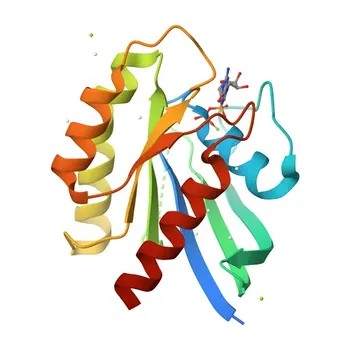
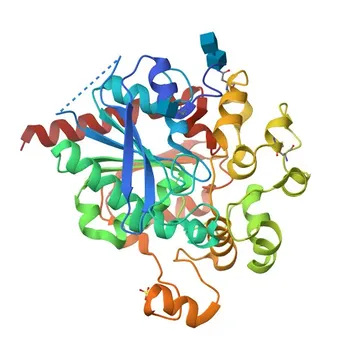
Ligase catalyzes the formation of a covalent bond between two oligonucleotides, and polymerase generates the rolling circle amplification product that amplifies the detection signal. Both enzymes rely on a precisely folded active site that is highly susceptible to thermal denaturation. Even a few minutes at room temperature can reduce the fraction of catalytically competent molecules, introducing uncontrolled variability that no downstream normalization can fully correct.
How Loss of Activity Compromises Sensitivity
When enzyme activity drops, two critical failures occur. First, ligation efficiency decreases, so fewer target-bound probes become a closed circular template for amplification. Second, polymerization slows or arrests, producing weaker, smaller amplification products. The result is a diminished signal that can mask low-abundance targets and increase the risk of false negatives, directly eroding the sensitivity and reproducibility you depend on.
The Three Non-Negotiable Handling Steps
These rules function as a single, integrated protocol. Skipping one undermines the others.
Use a Pre-chilled -20 °C Cooling Block
Do not simply take the enzyme tube out of the freezer and place it on the benchtop. Transfer it immediately to a -20 °C cooling block that sits at your workstation. The block’s thermal mass maintains the enzyme at a storage-grade temperature even as you pipette other reagents, preventing the micro-warming that begins the moment a tube hits ambient air.
Add Enzyme Last, Just Before Slide Application
Prepare your ligation or amplification buffer master mix—without the enzyme—ahead of time. Keep the buffer pre-warmed to the reaction temperature if indicated, but add the enzyme only seconds before you are ready to pipette the final mix onto your sample. This minimizes the window of time the protein spends in a diluted, less stabilized environment.
Vortex Immediately and Thoroughly
After adding the enzyme, close the tube and vortex it immediately. This is not just about mixing; it ensures that the concentrated, viscous enzyme stock becomes evenly distributed in the larger volume. Uneven distribution creates “hot” and “cold” spots of enzyme activity across your sample, leading to patchy, irreproducible staining. A quick spin afterward collects all liquid from the cap, preserving the intended concentration.
Never Store Diluted Enzyme Solutions
The temptation to prepare a larger batch of enzyme-containing mix and store the leftover for the next day is the most common source of catastrophic signal loss. Once diluted in reaction buffer, enzymes lose their stabilizing cosolvents and protective protein concentrations. Any leftover mix must be discarded after use—single-use preparation is the only path to reliable results.
Understanding the Trade-offs and Pitfalls
While strict adherence to cold handling and fresh preparation may feel like an economic inconvenience, the alternative trade-offs make the choice clear.
The Illusion of Convenience
Pre-mixing enzyme stocks and storing them on ice for an entire experiment run creates a false sense of efficiency. Even on wet ice, a diluted ligase or polymerase mix will lose measurable activity within 30–60 minutes. That decline varies from tube to tube, turning a supposedly uniform panel of samples into a series of reactions with unknowably different enzyme pedigrees.
When the Cooling Block Is Misused
Using a partially frozen cooling block (e.g., one that has been sitting out too long) or failing to let the enzyme tube fully equilibrate can lead to temperature gradients within the liquid stock. This can cause local freezing or condensation that alters the protein’s conformation. Always use a block that has been properly pre-chilled and is visually frosty, not just cold.
Integration with Broader Workflow Risks
Even perfect enzyme handling cannot rescue an assay if evaporation or light exposure is uncontrolled. Perform your incubation in a preheated humidity chamber to prevent reaction volume reduction, and once fluorophore-labeled detection components are added, shield the slides from ambient light. However, these steps complement—rather than substitute for—the core enzyme protocol.
Making the Right Choice for Your Goal
Your handling protocol should match your experimental priority. Use this decision guide to tailor your approach.
- If your primary focus is maximum signal sensitivity: Never compromise on the timing of enzyme addition. Add ligase and polymerase only after the master mix is fully prepared and you are moving immediately to the slide, vortexing just once.
- If your primary focus is inter-experiment reproducibility: Enforce a rigid discipline of using a -20 °C cooling block at all times and discarding any excess diluted enzyme. Document the exact timing between enzyme addition and slide application for every run.
- If your primary focus is high-throughput screening: Do not pre-batch enzyme mixes for multiple slides. Instead, aliquot your samples so that each slide or small group gets its own freshly prepared, vortexed mix just before processing.
The master key to PLA reliability is simple: treat your ligase and polymerase not as stable stock reagents, but as perishable, single-use catalysts whose moment of action must be precisely and freshly defined.
Summary Table:
| Handling Parameter | Recommended Practice | Impact on PLA Performance |
|---|---|---|
| Temperature Control | Keep enzymes on a -20 °C cooling block at all times | Prevents thermal denaturation and preserves active site function |
| Timing of Addition | Add enzymes last, immediately before slide application | Minimizes active protein degradation in diluted reaction buffer |
| Homogenization | Vortex immediately and thoroughly after enzyme addition | Ensures uniform enzyme distribution and prevents uneven, patchy staining |
| Storage of Diluted Mix | Single-use only; discard any leftover diluted mix | Eliminates run-to-run signal decline caused by unstable diluted enzymes |
Elevate Your Diagnostic & Assay Performance with CamelBio
Achieving peak assay sensitivity and flawless reproducibility depends on high-quality enzymes and robust experimental protocols. CamelBio provides diagnostic manufacturers, labs, and research institutes with one-stop access to premium IVD raw materials, technical services, and expert consulting—covering every stage from concept to clinic.
Whether you are scaling assay manufacturing or looking to optimize complex enzymatic assays, our experts are here to help. Contact CamelBio today to discover how our high-performance IVD raw materials and custom technical support can boost your assay reliability.
Related Products
- Anti-DNA Ligase III/LIG3 Rabbit Polyclonal Antibody for WB, IHC-P, IF/ICC, ELISA - P49916
- Anti-DNA Ligase III/LIG3 Rabbit Polyclonal Antibody for WB, IP, ELISA - P49916
- Anti-DNA Ligase IV Rabbit Polyclonal Antibody for WB, IHC-P, ELISA - P49917
- Anti-DARS Rabbit Polyclonal Antibody for WB, IHC-P, IP, ELISA - P14868
- Anti-LIG1 Rabbit Polyclonal Antibody for WB, IF/ICC, ELISA - P18858
People Also Ask
- What is the function of DNA ligase in molecular workflows? Discover why raw material purity drives assay accuracy.
- What performance limitations of standard DNA polymerases should IVD developers evaluate? Expert Guide
- Why is genomic DNA preferred over cDNA for cloning antibody genes in recombinant antibody engineering services?