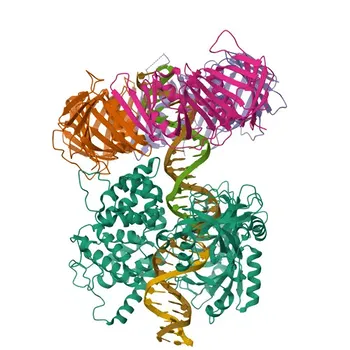
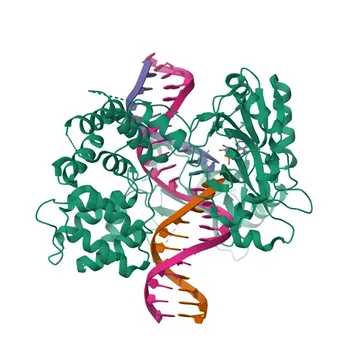
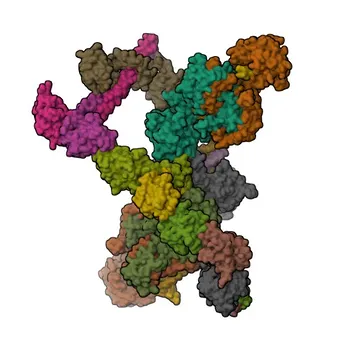
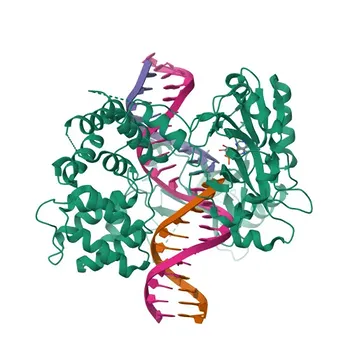
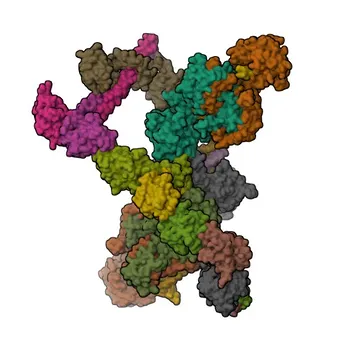
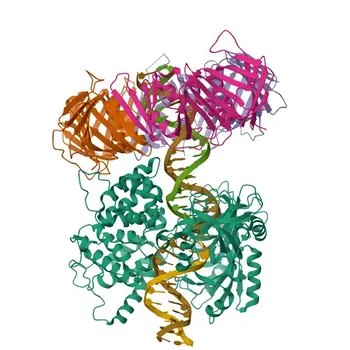
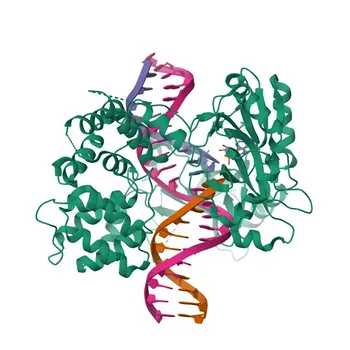
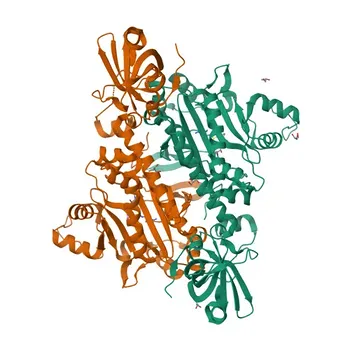
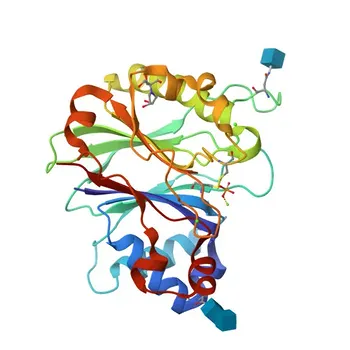
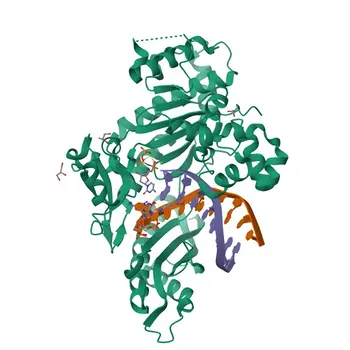
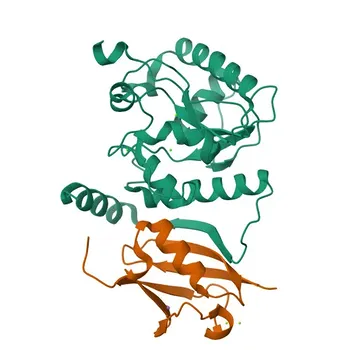
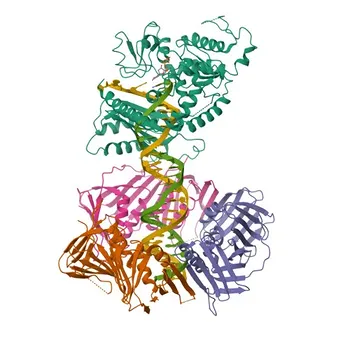
The success of nearly every modern nucleic acid detection and sequencing method hinges on a single enzymatic reaction: the seamless joining of DNA strands. DNA ligase is the enzyme that catalyzes the formation of a phosphodiester bond between the adjacent 3’-hydroxyl and 5’-phosphate ends of double-stranded DNA fragments. In molecular diagnostic workflows – from NGS library preparation and targeted cloning to ligation‑mediated amplification – it physically links adapter sequences or probe fragments. Raw material purity is absolutely critical because even trace contaminating enzymes can degrade precious target DNA, introduce non‑specific cleavage, and destroy the reproducibility that diagnostic assays demand, especially when working with low‑input samples.
DNA ligase acts as the molecular “glue” that covalently joins DNA fragments, enabling targeted amplification and detection. Yet the presence of nucleases, polymerases, or other impurities in the enzyme preparation can silently erode specificity and sensitivity, making raw material purity a foundational requirement for reliable, reproducible ligation‑dependent assays.
The Molecular Glue: How DNA Ligase Works
The Phosphodiester Bond Joining Reaction
DNA ligase functions only on double‑stranded DNA where a 3’-hydroxyl end is directly next to a 5’-phosphate end. The enzyme uses energy to create a covalent phosphodiester bond, sealing the nick. This single action permanently fuses two DNA molecules into one continuous strand, a step that is mechanically simple but experimentally indispensable.
Where Ligation Fits into Your Workflow
- NGS library construction: Ligase joins adapters to fragmented DNA to create sequences that can be amplified and read by the sequencer.
- Targeted cloning: Insert DNA is covalently ligated into a linearized vector.
- Ligation‑mediated amplification (including LCR): Ligase joins adjacent oligonucleotide probes that have hybridized perfectly to a target, allowing exponential, signal‑specific amplification.
In Ligase Chain Reaction (LCR), a thermostable DNA polymerase and DNA ligase work together. The polymerase fills any tiny gap between two adjacent primers, and the ligase seals the nick. Because both primers must bind with perfect complementarity for ligation to happen, the system achieves extraordinary specificity – a single mismatch near the ligation junction prevents sealing, effectively eliminating false‑positive signals.
Why Raw Material Purity Is Non‑Negotiable
Contaminants That Silently Sabotage Ligation
High‑purity ligase ensures no non‑specific cleavage of the DNA substrate. Common impurities include:
- Nucleases (endo‑ and exo‑nucleases): They can degrade the target DNA at nicks or ends, leading to false negatives or reduced sensitivity.
- Contaminating polymerases: In ligation‑dependent assays like LCR, any polymerase carry‑over can extend mismatched primers, eroding the specificity gained from the dual‑enzyme design.
- Phosphatases or kinases: These alter the necessary terminal phosphate groups, directly blocking the ligation reaction.
When you use a ligase raw material that is certified free of these side activities, the only thing happening in your tube is the intended joining reaction.
Preserving Low‑Input Target Integrity
Diagnostic samples – liquid biopsies, single‑cell inputs, FFPE DNA – often contain only picograms of highly fragmented nucleic acid. Even trace nuclease activity in the ligase reagent will chew through this scarce material before detection even begins. Purity directly translates into the ability to recover and read out every single target molecule.
The Link Between Purity and Diagnostic Reproducibility
Regulatory‑grade diagnostics require that the same test gives the same answer, run after run, lot after lot. Impure enzyme raw materials introduce batch‑to‑batch variability in ligation efficiency and background noise. Consistent purity specifications ensure that the assay’s sensitivity and specificity remain locked in, enabling robust validation and regulatory clearance.
Understanding the Trade‑offs in Ligase Selection
Purity vs. Cost in High‑Throughput Settings
Ultra‑pure, contaminant‑free ligase often comes at a higher price. The immediate trade‑off is the raw material cost per reaction. However, failed runs, ambiguous results, and re‑testing caused by impure enzyme lots quickly exceed any initial savings. In high‑stakes diagnostics, the real cost of impurity is measured in missed diagnoses and wasted sample.
Activity vs. Specificity: Avoiding Over‑Ligation
Even with pure ligase, using an excessive amount of enzyme can drive undesired blunt‑end ligations – generating chimeric molecules or adapter‑dimers that create background. Purity does not replace careful titration. The goal is enough ligase activity to drive the desired reaction to completion without overwhelming the system’s selectivity.
Making the Right Choice for Your Assay
Choosing the right ligase raw material depends on the specific demands of your molecular workflow.
- If your primary focus is high sensitivity with low‑input samples: Choose a ligase raw material that is certified nuclease‑free and demonstrates minimal lot‑to‑lot variation. This guarantees that every precious target molecule is preserved and ligated.
- If your primary focus is high specificity in multiplexed amplification (e.g., LCR): Insist on ligase that is verified free of contaminating polymerase and exonuclease activities. Even faint side activities can degrade the single‑base mismatch discrimination that defines your assay.
- If your primary focus is high‑throughput NGS library preparation: Balance purity and cost by selecting a supplier that provides extensive quality control data for each lot. Look for evidence of low adapter‑dimer formation and consistent molar ligation efficiency to minimize batch effects.
Ultimately, treating DNA ligase not just as a reagent but as a cornerstone of assay accuracy will transform your molecular workflow from fragile to failsafe.
Summary Table:
| Aspect | Key Function / Role | Impact of Enzyme Impurities |
|---|---|---|
| Molecular Mechanism | Joins 3’-OH and 5’-PO4 ends via phosphodiester bonds | N/A (Core enzymatic reaction) |
| Workflow Applications | NGS library preparation, target cloning, LCR & diagnostic amplification | Nuclease/polymerase contamination causes non-specific cleavage or false positives |
| Low-Input Integrity | Enables recovery and detection of picogram-level nucleic acids | Trace nuclease activity degrades scarce target DNA before detection |
| Diagnostic Reproducibility | Ensures consistent joining efficiency across assay batches | Impurities cause batch-to-batch variation and regulatory validation failures |
Scale Your Molecular Assays with High-Purity Enzyme Solutions
Don't let trace contaminants compromise your diagnostic accuracy. CamelBio provides diagnostic manufacturers, labs, and research institutes with one-stop access to ultra-pure IVD raw materials, technical services, and consulting—covering every stage from concept to clinic. Whether you are optimizing NGS workflows or developing high-specificity ligation assays, our team ensures reliable, lot-to-lot consistency tailored to your needs.
Ready to elevate your assay performance? Contact CamelBio today to consult with our experts!
Related Products
- Anti-DNA Ligase I Monoclonal Antibody for WB, IHC-P, IF/ICC, ELISA - P18858
- Anti-DNA Ligase III/LIG3 Monoclonal Antibody for WB, IHC-P, ELISA - P49916
- Anti-DNA Ligase IV Rabbit Monoclonal Antibody for WB, ELISA - P49917
- Anti-DNA Ligase III/LIG3 Rabbit Polyclonal Antibody for WB, IP, ELISA - P49916
- Anti-DNA Ligase IV Rabbit Polyclonal Antibody for WB, IHC-P, ELISA - P49917