Blog
When qPCR Wells Disagree: A Practical Framework for Fluorescence Variance and High CT Values
7 hours agoLearn how to trace qPCR well-to-well fluorescence variance and high CT values to sealing, calibration, evaporation, reagents, and assay design.
Learn More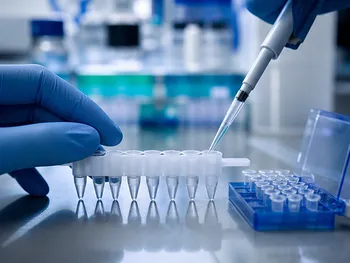
Primer-Dimers in qPCR: The Smallest Artifact with the Largest Diagnostic Consequences
1 day agoLearn how primer-dimers undermine qPCR sensitivity and specificity, and how design, hot-start enzymes, probes, and controls restore assay reliability.
Learn MoreWhen a Straight Line Lies: How R and R² Define qPCR Reliability
2 days agoLearn how R, R², slope, efficiency, and replicate precision work together to validate qPCR standard curves for reliable IVD results.
Learn More
Designing Hydrolysis Probes That Win the Kinetic Race in Real-Time PCR
3 days agoLearn how probe Tm, primer spacing, sequence composition, and assay validation determine qPCR signal strength and diagnostic reliability.
Learn MorePrimer-Dimers: The Hidden Reaction That Can Break a Molecular Diagnostic Assay
4 days agoLearn how primer-dimers create false positives, reduce sensitivity, and raise LOD, plus reagent design strategies to build more reliable PCR assays.
Learn MoreWhy Scorpion Probes Turn a Single Base into a Confident Genotyping Decision
5 days agoExplore how Scorpion probe architecture enables rapid, high-specificity allele discrimination in IVD genotyping assays.
Learn MoreDioxin-Like Compound Screening by ELISA: The Engineering Trade-Off Between Speed and Certainty
6 days agoUnderstand how competitive ELISA kits screen dioxin-like compounds, where matrix effects undermine accuracy, and how to build reliable workflows.
Learn MoreRNase H Activity in Reverse Transcription: The Hidden Variable Behind RNA Diagnostic Sensitivity
1 week agoLearn how RNase H activity shapes cDNA integrity, primer access, and assay sensitivity, and how to select the right RT strategy.
Learn MoreChoosing Between LFD and Microwell ELISA: Let the Testing Environment Decide
1 week agoLearn when lateral flow devices outperform microwell ELISA, and how speed, stability, precision, throughput, and workflow shape assay design.
Learn MorePrimer Melting Temperature in IVD Design: From Simple Rules to Thermodynamic Uniformity
1 week agoLearn how sequence, GC content, salt, concentration, and secondary structure shape primer Tm and determine reliable molecular diagnostic performance.
Learn MoreDesigning a Dioxin ELISA That Detects Risk Before It Becomes a Regulatory Failure
1 week agoHow antibody quality, conjugate stability, sample preparation, and TEQ calibration determine reliable low-picogram dioxin ELISA performance.
Learn MoreWhen qPCR Assays Leave Their Home Cycler: The Engineering of Cross-Platform Reliability
1 week agoWhy qPCR performance changes across thermal cyclers, and how thermal profiling, resilient chemistry, and stress validation create portable assays.
Learn MoreTwo Control Layers, One Reliable qPCR Result: Designing Endogenous and Exogenous Controls for Molecular Diagnostics
1 week agoEndogenous and exogenous controls solve different qPCR risks. Learn how dual-control design prevents false negatives and strengthens diagnostic confidence.
Learn MoreBuilding Accessible SPR Ligands: Reaction Chemistry and Spacer Design for Carboxylated Small Molecules
1 week agoLearn how EDC/NHS chemistry and diamine spacers covalently immobilize carboxylated small molecules while balancing signal, access, and background.
Learn MoreFrom Matrix Noise to Measurable Signal: A Practical Extraction Strategy for ELISA Testing
2 weeks agoLearn how pentane extraction, alkaline back-extraction, and neutral buffering remove matrix effects before sensitive ELISA analysis.
Learn MoreWhy SPR Throughput Is Won at the Antibody Surface
2 weeks agoDiscover how antibody affinity, immobilization chemistry, and regeneration determine whether automated SPR can deliver 8-plex testing and 600 samples daily.
Learn MoreTurning Serum into a Dilution Problem: Designing Label-Free SPR Immunoassays for Small-Molecule Drug Residues
2 weeks agoLearn how competitive SPR immunoassays measure small-molecule drug residues directly in diluted animal serum without complex extraction.
Learn MoreWhat Real-Time PCR Curves Reveal About Diagnostic Assay Performance
2 weeks agoLearn how baseline, Ct, and ΔRn expose hidden PCR failures, validate assay efficiency, and guide better molecular diagnostics.
Learn MoreSample Preparation Is the Assay: Designing Biosensors for Drug Residues in Complex Matrices
2 weeks agoLearn how dilution, tissue extraction, calibration, and selective enrichment turn complex biological samples into reliable biosensor signals.
Learn MoreWhen DNA Must Stop: The Chemistry, Control, and Supply Chain Behind Reliable ddNTP Sequencing
2 weeks agoDiscover how ddNTP chain termination creates readable DNA sequences, and why purity, stoichiometry, and supply continuity determine assay reliability.
Learn MoreSpecificity Is Built in Gates: A Hybridoma Screening Workflow for Reliable Immunoassay Raw Materials
2 weeks agoA practical hybridoma screening workflow that removes carrier binders, proves native-target recognition, and limits cross-reactivity in IVD assays.
Learn MoreTwo Positive Controls, One Clear Answer: Isolating RT and PCR Failure in qRT-PCR Diagnostics
3 weeks agoLearn how dual positive controls isolate reverse transcription and PCR failures, improve qRT-PCR reliability, and support compliant diagnostic workflows.
Learn MoreHow Surface Plasmon Resonance Turns Antibody Binding into Real-Time Diagnostic Data
3 weeks agoLearn how SPR converts antibody-analyte binding into real-time, label-free quantification, and how surface chemistry, kinetics, and calibration shape results.
Learn MoreWhen the Dye Sees Everything: A Systematic Strategy for Cleaner, More Reliable qPCR
3 weeks agoLearn how primer design, Mg2+ control, thermal optimization, and melt curves reduce background signal in dye-based qPCR assays.
Learn MoreThe Thermal Block Is the Hidden Variable in Real-Time PCR Performance
3 weeks agoHow ramp rate, gradient control, block geometry, and thermal uniformity shape qPCR speed, optimization, reproducibility, and sample volume.
Learn MoreWhen the Seal Changes the Result: Controlling CT Variance in Real-Time PCR
3 weeks agoLearn how evaporation, optical interference, and edge effects raise qPCR CT values, and how better sealing protects diagnostic accuracy.
Learn MoreWhy Broad-Spectrum Antibodies Lose Quantitative Precision in Multi-Residue Pesticide Immunoassays
3 weeks agoExplore how differential reactivity and matrix interference limit generic antibody accuracy, and how assay engineering restores reliable pesticide screening.
Learn MoreDesigning Broad-Spectrum Immunoassays: The Antibody and Conjugate Strategy Behind Multi-Residue Detection
3 weeks agoLearn how engineered antibodies, hapten conjugates, and affinity blending enable sensitive, broad-spectrum screening of small-molecule residues.
Learn More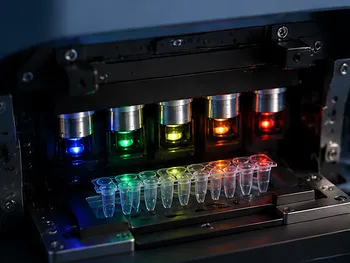
Designing Multiplex qPCR Assays from the Optical System Outward
4 weeks agoHow light sources, detectors, filters, and probe chemistry determine fluorophore choice, multiplex capacity, and quantitative qPCR performance.
Learn MoreWhy Serum Gives Veterinary Drug Residue Biosensors a Better Starting Point
4 weeks agoSerum offers higher residue levels, simpler preparation, and stronger biosensor signals than muscle tissue for veterinary drug screening.
Learn More