The Signal Is Decided Before PCR Begins
A molecular diagnostic assay can fail long before fluorescence appears on a qPCR instrument.
Imagine a low-abundance viral RNA molecule entering a reverse transcription reaction. The polymerase finds its primer, begins building cDNA, and appears to be doing exactly what the assay requires.
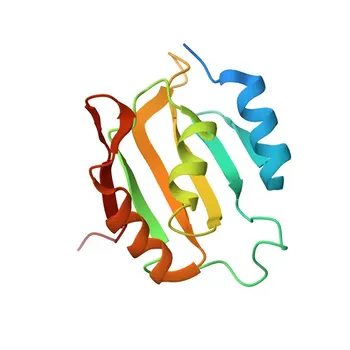
But the reaction contains a second force: RNase H activity.
That activity can remove the RNA template from the newly formed RNA:DNA hybrid, opening the cDNA for downstream amplification. It can also cut the template too early, leaving behind a truncated cDNA that no primer can recover.
This is the central paradox of reverse transcription diagnostics:
RNase H activity can improve accessibility while damaging the very sequence the assay is designed to detect.
For diagnostic manufacturers, the choice is therefore not simply about selecting a “strong” reverse transcriptase. It is about matching enzyme behavior to the structure, abundance, and intended use of the target RNA.
Why the RNA:DNA Hybrid Matters
During first-strand synthesis, the reverse transcriptase creates a DNA strand complementary to the RNA template. The two strands remain paired as an RNA:DNA hybrid.
That hybrid is useful during synthesis. It gives the polymerase a stable template to follow.
After synthesis, however, the RNA strand can become an obstacle. A secondary primer or PCR primer may need access to the cDNA sequence that is still occupied by its RNA complement.
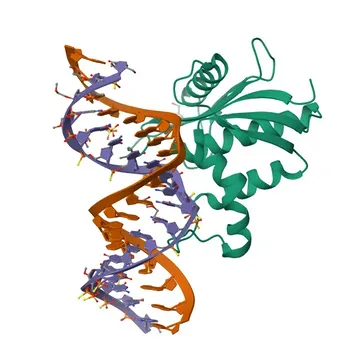
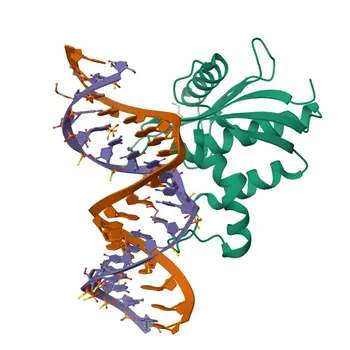
RNase H resolves this problem by selectively hydrolyzing the RNA strand within the hybrid.
The result is a more accessible cDNA template:
- Primer binding becomes less physically restricted.
- Secondary-strand synthesis can proceed more efficiently.
- Downstream PCR can become more robust and specific.
- Low-copy targets may produce a stronger measurable signal.
In a short-amplicon assay, this clearing function can be highly valuable. But timing determines whether it helps or harms.
The Same Activity Can Destroy Long Targets
High RNase H activity does not always wait until synthesis is complete.
As the reverse transcriptase moves along the RNA, RNase H may begin degrading the template near the growing end of the cDNA. For a short target, the damage may occur beyond the region that matters.
For a long or highly structured RNA, the consequences are different.
A cleavage event upstream of the intended amplification region can produce an incomplete cDNA. If the target sequence lies beyond that point, the assay receives no usable template even though the original RNA molecule was present.
This is especially important when working with:
- Full-length or near-full-length viral genomes
- Long transcripts
- Heavily structured RNA
- Alternative splice forms
- RNA targets with distant primer sites
- Low-abundance clinical specimens
The practical lesson is uncomfortable but important:
A reverse transcriptase can be highly active and still be poorly suited to the assay.
Enzyme performance has to be measured against the information the assay must preserve.
Three Enzyme Strategies for Three Different Problems
Reverse transcriptase engineering has largely followed one principle: separate the benefits of RNA degradation from its risks.
Wild-Type Reverse Transcriptase: Native Balance
Wild-type enzymes such as native M-MLV reverse transcriptase retain their natural RNase H activity.
Their main advantage is straightforward. After cDNA synthesis, the RNA template can be degraded without requiring an additional enzyme or reaction step. This may improve access for downstream primers and support efficient amplification of short targets.
They are often appropriate for:
- Routine short-amplicon qPCR
- Abundant RNA targets
- Single-exon detection
- Workflows where simplicity and reaction economy are priorities
Their limitations become more visible with difficult templates. Native RNase H activity can reduce effective processivity, increase the risk of premature cleavage, and make it harder to obtain broad transcript coverage.
RNase H-Minus Reverse Transcriptase: Protecting Template Length
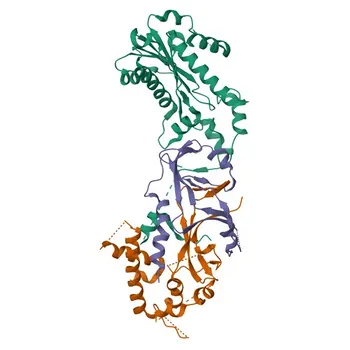
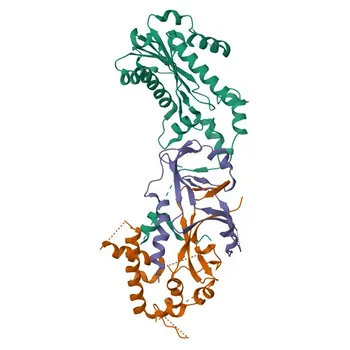
RNase H-minus enzymes contain mutations that inactivate the RNase H domain while preserving polymerase function.
Without active RNase H cleavage during synthesis, the RNA template remains available as the polymerase extends the cDNA. This supports longer products and improves the chance of capturing sequence information across structured or distant regions.
RNase H-minus enzymes are generally favored for:
- Long RNA molecules
- Structured viral genomes
- Full-length transcript analysis
- Alternative splicing studies
- Low-copy targets where every intact molecule matters
Many engineered enzymes in this category also operate effectively at elevated temperatures. Higher reaction temperatures can help destabilize RNA secondary structures, allowing the polymerase to move through regions that would otherwise cause pausing or premature termination.
The trade-off is that the RNA template may remain associated with the cDNA after synthesis. Primer design and downstream reaction conditions therefore become more important.
Decoupled or Boosted RNase H: Controlling the Timing
A third strategy separates synthesis from template removal.
A low- or inactive-RNase H reverse transcriptase first produces the longest possible cDNA. A separate thermostable RNase H is then added after synthesis to digest the RNA strand in a controlled post-synthesis step.
This design changes the question from “How much RNase H activity should the RT have?” to “When should RNase H activity occur?”
That timing can provide a useful combination:
- Long cDNA synthesis
- Reduced premature template cleavage
- Deliberate RNA-template removal
- Improved access for downstream amplification
- Greater control over quantitative performance
The additional step introduces more formulation and process-development considerations. Yet for high-accuracy workflows, the ability to control the sequence of events can be more valuable than minimizing the number of components.
The Decision Is a Trade-Off Between Information and Access
Assay developers are often forced to balance two competing needs.
The first is information preservation: keeping the cDNA long enough to contain the target.
The second is template access: removing the RNA strand so primers can bind efficiently.
These needs can be compared as follows:
| Enzyme strategy | RNase H profile | Primary strength | Main consideration | Typical application |
|---|---|---|---|---|
| Wild-type M-MLV | Native or moderate | Removes RNA template during the workflow | May cleave long templates prematurely | Routine short-amplicon qPCR |
| RNase H-minus RT | Inactivated | Preserves long cDNA and difficult targets | May require downstream template-removal planning | Long or structured RNA detection |
| Decoupled or boosted system | Added after synthesis | Separates full-length synthesis from RNA removal | Adds a controlled post-synthesis step | Absolute quantification and high-accuracy qPCR |
There is no universally superior profile.
A wild-type enzyme may be the most efficient choice for a short, abundant target. The same enzyme may be the wrong choice for a long viral genome.
An RNase H-minus enzyme may preserve the sequence that matters most, but it may require more careful primer placement and workflow design.
A boosted system may deliver the strongest control, but only when the added step is validated as part of the complete assay.
Choosing the Profile by Diagnostic Objective
The target itself should lead the selection process.
For Long and Structured Viral RNA
Use an RNase H-minus, thermostable reverse transcriptase.
The priorities are template protection, processivity, and the ability to move through secondary structures. A shorter cDNA may not merely reduce performance; it may remove the diagnostic region entirely.
For Short-Amplicon, High-Sensitivity qPCR
A wild-type reverse transcriptase with balanced RNase H activity may be effective.
Its ability to clear the RNA template can support primer accessibility and efficient amplification, particularly when the target is abundant or the amplicon is short.
For Absolute Quantification and Broad cDNA Coverage
Consider a decoupled workflow.
First preserve cDNA length with an RNase H-minus or low-activity RT. Then remove the RNA template using a separately controlled RNase H step.
This architecture can improve consistency when quantitative accuracy depends on reducing differences in template accessibility.
For Any RNA Diagnostic Workflow
Treat nuclease control as a primary design requirement.
An optimized reverse transcriptase cannot compensate for RNA degradation caused by environmental contamination. In practice, a single contaminating RNase A on a bench may do more damage than the carefully selected RNase H profile inside the reaction.
The Uncontrolled Variable: Environmental RNases
RNase H is selective. Environmental RNases are often not.
RNase A and related contaminants can cleave single-stranded RNA with remarkable stability. They may survive routine handling, persist on surfaces, and degrade clinical or extracted RNA before reverse transcription begins.
This creates a dangerous diagnostic illusion. The assay may appear to have an enzyme-performance problem when the real failure occurred during sample handling or reagent preparation.
A reliable RNA workflow therefore needs controls across the entire chain:
- Certified nuclease-free raw materials
- Validated RNase inhibitor systems
- Controlled sample collection and transport
- Clean separation of pre-amplification activities
- Appropriate low-binding consumables
- Defined storage and freeze-thaw conditions
- Lot-to-lot testing for critical reagents
- Contamination monitoring during production and testing
The goal is not simply to add an RNase inhibitor and assume the risk is solved. Inhibitors have concentration limits, compatibility constraints, and their own effects on reaction chemistry.
Nuclease control must be validated as a system.
What Raw Material Selection Really Means
For a diagnostic manufacturer, selecting an RT is not an isolated procurement decision.
The enzyme interacts with:
- RNA input quality
- Primer design
- Reaction temperature
- Magnesium concentration
- Salt conditions
- Inhibitors carried over from extraction
- Reaction timing
- Amplicon length
- Detection chemistry
- Downstream amplification format
A reverse transcriptase that performs well in a technical datasheet buffer may behave differently in a complete IVD formulation.
This is why raw material evaluation should include more than headline activity. Useful qualification questions include:
| Qualification question | Why it matters |
|---|---|
| Does the enzyme preserve long cDNA under the intended reaction conditions? | Confirms performance on the actual target architecture |
| How does RNase H activity change over time and temperature? | Reveals the risk of premature template degradation |
| Is the enzyme compatible with the assay's primer and probe system? | Connects biochemical performance to clinical signal |
| Does it tolerate extraction carryover inhibitors? | Reflects real specimen conditions |
| Is lot-to-lot consistency documented? | Supports manufacturing reproducibility |
| Are the raw materials certified nuclease-free? | Protects RNA integrity before synthesis begins |
| Can the supplier support formulation and scale-up? | Reduces development risk from concept to production |
The best supplier is not simply the one offering the highest nominal activity. It is the one able to connect enzyme behavior with the complete diagnostic workflow.
From Concept to Clinic
A laboratory may tolerate an extra optimization round. A regulated diagnostic product cannot rely on informal adjustments made by individual users.
The final kit must behave predictably across:
- Different operators
- Different instruments
- Multiple reagent lots
- Variable sample matrices
- Defined storage periods
- Manufacturing-scale production
- Clinical validation conditions
That requirement changes how RNase H activity should be evaluated.
The relevant question is not:
“Does this reverse transcriptase work?”
It is:
“Does this RNase H profile produce reliable, reproducible clinical signal in the intended assay architecture?”
Answering that question requires technical data, formulation knowledge, and a clear understanding of how the raw material will be manufactured and used.
CamelBio supports diagnostic manufacturers, laboratories, and research institutes with one-stop access to IVD raw materials, technical services, and consulting across the development path from concept to clinic. Its support can help teams evaluate reverse transcriptase options, strengthen nuclease-control strategies, and align raw material choices with the performance requirements of the finished assay.
The Final Design Principle
The ultimate sensitivity of an RNA diagnostic kit is determined by two linked decisions.
First, the reverse transcriptase must preserve the genetic information the assay needs.
Second, the workflow must remove or control competing RNA structures and contaminants at the right time.
RNase H activity sits exactly between those decisions. Too little activity can restrict primer access. Too much activity can erase the target before amplification begins.
The strongest assay designs do not treat RNase H as a fixed property to accept. They treat it as a variable to engineer, measure, and match to the diagnostic objective.
For help selecting the right enzyme profile and nuclease-free IVD raw materials, begin with Contact Our Experts.
Related Products
- Anti-RNASEH1 Rabbit Polyclonal Antibody for WB and ELISA - O60930
- Anti-RNASEH1 Monoclonal Antibody for WB, ELISA - O60930
- Anti-RNASEH2C Rabbit Polyclonal Antibody for WB and ELISA - Q8TDP1
- Anti-RNASEH2A Rabbit Polyclonal Antibody for WB, IF/ICC, ELISA - O75792
- Anti-RNASE2 Rabbit Polyclonal Antibody for WB, IF-P, ELISA - P10153