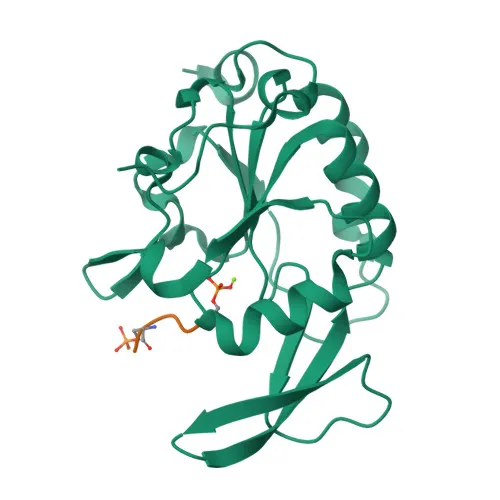
Monoclonal Antibodies
Anti-REST/NRSF Rabbit Monoclonal Antibody for WB, IP, ELISA - Q13127
Item Number : CM0007654
Price varies based on specs and customizations
- Application
- WB, IP, ELISA
- Cross Reactivity
- Human, Mouse, Rat
- Protein Weight
- 122kDa

Shipping:
Contact us to get shipping details Enjoy On-time Dispatch Guarantee.
Why Choose Us
Easy ordering process, quality products, and dedicated support for your business success.
Core Product Specifications and Parameters
| Parameter | Value |
|---|---|
| Product Name | REST/NRSF Rabbit mAb |
| Remarks/Alias | WT6, XBR, HGF5, NRSF, DFNA27, GINGF5, REST/NRSF |
| Species | Human |
| GeneID | 5978 |
| Immunogen | A synthetic peptide corresponding to a sequence within amino acids 100-200 of human REST/NRSF (Q13127) |
| Source | Rabbit |
| Category | Monoclonal Antibodies |
| Application | WB, IP, ELISA |
| Cross Reactivity | Human, Mouse, Rat |
| SWISS | Q13127 |
| Protein Weight | 122kDa |
| Shipping | Ice bag |
Biological Background: REST/NRSF Function and Localization
- REST/NRSF is a zinc-finger transcriptional repressor that binds to the neuron-restrictive silencer element (NRSE) and silences neuronal gene expression in non-neuronal cells. Related references: PMID:11741002 PMID:11779185 PMID:12399542
- It recruits corepressors SIN3A and RCOR1, which in turn recruit histone deacetylases, and also mediates repression via the BHC complex through histone deacetylation and demethylation, leading to chromatin compaction. Related references: PMID:10449787 PMID:10734093
- REST can also repress transcription by recruiting CDYL and histone methyltransferase EHMT2, a process potentially important for suppression of cellular transformation. Related references: PMID:19061646
- In neural stem cells, REST maintains repression of neuronal genes, preserving quiescence and preventing premature differentiation. Related references: PMID:21258371
- Under hypoxic conditions, REST acts as a key repressor by directly binding to NRSE sites on target gene promoters; it also mediates stress resistance in the aging brain and contributes to ischemia-induced neuronal cell death, partly through repression of miR-132. Related references: PMID:27531581 PMID:24670762
- Alternative splicing produces isoforms, including a short isoform that can heterodimerize with full-length REST and inhibit its repressor activity; SRRM4-dependent splicing generates a REST isoform essential for hearing. Related references: PMID:11741002 PMID:11779185
- REST is predominantly nuclear but can also be detected in the cytoplasm; it is a phosphoprotein, subject to ubiquitination, and contains multiple zinc-finger domains.
- It is ubiquitously expressed, with higher levels in lymphoid tissues; in the brain, REST is expressed in specific neuronal populations and its nuclear depletion is linked to Alzheimer's disease, Parkinson's disease, and dementia with Lewy bodies, where it may accumulate in Lewy bodies. Related references: PMID:8568247 PMID:24670762 PMID:30684677 PMID:26053433
Experimental Guidance and Technical Tips
- The immunogen is a synthetic peptide from amino acids 100–200 of human REST/NRSF; this region may be present in multiple isoforms. Consider sequence alignment to assess potential isoform recognition.
- For western blotting (WB), anticipate a band around 122 kDa, consistent with the predicted molecular weight. Post-translational modifications (e.g., phosphorylation, ubiquitination) may cause slight migration shifts or additional bands.
- REST is a nuclear protein; efficient nuclear extraction protocols or whole-cell lysates including nuclear fractions may improve detection in WB and IP.
- For immunoprecipitation (IP), the rabbit monoclonal format typically offers high specificity and low background; include an appropriate isotype control.
- In ELISA, use a peptide blocking assay to verify specific binding; the immunogen peptide can serve as a positive control.
- The antibody shows cross-reactivity with mouse and rat REST; validate assay conditions in the intended species, as epitope conservation may influence performance.
CamelBio: Your One-Stop Sourcing Bridge
CamelBio is your comprehensive one-stop partner for IVD raw-material sourcing, offering validated antibody pairs, optimized monoclonal and polyclonal antibodies, and bulk ancillary reagents to accelerate your assay development from concept to clinic. This anti-REST/NRSF rabbit monoclonal antibody is ideal for transcriptional regulation and neuroscience research applications. CamelBio also specializes in sourcing rare-target raw materials, ensuring a reliable supply chain for your diagnostic development needs.
REQUEST A QUOTE
Our professional team will reply to you within one business day. Please feel free to contact us!
Related Articles
ROX in qPCR: The Quiet Reference That Makes Diagnostic Signals Trustworthy
Learn how ROX normalizes qPCR fluorescence, stabilizes Ct calls, and shapes the trade-off between instrument compatibility and multiplexing.
Why Direct Hapten Coupling Changes the Economics of Small-Molecule Biosensors
Compare direct hapten coupling with protein conjugates to improve ligand density, signal quality, antibody efficiency, and chip reusability.
From Molecular Recognition to Reliable Results: Engineering Biosensors for Rapid Safety Testing
How antibodies and enzymes turn invisible molecular events into reliable biosensor signals, and how material quality determines test performance.
qPCR Primer Design: The Small Decisions That Determine Assay Reliability
A practical guide to qPCR primer design, from amplicon length and 3' stability to validation for efficient, reproducible diagnostics.
ROX in Real-Time PCR: The Optical Trade-Off Behind Precision and Multiplexing
Understand how ROX normalization corrects qPCR signal variation, how optics consume channels, and how to choose the right master mix.
When a Surface Becomes a Sensor: Choosing Between QCM, SAW, and Six Classes of Quality Detection
Explore six sensor families, how QCM and SAW convert molecular binding into frequency shifts, and why surface chemistry determines diagnostic reliability.
The Silent Well: How No Template Controls Protect Molecular Diagnostic Integrity
A practical guide to No Template Controls: how unexpected qPCR signals reveal contamination, reagent impurities, artifacts, and broken workflow controls.
From Fluorescence to Diagnostic Truth: Choosing Passive Reference Dyes for qPCR Master Mixes
Learn how passive reference dyes stabilize qPCR signals, improve diagnostic reproducibility, and guide ROX formulation across instrument platforms.
Why Minor Groove Binders Turn Short Hydrolysis Probes into Precision Diagnostic Tools
MGB chemistry improves probe stability, SNP discrimination, signal-to-noise ratio, and low-copy detection in demanding molecular assays.
From Molecular Binding to Manufacturing Discipline: How Reliable ELISA Kits Are Engineered
Explore the four operational mechanisms that govern ELISA kit performance, from passive coating and washing to signal generation and scalable IVD manufacturing.
Engineering the Weakest Link: Recombinant Antibodies for Reliable Multi-Analyte Biosensors
Learn how engineered recombinant antibodies improve multi-analyte biosensors through uniform recognition, oriented surfaces, avidity, and wider dynamic range.
When Fluorescence Becomes Evidence: Engineering a Competitive ELISA for Trace Molecule Detection
Learn how procedural discipline, blank correction, substrate selection, and reader configuration turn fluorometric ELISA sensitivity into reliable trace detection.