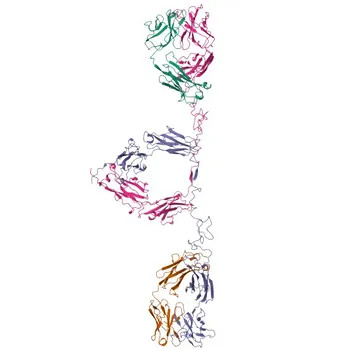
The Moment a Biosensor Earns Trust
A food-safety technician opens a test cartridge beside a production line.
There is no central laboratory in the room. No overnight incubation. No specialist standing over a bench. The decision must be made while a batch is still moving through the supply chain.
The sample may contain proteins, fats, salts, preservatives, pigments, and thousands of molecules that were never part of the original assay design. Somewhere inside that chemical crowd, the biosensor must recognize one pathogen, toxin, pesticide, or residue.
That recognition event is invisible.
The result is not.
A biosensor converts the event into a current, a voltage, a color shift, a change in refractive index, or a frequency response. But the instrument does not create specificity by itself. Specificity begins with the biological recognition element: the antibody, enzyme, or another molecule that knows what to look for.
This is why a rapid test is never merely an electronics problem. It is a biological system connected to a physical measurement system. The quality of that connection determines whether a device becomes a dependable tool or an impressive prototype that fails in real samples.
Specificity Begins with the Recognition Element
A conventional chemical sensor may respond to a general property such as acidity, conductivity, or oxidation potential.
A biosensor makes a more disciplined promise:
It will respond to a particular biological or biochemical target.
That promise depends on molecular recognition.
The biological element acts like a lock-and-key mechanism, although the real interaction is more dynamic. Shape, charge, hydrophobicity, hydrogen bonding, and molecular motion all contribute to whether the target is captured or transformed.
The transducer then observes what changed.
The complete pathway is:
- The analyte reaches the sensor surface.
- The biological element binds to or reacts with the analyte.
- That event changes a measurable physical or chemical property.
- The transducer converts the change into a signal.
- Software or an operator interprets the signal as a safety or quality decision.
If the first step is weak, the rest of the system cannot compensate indefinitely. A more sensitive amplifier cannot repair poor molecular selectivity. A sophisticated algorithm cannot reliably distinguish true binding from uncontrolled background noise.
The sensor is only as trustworthy as the recognition moment at its center.
Antibodies: Capturing Complex Targets
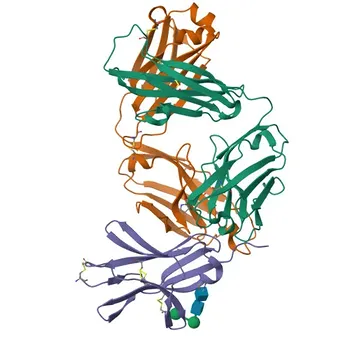
Antibodies are particularly valuable when the target is structurally complex.
A whole bacterial cell, viral particle, or large toxin may present several surface features that can be recognized by an antibody. The antibody's paratope binds to a corresponding antigenic structure, or epitope, on the target.
For applications such as detecting Listeria, Salmonella, or E. coli O157, this physical capture mechanism offers a practical advantage: the assay can recognize the target as a biological entity rather than requiring it to be chemically broken down into a simpler component.
When the target binds, the sensor surface changes.
Depending on the design, that change may appear as:
- A variation in electrical current or potential.
- A shift in impedance at the electrode interface.
- A change in fluorescence or visible color.
- A variation in refractive index.
- A mass-induced frequency shift on a vibrating crystal.
The antibody does not produce the final result alone. It creates the molecular event that the transducer is capable of observing.
Monoclonal and Polyclonal Choices
The choice between monoclonal and polyclonal antibodies is a decision about consistency, breadth, and risk.
| Antibody type | Recognition profile | Main advantage | Main development concern |
|---|---|---|---|
| Monoclonal | One defined epitope | High specificity and strong lot consistency | A mutation or structural change at the epitope may reduce detection |
| Polyclonal | Multiple epitopes | Broader recognition and often strong signal | Greater risk of cross-reactivity and lot-to-lot variation |
A monoclonal antibody can be ideal when the assay must distinguish one target from closely related organisms.
A polyclonal antibody may be useful when target variation is expected and broad capture is more important than absolute discrimination.
Neither is universally superior. The right choice depends on the target, matrix, regulatory expectations, and the consequences of a false result.
A false negative can release a contaminated batch. A false positive can trigger a costly investigation, production delay, or recall. The psychology of testing matters here: when operators lose confidence in a system because it produces too many ambiguous results, they begin to treat every result as negotiable.
Reliability is partly an analytical property and partly a human one.
Enzymes: Turning Chemistry into Signal
Enzymes approach the problem differently.
An antibody captures. An enzyme transforms.
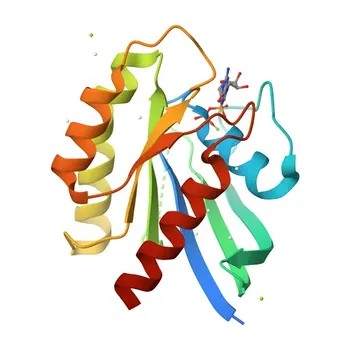
The enzyme catalyzes a reaction involving the analyte, either consuming the target or generating a detectable product. That product may be hydrogen peroxide, ammonia, a colored compound, or another electrochemically active species.
The key advantage is catalytic amplification.
One enzyme molecule can process many substrate molecules. This means that a relatively small recognition event can create a larger measurable response than direct binding alone might provide.
For residue and small-molecule testing, this can be especially valuable. An enzyme inhibition assay, for example, may use acetylcholinesterase. If a pesticide inhibits the enzyme, the reaction rate falls. The reduction in signal becomes an indirect measurement of contamination.
The logic is simple:
- More active enzyme produces a stronger baseline reaction.
- Greater inhibition produces a larger signal decrease.
- The measured change can be correlated with the concentration of the target.
But the simplicity of the output conceals a demanding design problem. Enzyme activity depends on temperature, pH, ionic strength, cofactors, immobilization conditions, and storage history.
A reagent can be chemically present and still be functionally absent.
The Transducer Interface Is Where Biology Becomes Engineering
The recognition element and the transducer must behave as one system.
An antibody that performs well in solution may lose activity after immobilization. An enzyme with excellent catalytic performance in a reaction vessel may become inaccessible or unstable when attached to an electrode.
The surface is not a passive platform. It changes the environment around the biomolecule.
Immobilization can alter:
- Molecular orientation.
- Accessibility of the binding site or active site.
- Protein conformation.
- Local charge and hydrophobicity.
- Diffusion of the analyte.
- Non-specific adsorption.
- Resistance to washing and mechanical stress.
This is why conjugation chemistry deserves the same attention as target selection.
The Cost of the Wrong Orientation
Imagine attaching thousands of antibodies to a sensor surface.
The surface may look well coated. The protein concentration may meet the specification. Yet if many antibodies are attached through or near their antigen-binding regions, the sensor has effectively installed its locks facing the wrong direction.
The result is a familiar development pattern:
- Low apparent sensitivity.
- High reagent consumption.
- Weak signal separation.
- More aggressive assay conditions.
- Increasingly complicated data processing.
The root cause is not necessarily the antibody itself. It may be the way the antibody was presented to the sample.
Controlled orientation, compatible cross-linking chemistry, and optimized surface blocking can convert the same biological material into a much more effective recognition layer.
Signal Pathways
The transducer defines how the molecular event becomes measurable.
| Transducer | Measured change | Typical signal source | Practical strength |
|---|---|---|---|
| Electrochemical | Current, potential, or impedance | Redox reaction or interfacial binding | Compact, low-power, and suitable for portable systems |
| Optical | Fluorescence, absorbance, color, or refractive index | Label activity or surface interaction | High sensitivity and strong visual or instrument-based readout |
| Acoustic or piezoelectric | Resonant frequency or mass change | Target accumulation on a vibrating surface | Label-free detection and direct mass measurement |
The best transducer is not selected in isolation.
It must match the recognition chemistry, sample matrix, expected concentration range, power constraints, workflow, and operator environment.
A field test for water contamination may need low power and a simple visual output. A high-throughput manufacturing platform may prioritize automated fluidics, rapid regeneration, and digital data integration.
The same antibody can perform very differently in those two systems.
Raw Material Quality Determines the Ceiling
The biological raw material is the first major input into assay performance.
Three properties usually define whether it is suitable for biosensor development.
Affinity and Specificity
Affinity determines how strongly the molecule interacts with the target.
Specificity determines whether it ignores the molecules that should not matter.
These properties are related but not identical. An antibody can bind strongly to several structurally similar compounds. An enzyme can show high activity toward a substrate that is present in the sample but irrelevant to the measurement.
Development teams must evaluate binding and activity against the real target panel, including likely interferents.
Robustness
A recognition element must survive more than its intended reaction.
It may experience:
- Temperature changes during shipping.
- Freeze-thaw cycles.
- Drying or lyophilization.
- Conjugation reagents.
- Sample preservatives.
- Extreme pH.
- High salt concentration.
- Organic solvents.
- Proteases or other matrix components.
A molecule that is excellent under controlled laboratory conditions may be unsuitable for a test used beside a warm production line or in a remote sampling location.
Robustness is not a secondary convenience. It is part of analytical performance.
Consistency
Lot-to-lot consistency determines whether a calibration curve remains meaningful over time.
If one batch of antibody has a different affinity profile from the previous batch, or one enzyme preparation has substantially different specific activity, the device may require new calibration, revised cutoffs, or additional quality-control work.
For diagnostic manufacturers, this affects more than assay precision. It affects validation packages, production planning, customer confidence, and the ability to scale.
Purity Is a Performance and Business Decision
Purity is often treated as a technical specification. In practice, it is also an economic decision.
Impurities can increase non-specific binding, inhibit enzyme activity, interfere with immobilization, or create background signal. Higher purity may therefore improve sensitivity and reduce false positives.
But purification also affects yield and cost.
The right question is not simply, “What is the highest purity available?”
It is:
What level of purity provides the required performance, reproducibility, and regulatory confidence at a commercially sustainable cost?
A research prototype may tolerate a costly reagent because only a few tests are being run.
A commercial cartridge cannot make that assumption. Its reagent architecture must support manufacturing scale, storage, release testing, and predictable margins.
This is where an experienced raw-material partner becomes part of the development strategy. Access to suitable IVD materials, technical services, and consulting can help teams evaluate the trade-off before it becomes embedded in the product design.
The Real Sample Is the Final Examiner
Many biosensors perform well in buffer and poorly in practice.
The difference is the matrix.
Food extracts contain fats, proteins, pigments, and salts. Blood contains cells, proteins, and endogenous compounds. Environmental water can contain humic substances, metals, microorganisms, and variable pH.
These components can block the surface, bind non-specifically, alter enzyme kinetics, or distort the transducer response.
A recognition element should therefore be tested in the matrix in which the product will operate, not only in an idealized solution.
Cross-Reactivity Is a System Failure
Cross-reactivity is often described as an antibody problem.
It is more accurately a system-design problem.
An antibody may recognize a related structure. The immobilization layer may expose unwanted binding behavior. The sample preparation may concentrate an interferent. The signal threshold may be too permissive.
Useful controls include:
- Epitope mapping.
- Testing against near-neighbor organisms or compounds.
- Interference studies using the complete sample matrix.
- Stringency optimization during washing.
- Orthogonal confirmation with a reference method.
- Evaluation of false-positive and false-negative costs.
A rapid assay should be designed around the decisions it will support. If a result can stop a production line, release a shipment, or trigger a public-health response, the validation burden must reflect that consequence.
Stability Versus Affinity in the Field
The highest-affinity molecule is not always the best commercial reagent.
A sensor used in a temperature-controlled laboratory may benefit from maximum binding strength. A sensor transported through hot warehouses, stored without refrigeration, or used by non-specialist operators may need greater thermal and formulation stability.
This creates a practical trade-off:
| Priority | Biological preference | Operational benefit |
|---|---|---|
| Maximum analytical sensitivity | Very high affinity or activity | Lower detection limits under controlled conditions |
| Field durability | Thermally stable, formulation-tolerant material | Longer shelf life and fewer storage failures |
| Manufacturing scale | Consistent, available, reproducible lots | More predictable production and validation |
| Simple deployment | Lyophilizable or dry-format reagent | Reduced cold-chain dependence |
A small loss in affinity may be acceptable if the material remains active after transport and storage.
A theoretical sensitivity advantage is worthless if the cartridge reaches the user inactive.
This is an engineering version of a broader psychological truth: people trust systems that work consistently in ordinary conditions more than systems that occasionally perform brilliantly.
Matching the Molecule to the Testing Goal
There is no universal best recognition element. The choice should begin with the intended decision.
Detecting Whole Pathogens
For targets such as E. coli O157 or Salmonella, a high-affinity monoclonal antibody against a surface-exposed antigen can provide selective capture.
An optical or electrochemical transducer may then convert the capture event into a rapid qualitative or quantitative result.
The critical questions are:
- Is the antigen present and accessible?
- Does the antibody distinguish live target cells from related organisms?
- Can the sample be prepared quickly enough for the workflow?
- Will the matrix interfere with capture or signal generation?
Quantifying Pesticides or Toxins
For small molecules, enzyme inhibition or competitive immunoassay formats may be more appropriate than direct whole-particle capture.
An enzyme such as acetylcholinesterase can provide signal amplification while revealing the presence of an inhibitor through a measurable reduction in activity.
Here, enzyme specific activity, inhibitor selectivity, reaction timing, and matrix effects become central.
Deploying in Low-Resource Settings
Field systems must be designed around their environment.
Prioritize:
- Thermal stability.
- Dry or lyophilized formats.
- Minimal sample preparation.
- Low-power electrochemical or colorimetric readouts.
- Clear decision thresholds.
- Packaging that protects activity during transport.
The most sophisticated assay is not necessarily the most useful one. In a low-resource setting, every additional dependency is a possible failure point.
Supporting Automated Quality Monitoring
High-throughput systems place a premium on uniformity.
Reagents should demonstrate:
- Low non-specific binding.
- Stable performance across lots.
- Compatibility with automated dispensing.
- Predictable conjugation behavior.
- Long-term storage stability.
- Clear release specifications.
In these systems, surface blocking and conjugation protocols may influence performance as much as the recognition molecule itself.
From Concept to Clinic, the Material Strategy Matters
A biosensor development program often begins with a promising biological interaction.
It becomes a product only when that interaction survives the rest of the journey:
- Target definition.
- Recognition-element screening.
- Matrix compatibility testing.
- Conjugation and immobilization development.
- Transducer integration.
- Stability and stress studies.
- Prototype verification.
- Manufacturing scale-up.
- Analytical validation.
- Clinical, field, or application-specific evaluation.
At each stage, the material decision can either preserve momentum or force the team to repeat earlier work.
A reagent that cannot be supplied consistently may delay scale-up. A conjugate that loses activity may invalidate an entire prototype series. A material with unclear specifications may complicate regulatory documentation.
That is why material sourcing should be considered early, not after the assay has already been designed around a fragile or inconsistent input.
CamelBio supports diagnostic manufacturers, laboratories, and research institutes with one-stop access to IVD raw materials, technical services, and consulting. Its role extends across the development path, from early concept work to the demands of a product intended for real-world use.
The value is not simply access to a catalog.
It is the ability to connect biological performance with formulation, conjugation, supply, and application requirements before those requirements become expensive problems.
The Recognition Event Is Small. The Consequences Are Not.
A single antibody binding to an antigen may change a surface property by an amount too small for human perception.
A single enzyme reaction may seem insignificant.
Together, and with the right transducer, these molecular events can determine whether food is released, water is cleared, a clinical result is reported, or a manufacturing line is stopped.
That is the quiet engineering achievement of a biosensor: turning molecular selectivity into operational certainty.
The strongest designs match the recognition element to the target, the matrix, the transducer, the storage environment, and the decision that follows the result.
When high-purity materials, controlled immobilization, and realistic validation are treated as one connected system, rapid testing becomes more than fast. It becomes dependable.
To align your biosensor design with the right materials and development support, connect with Contact Our Experts.
Related Products
- Anti-BOLL Polyclonal Antibody for WB, ELISA - Q8N9W6
- Anti-ABI3 Rabbit Monoclonal Antibody for WB, IHC-P, ELISA - Q9P2A4
- Monoclonal Mouse IgG1 Isotype Control Antibody (Conjugate) for Flow Cytometry - Mouse IgG 1 isotype control
- Anti-BSN Rabbit Polyclonal Antibody for WB, IF/ICC, ELISA - Q9UPA5
- Anti-BTLA Rabbit Polyclonal Antibody for WB, ELISA - Q7Z6A9
Related Articles
- Why Direct Hapten Coupling Changes the Economics of Small-Molecule Biosensors
- ROX in qPCR: The Quiet Reference That Makes Diagnostic Signals Trustworthy
- When a Surface Becomes a Sensor: Choosing Between QCM, SAW, and Six Classes of Quality Detection
- qPCR Primer Design: The Small Decisions That Determine Assay Reliability
- ROX in Real-Time PCR: The Optical Trade-Off Behind Precision and Multiplexing