Polyclonal Antibodies
Anti-APITD1 Rabbit pAb - Q8N2Z9
Item Number : CM0025855
Price varies based on specs and customizations
- Application
- WB, ELISA
- Cross Reactivity
- Human
- Protein Weight
- 16kDa

Shipping:
Contact us to get shipping details Enjoy On-time Dispatch Guarantee.
Why Choose Us
Easy ordering process, quality products, and dedicated support for your business success.
Core Product Specifications and Parameters
| Parameter | Value |
|---|---|
| Product Name | APITD1 Rabbit pAb |
| Remarks/Alias | MHF1; APITD1; CENP-S; FAAP16 |
| Species | Human |
| GeneID (Human) | 378708 |
| GeneID | 378708 |
| Immunogen | Recombinant fusion protein containing a sequence corresponding to amino acids 1-138 of human APITD1 (NP_954988.1) |
| Source | Rabbit |
| Category | Polyclonal Antibodies |
| Application | WB, ELISA |
| Cross Reactivity | Human |
| SWISS | Q8N2Z9 |
| Protein Weight | 16kDa |
| Shipping | Ice bag |
Biological Background: CENPS/APITD1 Function and Localization
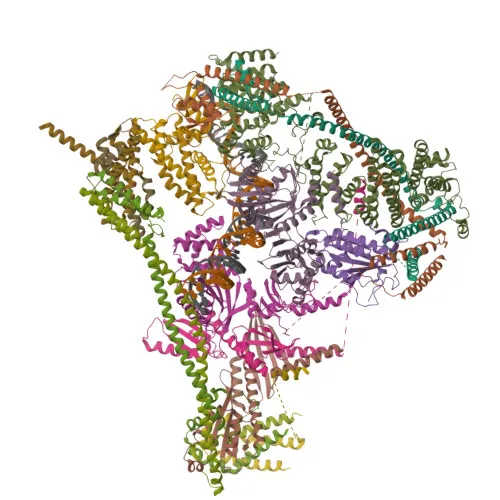
- CENPS (APITD1), also known as MHF1, CENP-S, or FAAP16, is a histone-fold protein that forms heterodimers with CENPX to create the MHF complex, which binds and remodels DNA into nucleosome-like structures. Related references: PMID:20347428, PMID:20347429, PMID:22304917
- As a DNA-binding component of the Fanconi anemia (FA) core complex, CENPS is essential for activation of the FA pathway, promoting monoubiquitination of FANCI-FANCD2 in response to DNA damage and contributing to cellular resistance to cross-linking agents and prevention of chromosomal breakage. Related references: PMID:20347428, PMID:20347429
- In partnership with CENPX and FANCM, CENPS is rapidly recruited to stalled replication forks, where it facilitates gene conversion and replication fork remodeling. Related references: PMID:20347428
- CENPS is a component of the CENP-T-W-S-X heterotetramer, which assembles at centromeres and kinetochores, playing a critical role in kinetochore outer plate formation, microtubule attachment, and faithful chromosome segregation during mitosis. Related references: PMID:19620631
- This protein is ubiquitously expressed in human tissues and localizes to the nucleus, centromere, and kinetochore regions.
- Alternative splicing of CENPS yields multiple isoforms, and the protein is subject to acetylation.
- CENPS does not bind DNA alone; its DNA-binding ability requires heterodimerization with CENPX, with a substrate preference for Holliday junctions, double-stranded DNA, splay arms, and single-stranded DNA in decreasing affinity. Related references: PMID:20347428, PMID:20347429
Experimental Guidance and Technical Tips
- This polyclonal antibody, raised against the full-length N-terminal region (aa 1–138) of human CENPS, may detect endogenous protein by WB. Consider using a whole-cell lysate from a human cell line (e.g., HeLa, HEK293) to validate the expected 16 kDa band.
- For ELISA, this antibody can be used as either capture or detection reagent, though specific pairings should be optimized experimentally.
- When probing for CENPS in samples treated with DNA-damaging agents (e.g., mitomycin C), consider including appropriate controls to observe potential changes in expression or localization.
- Always include a loading control and pre-stained molecular weight markers to confirm band size and electrophoretic transfer.
CamelBio: Your One-Stop Sourcing Bridge
CamelBio is a dedicated IVD raw-material supply partner, supporting diagnostic manufacturers and research laboratories with validated antibodies, antigen reagents, and ancillary materials for DNA repair, cell cycle, and kinetochore biology studies. Whether you need this CENPS polyclonal antibody for assay development or require custom monoclonal antibody generation, bulk reagent production, or rare target sourcing, CamelBio streamlines your supply chain from concept to clinic. Contact us to discuss your specific project requirements and take advantage of our integrated CRO and sourcing solutions.
REQUEST A QUOTE
Our professional team will reply to you within one business day. Please feel free to contact us!
Related Articles
Why Direct Hapten Coupling Changes the Economics of Small-Molecule Biosensors
Compare direct hapten coupling with protein conjugates to improve ligand density, signal quality, antibody efficiency, and chip reusability.
qPCR Primer Design: The Small Decisions That Determine Assay Reliability
A practical guide to qPCR primer design, from amplicon length and 3' stability to validation for efficient, reproducible diagnostics.
When a Surface Becomes a Sensor: Choosing Between QCM, SAW, and Six Classes of Quality Detection
Explore six sensor families, how QCM and SAW convert molecular binding into frequency shifts, and why surface chemistry determines diagnostic reliability.
When the Surface Becomes the Assay: Direct Hapten Coating for More Efficient IVD Biosensors
Compare direct hapten derivative coating with protein conjugates to improve SPR assay sensitivity, reduce antibody use, and extend chip life.
The Silent Well: How No Template Controls Protect Molecular Diagnostic Integrity
A practical guide to No Template Controls: how unexpected qPCR signals reveal contamination, reagent impurities, artifacts, and broken workflow controls.
Engineering the Weakest Link: Recombinant Antibodies for Reliable Multi-Analyte Biosensors
Learn how engineered recombinant antibodies improve multi-analyte biosensors through uniform recognition, oriented surfaces, avidity, and wider dynamic range.
Designing Generic Antibodies: How Hapten Engineering Enables Broad-Spectrum Pesticide Detection
Learn how strategic hapten design exposes conserved pesticide structures, improves antibody cross-reactivity, and guides reliable multi-residue assays.
Why Open Chemistry and Flexible Reaction Volumes Define Better Diagnostic PCR Systems
Learn how open chemistry compatibility and flexible reaction volumes improve PCR assay control, sensitivity, cost, scalability, and supply independence.
qPCR Efficiency: The Mathematical Foundation of Reliable Molecular Diagnostics
Learn how qPCR efficiency is calculated, why the 90–100% range matters, and how it protects diagnostic accuracy, sensitivity, and compliance.
From a 36-Hour Wait to a 30-Minute Decision: The Workflow Advantage of Rapid Antibody-Based Immunosensors
Rapid antibody-based immunosensors compress analyte detection from 24–36 hours to about 30 minutes, changing workflows, decisions, and assay design.
From Hapten to Reliable Result: Engineering Small-Molecule Immunoassays for Diagnostic Use
Discover how hapten chemistry, antibody selection, competitive formats, and validation determine small-molecule immunoassay performance.
What Your qPCR Signal Really Means: Choosing Between SYBR Green I and TaqMan Chemistry
Compare SYBR Green I and TaqMan qPCR detection chemistry, from false-positive risk and multiplexing to workflow design for reliable IVD assays.