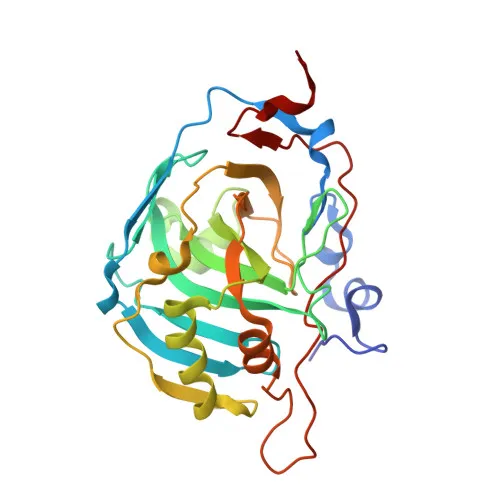
Polyclonal Antibodies
Anti-CA3 Polyclonal Antibody for WB, IF/ICC, ELISA - P07451
Item Number : CM0015027
Price varies based on specs and customizations
- Application
- WB, IF/ICC, ELISA
- Cross Reactivity
- Human, Mouse, Rat
- Protein Weight
- 30kDa

Shipping:
Contact us to get shipping details Enjoy On-time Dispatch Guarantee.
Why Choose Us
Easy ordering process, quality products, and dedicated support for your business success.
Core Product Specifications and Parameters
| Parameter | Value |
|---|---|
| Product Name | CA3 Rabbit pAb |
| Remarks/Alias | Car3, CAIII, CA3 |
| Species | Human |
| GeneID (Human) | 761 |
| GeneID | 761 |
| Immunogen | Recombinant fusion protein containing a sequence corresponding to amino acids 1-260 of human CA3 (NP_005172.1) |
| Source | Rabbit |
| Category | Polyclonal Antibodies |
| Application | WB, IF/ICC, ELISA |
| Cross Reactivity | Human, Mouse, Rat |
| SWISS | P07451 |
| Protein Weight | 30kDa |
| Shipping | Ice bag |
Biological Background: CA3 Function and Localization
- Encodes human carbonic anhydrase 3 (CA3/CAIII), also known as carbonate dehydratase III, a zinc metalloenzyme catalyzing the reversible hydration of carbon dioxide (CO₂ + H₂O ⇌ HCO₃⁻ + H⁺).
- CA3 is a muscle-specific cytoplasmic protein, predominantly expressed in skeletal muscle, consistent with its role in buffering pH changes during contraction.
- Belongs to the alpha-carbonic anhydrase family, a group of enzymes that maintain acid-base balance and facilitate CO₂ transport; unlike CA1 and CA2, CA3 exhibits lower catalytic activity and possible dual functions.
- Subcellular localization is primarily cytoplasmic, as indicated by UniProt annotation and lack of transmembrane domains.
- Post-translational modifications include acetylation, glutathionylation, and phosphorylation, potentially regulating enzyme activity or stability.
- Molecular weight of the unmodified monomer is ~29.6 kDa; the observed ~30 kDa band in SDS-PAGE likely reflects the mature protein.
Experimental Guidance and Technical Tips
- The immunogen used is a full-length recombinant human CA3 protein (amino acids 1-260), which may yield a polyclonal antibody recognizing multiple epitopes; consider this when analyzing band patterns in western blot.
- This antibody is suitable for Western blot (WB), immunofluorescence/immunocytochemistry (IF/ICC), and ELISA applications as reported; validate cross-reactivity in human, mouse, and rat tissue samples relevant to your experimental system.
- For optimal results, titrate the antibody using a serial dilution (e.g., 1:500–1:2000 for WB) and include appropriate positive and negative controls, especially when working with muscle-specific samples.
CamelBio: Your One-Stop Sourcing Bridge
CamelBio is your one-stop sourcing partner for IVD raw materials, offering seamless access to anti-CA3 antibodies for research in muscle physiology and metabolic pH regulation. Our supply capabilities span validated antibody pairs, bulk ancillary reagents, and rare target raw materials, empowering diagnostic manufacturers from concept to clinic. Whether you require routine carbonic anhydrase reagents or specialized sourcing, CamelBio bridges the gap with reliable procurement solutions.
REQUEST A QUOTE
Our professional team will reply to you within one business day. Please feel free to contact us!
Related Articles
Matrix Interference in ELISA Development: Designing Accuracy Into Complex-Sample Assays
Learn how to diagnose and control ELISA matrix interference through sample cleanup, buffer design, calibration, and smarter reagent selection.
From Matrix Noise to Measurable Signal: A Practical Extraction Strategy for ELISA Testing
Learn how pentane extraction, alkaline back-extraction, and neutral buffering remove matrix effects before sensitive ELISA analysis.
From Molecular Recognition to Reliable Results: Engineering Biosensors for Rapid Safety Testing
How antibodies and enzymes turn invisible molecular events into reliable biosensor signals, and how material quality determines test performance.
When a Surface Becomes a Sensor: Choosing Between QCM, SAW, and Six Classes of Quality Detection
Explore six sensor families, how QCM and SAW convert molecular binding into frequency shifts, and why surface chemistry determines diagnostic reliability.
The Silent Well: How No Template Controls Protect Molecular Diagnostic Integrity
A practical guide to No Template Controls: how unexpected qPCR signals reveal contamination, reagent impurities, artifacts, and broken workflow controls.
Engineering Trace-Level Sensitivity in Indirect Competitive ELISA for Small-Molecule Contaminants
How heterologous haptens, indirect signal amplification, and raw-material control push competitive ELISA sensitivity into the low-ng/mL range.
Competitive ELISA vs. GC/MS: Building a Faster, Defensible Strategy for Trace Detection
Learn how competitive ELISA compares with GC/MS for trace detection and how to validate immunoassay kits for reliable laboratory screening.
Building Accessible SPR Ligands: Reaction Chemistry and Spacer Design for Carboxylated Small Molecules
Learn how EDC/NHS chemistry and diamine spacers covalently immobilize carboxylated small molecules while balancing signal, access, and background.
The Annealing Temperature Decision: Building Real-Time PCR Assays That Can Carry Clinical Responsibility
Annealing temperature controls the balance between PCR specificity and sensitivity. Learn how to optimize it for robust, clinically reliable diagnostics.