Polyclonal Antibodies
Anti-Catalase Polyclonal Antibody for WB, IHC-P, IF/ICC, ELISA - P04040
Item Number : CM0017375
Price varies based on specs and customizations
- Application
- WB, IHC-P, IF/ICC, ELISA
- Cross Reactivity
- Human, Mouse, Rat
- Protein Weight
- 60kDa

Shipping:
Contact us to get shipping details Enjoy On-time Dispatch Guarantee.
Why Choose Us
Easy ordering process, quality products, and dedicated support for your business success.
Core Product Specifications and Parameters
| Parameter | Value |
|---|---|
| Product Name | Catalase Rabbit pAb |
| Remarks/Alias | CAT; catalase; MGC138422; MGC138424; Catalase |
| Species | Human |
| GeneID (human) | 847 |
| GeneID | 847 |
| Immunogen | Recombinant fusion protein containing a sequence corresponding to amino acids 1-225 of human Catalase (NP_001743.1). |
| Source | Rabbit |
| Category | Polyclonal Antibodies |
| Application | WB, IHC-P, IF/ICC, ELISA |
| Cross Reactivity | Human, Mouse, Rat |
| SWISS | P04040 |
| Protein Weight | 60kDa |
| Shipping | Ice bag |
Biological Background: Catalase Function and Localization
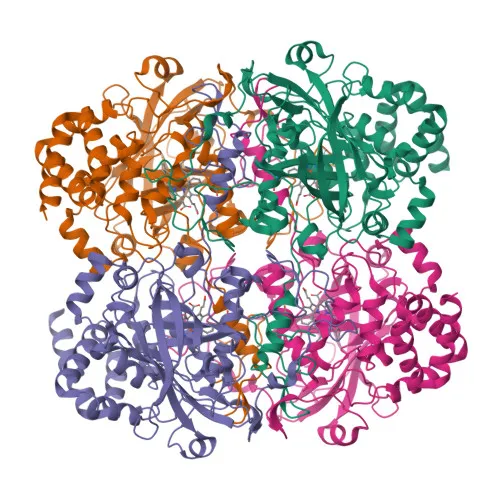
- Catalase (CAT) is a ubiquitous heme-containing antioxidant enzyme that catalyzes the decomposition of hydrogen peroxide (H₂O₂) into water and oxygen, protecting cells from oxidative damage. Related references: PMID:7882369
- It also functions as a mitogen, promoting the growth of various cell types including T-cells, B-cells, myeloid leukemia cells, melanoma cells, and fibroblasts. Related references: PMID:7882369
- Catalase is primarily localized to the peroxisome matrix, where it neutralizes H₂O₂ generated by peroxisomal oxidases.
- The enzyme contains a heme prosthetic group and binds iron and NADP, classifying it as an oxidoreductase with peroxidase activity.
- Post-translational modifications include acetylation and phosphorylation, which may regulate its activity and stability.
- The predicted molecular weight of human catalase is approximately 60 kDa (59756 Da per UniProt), consistent with the detection of a 60 kDa band in western blotting.
Experimental Guidance and Technical Tips
- The immunogen is a recombinant fragment spanning the N-terminal region (amino acids 1-225) of human catalase. This region is likely surface-exposed and conserved, making it a suitable target for generating antibodies that detect both endogenous and recombinant protein.
- For western blotting (WB), a band at approximately 60 kDa is expected; validate the antibody using appropriate positive control lysates (e.g., human, mouse, or rat tissue/cell lines known to express catalase).
- In immunohistochemistry (IHC-P) and immunofluorescence (IF/ICC), optimize antigen retrieval and permeabilization conditions, as catalase is localized in peroxisomes. Use tissue sections or cells with high peroxisomal content, such as liver or kidney.
- For ELISA, consider using the antibody as either capture or detection antibody in a sandwich format; pairing with another anti-catalase antibody may improve sensitivity. Always verify performance under your specific assay conditions.
CamelBio: Your One-Stop Sourcing Bridge
CamelBio serves as a comprehensive sourcing partner for IVD manufacturers and research laboratories, providing high-quality antibodies like this anti-Catalase rabbit polyclonal antibody. We offer validated antibody pairs, optimized monoclonal and polyclonal antibodies, bulk ancillary reagents, and specialized raw-material sourcing for oxidative stress and peroxisomal research. Whether you need routine supply or custom solutions, CamelBio streamlines your procurement from concept to clinic.
REQUEST A QUOTE
Our professional team will reply to you within one business day. Please feel free to contact us!
Related Articles
From Molecular Recognition to Reliable Results: Engineering Biosensors for Rapid Safety Testing
How antibodies and enzymes turn invisible molecular events into reliable biosensor signals, and how material quality determines test performance.
When a Surface Becomes a Sensor: Choosing Between QCM, SAW, and Six Classes of Quality Detection
Explore six sensor families, how QCM and SAW convert molecular binding into frequency shifts, and why surface chemistry determines diagnostic reliability.
From Molecular Binding to Manufacturing Discipline: How Reliable ELISA Kits Are Engineered
Explore the four operational mechanisms that govern ELISA kit performance, from passive coating and washing to signal generation and scalable IVD manufacturing.
Designing Generic Antibodies: How Hapten Engineering Enables Broad-Spectrum Pesticide Detection
Learn how strategic hapten design exposes conserved pesticide structures, improves antibody cross-reactivity, and guides reliable multi-residue assays.
Competitive ELISA vs. GC/MS: Building a Faster, Defensible Strategy for Trace Detection
Learn how competitive ELISA compares with GC/MS for trace detection and how to validate immunoassay kits for reliable laboratory screening.
pH Is a Hidden Variable: Engineering More Reliable Competitive ELISA Kits for Small-Molecule Contaminants
Learn how precise pH control protects antibody binding, HRP activity, sensitivity, and reproducibility during competitive ELISA development.
When Fluorescence Becomes Evidence: Engineering a Competitive ELISA for Trace Molecule Detection
Learn how procedural discipline, blank correction, substrate selection, and reader configuration turn fluorometric ELISA sensitivity into reliable trace detection.

Engineering High-Sensitivity Electrochemical Immunosensors for Small-Molecule Detection
How competitive assay design, high-affinity antibodies, HRP labels, and interface control enable reliable trace small-molecule detection.
What Your qPCR Signal Really Means: Choosing Between SYBR Green I and TaqMan Chemistry
Compare SYBR Green I and TaqMan qPCR detection chemistry, from false-positive risk and multiplexing to workflow design for reliable IVD assays.
Choosing the Right High-Throughput Toxicology Platform: Cell-Based Bioassays Versus ELISA
Compare cell-based bioassays and ELISA for toxicology screening, from biological relevance and throughput to validation and technical support.