Polyclonal Antibodies
Anti-DNA Polymerase Kappa (POLK) Polyclonal Antibody for WB and ELISA - Q9UBT6
Item Number : CM0018713
Price varies based on specs and customizations
- Application
- WB, ELISA
- Cross Reactivity
- Human, Mouse, Rat
- Protein Weight
- 99kDa

Shipping:
Contact us to get shipping details Enjoy On-time Dispatch Guarantee.
Why Choose Us
Easy ordering process, quality products, and dedicated support for your business success.
Core Product Specifications and Parameters
| Parameter | Value |
|---|---|
| Product Name | POLK Rabbit pAb |
| Remarks/Alias | DINP; POLQ; DINB1; POLK |
| Species | Human |
| GeneID (Human) | 51426 |
| GeneID | 51426 |
| Immunogen | Synthetic peptide corresponding to a sequence within amino acids 1-100 of human POLK (NP_057302.1) |
| Source | Rabbit |
| Category | Polyclonal Antibodies |
| Application | WB, ELISA |
| Cross Reactivity | Human, Mouse, Rat |
| SWISS | Q9UBT6 |
| Protein Weight | 99kDa |
| Shipping | Ice bag |
Biological Background: DNA Polymerase Kappa Function and Localization
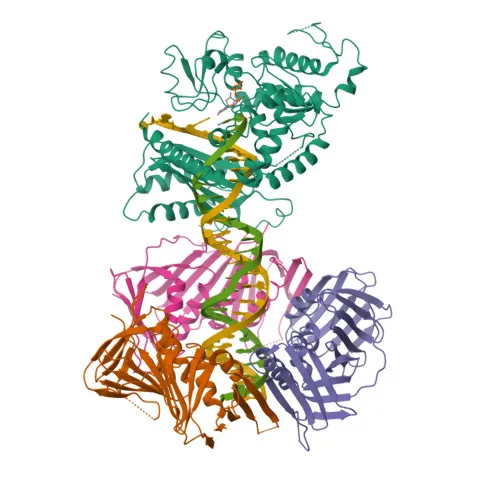
- DNA polymerase kappa (POLK), also designated DINB1 or DINP, is a specialized Y-family DNA polymerase that participates in translesion DNA synthesis.
- It facilitates DNA replication past lesions that stall high-fidelity polymerases, but its error-prone nature frequently introduces base transitions, transversions, and frameshifts.
- POLK lacks 3'-5' proofreading exonuclease activity, which contributes to its lower fidelity during DNA synthesis.
- The enzyme can form a Schiff base with 5'-deoxyribose phosphate at abasic sites, although it does not possess lyase activity.
- POLK is predominantly localized to the nucleus, consistent with its role in DNA repair and genome maintenance.
- Tissue expression is detected at low levels in testis, spleen, prostate, and ovary, and at very low levels in kidney, colon, brain, heart, liver, lung, placenta, pancreas, and peripheral blood leukocytes.
- Structural features include zinc-finger domains and metal-binding sites, requiring divalent cations such as magnesium for catalytic activity.
Experimental Guidance and Technical Tips
- The immunogen corresponds to the N-terminal region (aa 1–100) of human POLK; this region is expected to recognize the full-length protein and may exhibit cross-reactivity with mouse and rat orthologs due to sequence conservation.
- For Western blot analysis, a predominant band at approximately 99 kDa is anticipated; consider using testis or spleen lysates as positive controls, where POLK expression is relatively higher.
- When performing ELISA, the immunizing peptide can serve as a coating antigen for titer determination or competition studies.
- Although cross-reactivity with mouse and rat has been reported, validate specificity in your specific sample system and experimental conditions.
CamelBio: Your One-Stop Sourcing Bridge
CamelBio supports diagnostic manufacturers, laboratories, and research institutes with one-stop access to IVD raw materials and technical support, covering every stage from concept to clinic. For DNA repair and translesion synthesis research, we can supply validated antibody pairs, optimized monoclonal/polyclonal antibodies such as this POLK antibody, bulk ancillary reagents, and assist with rare target raw-material sourcing. Reach out to discuss your procurement needs.
REQUEST A QUOTE
Our professional team will reply to you within one business day. Please feel free to contact us!