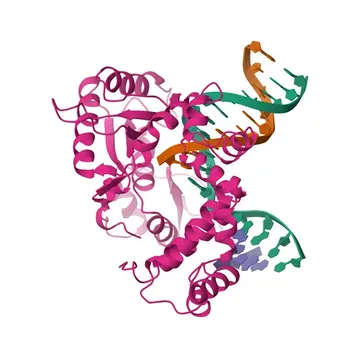
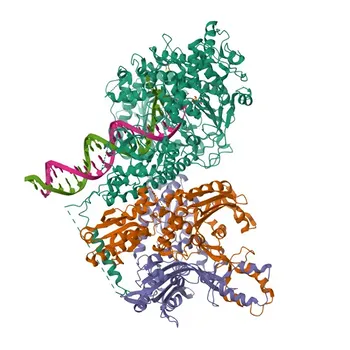
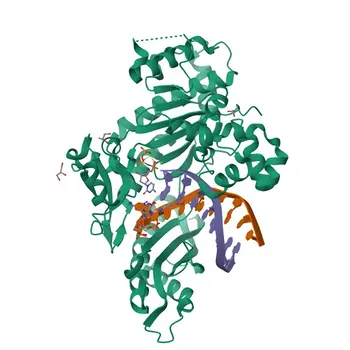
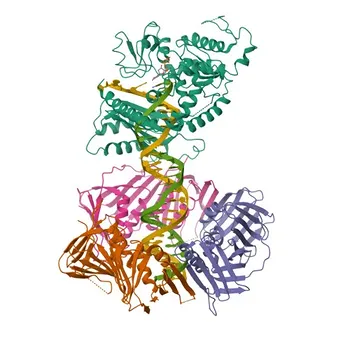
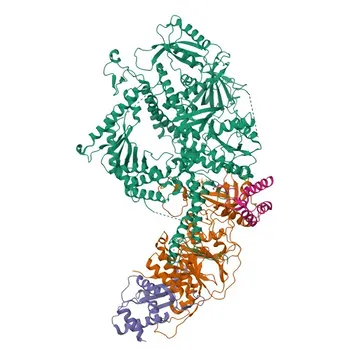
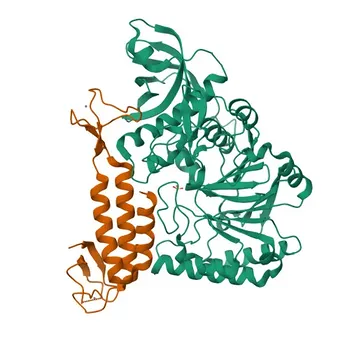
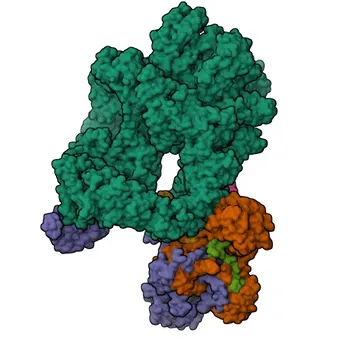
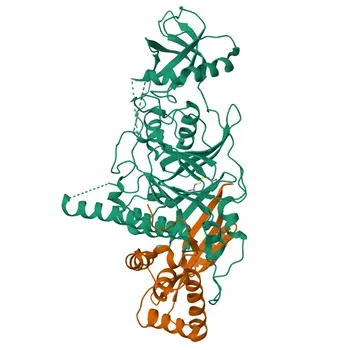
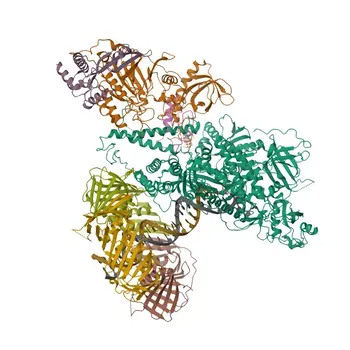
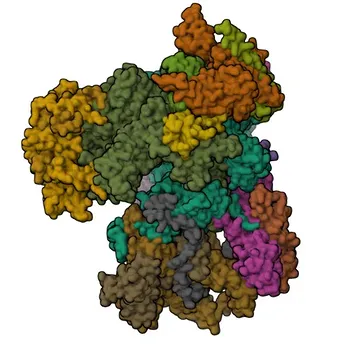
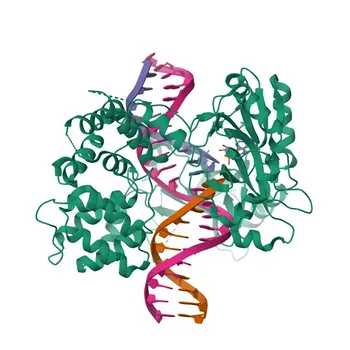
DNA polymerases are the engines of every PCR assay, but their inherent limitations can directly undermine diagnostic accuracy. Standard enzymes like wild-type Taq are prone to nucleotide misincorporation, non-specific amplification, and unselective detection of DNA from both live and dead cells. IVD developers evaluating raw materials must scrutinize these constraints—fidelity, terminal transferase activity, buffer dependence, and amplicon-length ceiling—to ensure their assay’s sensitivity, specificity, and clinical relevance are not compromised by the choice of the polymerase itself.
The critical performance flaws of standard DNA polymerases can be systematically mitigated by aligning enzyme fidelity grade, reaction chemistry, and internal controls with the clinical endpoint. Developers must balance speed, yield, and accuracy, while recognizing that no single enzyme fits every diagnostic scenario. The art is in matching the polymerase profile to the assay’s deepest functional need.
The Core Performance Limitations of Standard DNA Polymerases
A standard Taq DNA polymerase has been a workhorse for routine detection, but its functional limitations become liabilities in a regulated IVD environment. Developers must evaluate these three interdependent risks before locking in a raw material supplier.
The Fidelity Gap: When a Single Misincorporation Matters
Every polymerase makes mistakes, but the rate varies dramatically. Standard Taq lacks 3'→5' exonuclease proofreading activity, meaning it cannot excise a mispaired nucleotide once it is inserted.
For a qualitative pathogen-detection test targeting a conserved region, a random point mutation may be harmless. However, for applications requiring absolute sequence fidelity—SNP genotyping, oncogene mutation detection, or viral drug-resistance screening—even a single misincorporation can produce a false-negative or clinically misleading result. Proofreading polymerases (e.g., from Pyrococcus furiosus) reduce error rates by up to 100-fold, making them the only acceptable raw material for high-stakes diagnostic endpoints.
Non-Specific Amplification: The Silent Destroyer of Specificity
A polymerase does not work alone—it relies on primers binding to the correct template. Off-target binding is a constant risk, exacerbated by polymerases that extend from mismatched 3' termini or from primer-dimers.
Standard Taq’s robust activity can amplify a tiny amount of non-specific product, generating background that masks the true signal or triggers a false-positive. This is particularly dangerous in multiplex PCRs, where many primer pairs coexist. Developers must assess whether a candidate polymerase exhibits hot-start properties, buffer systems that suppress activity at low temperatures, or engineered mutants with reduced affinity for misprimed substrates.
The Viability Blind Spot: Dead Cells, Live Signal
PCR reagents amplify any DNA present, regardless of cellular viability. A patient cured of a bacterial infection may still carry circulating cell-free DNA for days or weeks. A standard polymerase will amplify that non-viable remnant exactly as it would a live pathogen.
For many molecular diagnostic questions—especially those guiding antibiotic therapy or infection control—this leads to overtreatment or delayed discontinuation. This is not a failure of the polymerase itself, but rather a critical limitation of the PCR reagent system. Developers must therefore complement their polymerase choice with strategies that exclude non-viable target signals, such as pre-treatment with membrane-impermeable DNA intercalating dyes (viability PCR) or by shifting to RNA-based detection where short transcript half-life better reflects active metabolism.
Hidden Technical Hurdles That Shape Assay Performance
Beyond the headline issues of fidelity and specificity, several lesser-known properties of standard polymerases can derail an IVD assay unless they are explicitly addressed in raw material specifications.
Terminal Transferase Activity: The Unwanted ‘A’ Tail
Wild-type Taq adds a single, non-templated adenine to the 3' end of most amplicons. For many routine gel-based or probe-based detection chemistries, this is irrelevant. But if your downstream analysis requires precise fragment length determination—such as capillary electrophoresis or high-resolution melting analysis—this extra nucleotide creates split peaks and ambiguous sizing.
Moreover, if your diagnostic workflow involves seamless cloning or T-vector ligation, the A-overhang is an asset; if it demands blunt-end cloning, it’s a problem that requires either a proofreading enzyme or a post-amplification blunting step. The message: you are choosing not just a speed and a fidelity, but an amplicon-end chemistry that either aligns with or disrupts your entire detection pipeline.
Buffer Dependency and Amplicon Length Ceiling
Standard full-length Taq requires ~50 mM KCl for optimal performance, whereas engineered deletion mutants function better without it. This buffer rigidity can clash with the stabilization needs of other raw materials in a multiplex master mix (e.g., reverse transcriptase, aptamer-based hot-start antibodies).
Equally important, routine Taq is effective for short amplicons (70–200 bp), such as those extracted from formalin-fixed paraffin-embedded (FFPE) tissue. For targets longer than 2 kb or GC-rich regions, Taq’s processivity and fidelity decline sharply. Enzyme blends that combine a proofreading polymerase with Taq are the standard solution, but they add cost and complexity to a kit that is supposed to deliver simplicity to the clinical lab.
The Contamination Threat Lurking in Raw Materials
Even the purest recombinant polymerase or master mix can carry trace environmental DNA. For broad-range PCR assays—panfungal, panbacterial 16S rRNA—commercial enzyme preparations occasionally contain DNA from the very organisms being targeted. This is not a theoretical risk; it has been documented that up to 14–20% of sequences in public databases may be erroneous due to contamination or misidentification.
For IVD developers, this means that raw material acceptance criteria must go beyond specific activity and purity certificates. Ultra-low DNA background certification and stringent in-process controls must be demanded from suppliers, and every new lot of polymerase should be functionally qualified with no-template controls that mimic the final clinical matrix.
Understanding the Trade-offs
No single DNA polymerase can deliver the holy grail of speed, length, fidelity, and tolerance to inhibitors simultaneously. A clear-eyed evaluation of trade-offs prevents late-stage kit failure.
- Fidelity vs. Speed: Proofreading enzymes are more accurate but polymerize at a slower rate. In a high-throughput central lab, the throughput penalty can be unacceptable if a 98% accurate answer is sufficient.
- Yield vs. Specificity: Non-proofreading enzymes often produce higher yield due to faster extension, but that yield may include non-specific products. For resource-limited settings where a simple end-point lateral flow readout is used, high yield might be prioritized; for liquid biopsy, a single false-positive is catastrophic.
- Stability vs. Convenience: Lyophilized, hot-start antibody-masked Taq improves specificity but can be more sensitive to rehydration conditions. Developers must balance room-temperature stability with the need for a simple reconstitution protocol.
- Cost vs. Clinical Outcome: High-fidelity polymerases or multi-enzyme blends are more expensive. The decision should not be based on a bill-of-materials spreadsheet alone, but on a risk analysis of what a false-negative or false-positive costs the patient and the healthcare system.
Making the Right Choice for Your Diagnostic Goal
Every enzyme’s limitation is another enzyme’s opportunity. The key is to define what your assay cannot tolerate, then let that rejection criteria guide raw material selection.
- If your primary focus is high-throughput infectious disease screening: Select a hot-start, non-proofreading Taq with a rigorously optimized buffer that suppresses primer-dimers. The goal is fast and sensitive yes/no answers with a reagent cost that supports large volume testing.
- If your primary focus is detecting drug-resistance mutations or hereditary SNPs: Invest in a high-fidelity proofreading polymerase (or a balanced blend). Accept the slower speed and higher cost, because sequence accuracy is non-negotiable for clinical decision-making.
- If your primary focus is viability-based diagnosis or pathogen clearance monitoring: Do not rely on polymerase properties alone. Integrate a membrane-impermeable dye treatment step to exclude DNA from dead cells, and pair it with a polymerase that retains full activity in the modified buffer.
- If your primary focus is a broad-range or pan-species detection kit: Define your supplier’s maximum allowable DNA background level in writing, use an ultra-pure enzyme preparation, and validate every lot with a highly sensitive broad-range primer set run against no-template controls and a curated, well-characterized target sequence database.
- If your primary focus is point-of-care or field-deployable assays: Look beyond traditional PCR polymerases entirely. Isothermal amplification enzymes (LAMP, RPA, RAA) eliminate thermal cycling, tolerate unpurified samples better, and can be lyophilized with high stability, though they may introduce their own specificity challenges.
The polymerase you choose becomes the biochemical foundation of your diagnostic claim—there is no compensatory downstream step that can fully correct a fundamental mismatch between the enzyme’s limitations and your assay’s clinical purpose.
Summary Table:
| Performance Limitation | Impact on Diagnostic Assays | Recommended Mitigation Strategy |
|---|---|---|
| Fidelity Gap (No Proofreading) | Misincorporation causes false results in SNP & mutation assays | Switch to high-fidelity proofreading polymerases |
| Non-Specific Amplification | Primer-dimers & off-target noise in multiplex PCR | Utilize hot-start polymerases and optimized buffers |
| Viability Blind Spot | Amplifies DNA from dead cells, leading to overtreatment | Implement viability PCR (intercalating dyes) or RNA targets |
| Terminal Transferase ('A' Tail) | Split peaks & sizing errors in fragment analysis | Select blunt-end proofreading enzymes or blunting steps |
| Background Contamination | Trace environmental DNA triggers false-positive results | Require ultra-low DNA background certified raw materials |
Accelerate Your IVD Development with CamelBio
Selecting the ideal DNA polymerase is crucial for achieving high sensitivity, specificity, and batch-to-batch reliability in clinical diagnostics. CamelBio provides diagnostic manufacturers, labs, and research institutes with one-stop access to high-grade IVD raw materials, technical services, and expert consulting—covering every stage from concept to clinic.
Whether you need optimized hot-start enzymes, ultra-low background formulations, or custom master mix development, our team is ready to empower your assay performance.
👉 Contact CamelBio Today to discuss your raw material specifications with our molecular diagnostic experts!
Related Products
- Anti-DNA Polymerase gamma Monoclonal Antibody for WB, ELISA - P54098
- Anti-DNA Polymerase beta Rabbit Monoclonal Antibody for WB, IHC-P, ELISA - P06746
- Anti-DNA Polymerase gamma Rabbit Polyclonal Antibody for WB, ELISA - P54098
- Anti-DNA Polymerase beta Rabbit Polyclonal Antibody for WB, IHC-P, IF/ICC, ELISA - P06746
- Anti-DNA polymerase eta Polyclonal Antibody for WB - Q9Y253