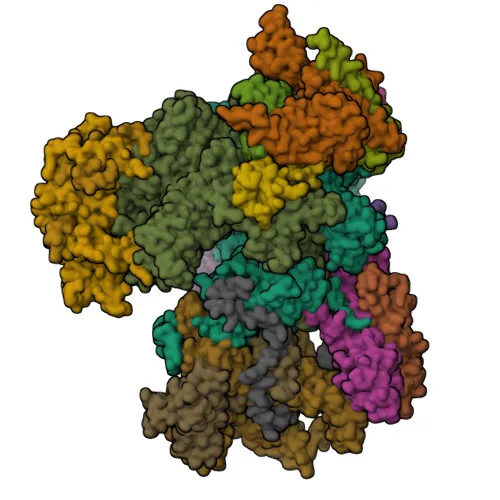
Polyclonal Antibodies
Anti-POLR1C Rabbit Polyclonal Antibody for WB and ELISA - O15160
Item Number : CM0014088
Price varies based on specs and customizations
- Application
- WB, ELISA
- Cross Reactivity
- Human
- Protein Weight
- 39kDa

Shipping:
Contact us to get shipping details Enjoy On-time Dispatch Guarantee.
Why Choose Us
Easy ordering process, quality products, and dedicated support for your business success.
Core Product Specifications and Parameters
| Parameter | Value |
|---|---|
| Product Name | POLR1C Rabbit pAb |
| Remarks/Alias | AC40; RPA5; TCS3; HLD11; RPA39; RPA40; RPAC1; RPC40; POLR1C |
| Species | Human |
| GeneID (Human) | 9533 |
| GeneID | 9533 |
| Immunogen | Recombinant protein; Recombinant fusion protein containing a sequence corresponding to amino acids 1-200 of human POLR1C (NP_976035.1). |
| Source | Rabbit |
| Category | Polyclonal Antibodies |
| Application | WB, ELISA |
| Cross Reactivity | Human |
| SWISS | O15160 |
| Protein Weight | 39kDa |
| Shipping | Ice bag |
Biological Background: POLR1C (RPAC1) Function and Localization
- POLR1C, also known as RPAC1, RPA40, or RPC40, is a shared subunit of RNA polymerases I and III.
- It forms part of the polymerase core and is thought to act as a clamp element that moves to open and close the cleft, facilitating processive transcription.
- RNA polymerase I synthesizes ribosomal RNA precursors in the nucleolus, while RNA polymerase III produces short non-coding RNAs including 5S rRNA, tRNAs, and miRNAs.
- Subcellular localization is primarily nuclear, with enrichment in the nucleolus, but POLR1C can also be detected in the cytoplasm and cytosol.
- Post-translational modifications include acetylation and phosphorylation; alternative splicing produces multiple isoforms.
- Mutations in POLR1C are associated with leukodystrophy, highlighting its critical role in neural development and myelin maintenance.
Experimental Guidance and Technical Tips
- The immunogen (recombinant protein spanning residues 1–200) targets the N-terminal region of POLR1C; therefore, the antibody is expected to recognize full-length POLR1C and potentially some isoforms.
- For Western blot, a band around 39 kDa is anticipated in human whole-cell lysates. Inclusion of a nuclear extract control and post-translational modification considerations may aid interpretation.
- As a polyclonal antibody, perform appropriate negative controls (e.g., knockout lysate or blocking peptide) to confirm specificity.
- ELISA applications require empirical optimization of coating antigen concentration and antibody dilution; the antibody is supplied in a format suitable for typical ELISA protocols.
- Although provided for WB and ELISA, this antibody may be effective in other applications such as immunoprecipitation or immunofluorescence; end-users should validate accordingly.
CamelBio: Your One-Stop Sourcing Bridge
CamelBio empowers diagnostic developers and research teams with a comprehensive suite of IVD raw materials. From this POLR1C polyclonal antibody to optimized antibody pairs and recombinant proteins, we streamline procurement for transcription and RNA polymerase studies. Leverage our sourcing expertise to secure high-quality reagents for every stage of your assay development, from early research to clinical validation.
REQUEST A QUOTE
Our professional team will reply to you within one business day. Please feel free to contact us!
Related Articles
Choosing the Thermal Architecture That Makes a Molecular Assay Transferable
Compare Peltier blocks and air-heated carousels across speed, uniformity, sample flexibility, optimization, and throughput for qPCR development.
Why Open Chemistry and Flexible Reaction Volumes Define Better Diagnostic PCR Systems
Learn how open chemistry compatibility and flexible reaction volumes improve PCR assay control, sensitivity, cost, scalability, and supply independence.