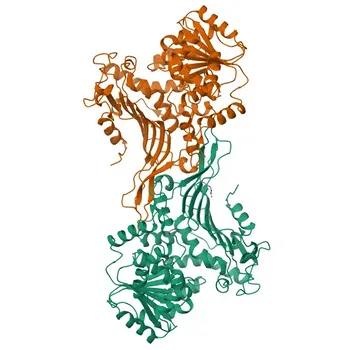
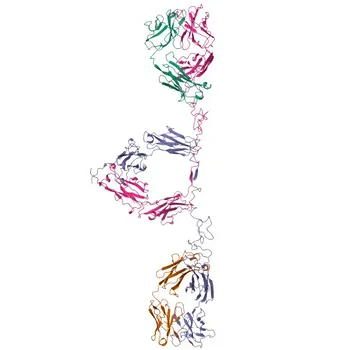
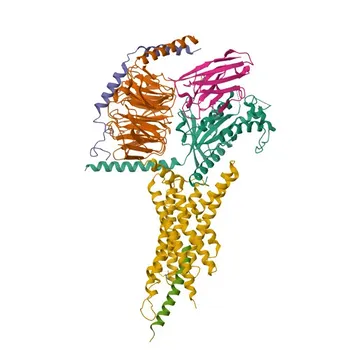
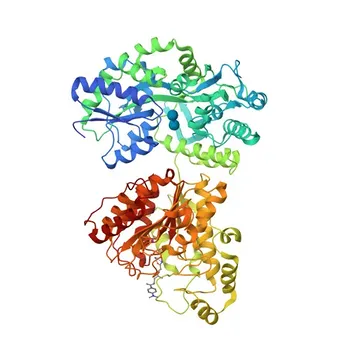
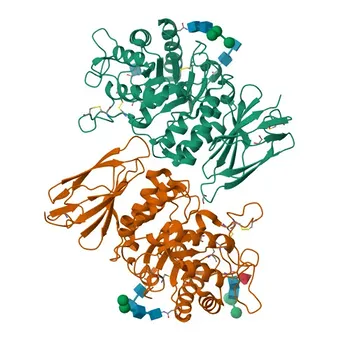
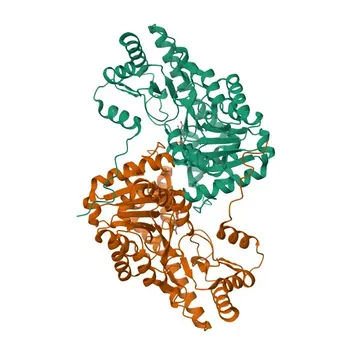
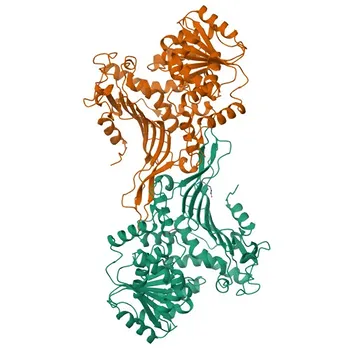
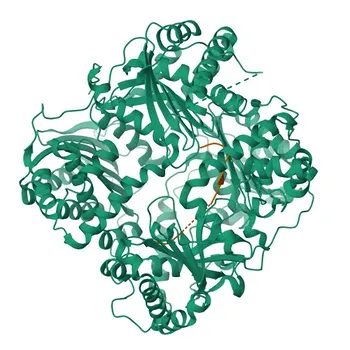
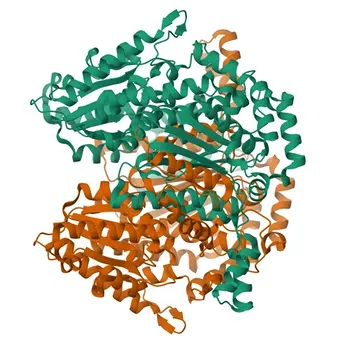
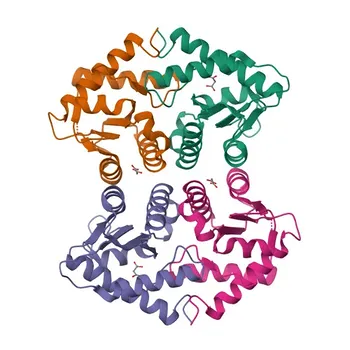
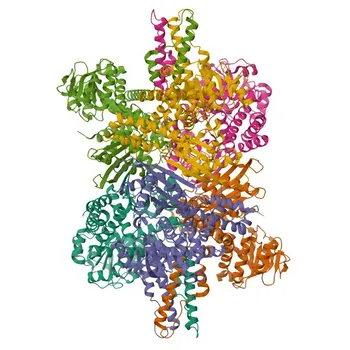
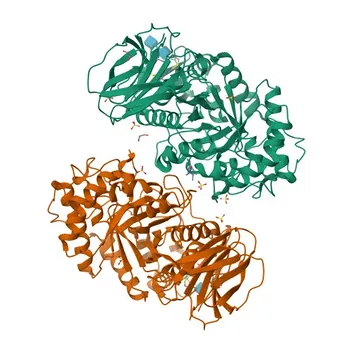
The modern diagnostic development path for Type 1 diabetes has definitively moved away from radioactive isotopes. For GAD65 and IA-2 autoantibodies, the critical assay formats are now non-isotopic enzyme immunoassays (ELISA) and automated chemiluminescent immunoassays (CLIA). The non-negotiable raw material requirement is sourcing high-purity recombinant antigens that faithfully preserve their native three-dimensional conformational structure, as this is the sole determinant of diagnostic specificity.
The entire analytical validity of a T1D autoantibody assay hinges on a single binary relationship: whether your recombinant antigen presents the exact conformational epitope the patient's antibody seeks. An assay built on a denatured, linearized, or incorrectly folded GAD65 or IA-2 protein, regardless of its genetic purity, will generate a false-negative result and a clinically invalid product.
The Performance Pivot: Liquid-Phase vs. Solid-Phase Chemistry
The primary reference correctly identifies a historical pivot from radioligand-binding assays (RBA) to ELISA and CLIA. This pivot is not just a safety upgrade; it represents a fundamental change in reaction kinetics that demands specific raw material validation.
Why Conformation Dictates Clinical Correlation
Autoantibodies in T1D, particularly those targeting GAD65 and IA-2, are overwhelmingly directed against discontinuous, conformational epitopes. These are structural folds created by the protein’s three-dimensional shape, not just a linear sequence of amino acids.
When a recombinant antigen is produced in a bacterial system without proper folding or is coated directly onto a polystyrene ELISA plate, it can partially denature. This process flattens the critical epitope. An antibody that would have recognized the native structure will simply pass by. This is the primary reason early ELISA attempts failed to match RBA sensitivity—the reference's mention of "native conformational epitopes" is the key to closing this performance gap.
Distinguishing Bridged ELISA from Liquid-Phase CLIA
There is a structural nuance to the recommended formats that directly impacts raw material sourcing.
A standard indirect ELISA, where the antigen is passively adsorbed to the plate, poses the highest risk of epitope disruption. To mitigate this, a bridged ELISA format is often employed. This uses a capture antibody anchored to the plate to hold the recombinant antigen in a more native orientation.
However, fully automated CLIA platforms offer a superior paradigm. These often mimic the original RBA by allowing the antibody-antigen binding event to occur in the liquid phase. The immune complex is then captured for detection. This liquid-phase kinetics environment is far gentler on conformational epitopes. Therefore, your choice of a liquid-phase CLIA platform directly influences your specification for an antigen that remains stable and correctly folded in solution.
Raw Material Specifications: Beyond Genetic Purity
Biosupplier documentation typically highlights purity by SDS-PAGE. For GAD65 and IA-2, this metric is necessary but insufficient. The deep need is for biologically active protein.
The Requirement of Epitope-Specific Validation
The core challenge in sourcing is that a recombinant protein can be 95% pure by HPLC but functionally 0% active if misfolded. IVD developers must move beyond molecular weight confirmation.
A raw material specification must include functional validation via a highly sensitive bridging ELISA or biosensor platform. This test should use a well-characterized panel of conformation-sensitive human monoclonal antibodies. Only a positive binding signal against a known conformational epitope standard validates the antigen lot. This is the only way to achieve the "equivalent sensitivity and specificity to radioligand techniques" that the primary reference mandates.
Managing Anti-Insulin Complexity
While GAD65 and IA-2 are the focus, the supplementary context clarifies the panel approach. Insulin autoantibodies (IAA) are a critical component, but they operate on a different immunological principle.
Insulin is a small, poorly immunogenic protein. IAA assays demand recombinant human insulin that demonstrates a lack of non-specific binding. The raw material sourcing strategy for insulin must focus on carriers and blockers that eliminate false positives, a challenge distinct from the conformational integrity needed for the larger GAD65 and IA-2 molecules.
Understanding the Trade-offs in Format Selection
Objective advisory requires addressing where these modern formats can still fail against legacy methods. The claim of "equivalent sensitivity" is only true under strict conditions.
The Risk of Negative Discrepancy in ELISA
The most common pitfall is a negative discrepancy in a solid-phase ELISA. A low-positive clinical sample that is correctly identified by an RBA can be missed by an ELISA.
This occurs because the RBA’s liquid-phase environment and the chaotropic wash steps traditionally used reduce low-affinity background while preserving high-affinity disease-specific signals. An ELISA that cannot discriminate these signal types due to a partially denatured antigen or inappropriate blocking will simply return a negative result. The failure is not in the clinical sensitivity of the method, but in the raw material’s inability to present the high-affinity binding target.
Standardization as a Technical Constraint
The Diabetes Autoantibody Standardization Programme (DASP) provides a framework, but it is also a design constraint. IVD developers are not free to define a "positive" result arbitrarily.
The unit of measure is linked to a reference reagent. Your raw material selection must ensure your dose-response curve can be calibrated to these international standards. A high-affinity antigen that deviates in its quantitative binding profile from the established consensus will create a harmonization problem, not a useful clinical tool. Your deep need is not just an assay, but a commutable result.
Making the Right Choice for Your Diagnostic Platform
Your final technical decision tree must align your platform choice with the molecular biology of the target autoantigen.
- If your primary focus is developing a high-throughput, fully automated screening panel: Prioritize sourcing recombinant GAD65 and IA-2 validated for liquid-phase stability and compatibility with a CLIA detection module. The raw material's solution behavior is your primary risk.
- If your primary focus is a plate-based bridged ELISA for decentralized labs: Your critical raw material is not just the recombinant antigen but the matched capture antibody pair. The capture antibody must bind to a non-immunodominant framework region to present the critical epitope without steric hindrance.
- If your primary focus is ensuring flawless lot-to-lot consistency: Lock your specification on epitope-specific biological activity, not just protein concentration. A simple amino acid analysis or A280 reading on a new antigen lot will miss a subtle folding failure that destroys clinical performance.
In immunoassay development for autoimmune disease, the protein is the assay. Every performance characteristic—sensitivity, specificity, and precision—is pre-determined by the conformational integrity of the raw material before you add the first patient sample.
Summary Table:
| Assay Format / Target | Essential Raw Material Requirement | Primary Technical Consideration |
|---|---|---|
| Liquid-Phase CLIA | Recombinant antigens with high solution stability | Preserves native 3D conformational epitopes; ideal for high-throughput automated platforms. |
| Bridged ELISA | Matched capture antibody & non-denatured antigen | Reduces passive adsorption denaturation; requires non-steric capture antibodies. |
| GAD65 & IA-2 Antigens | Functionally validated recombinant proteins | Requires monoclonal epitope-binding validation beyond standard SDS-PAGE purity. |
| Insulin (IAA) | Recombinant human insulin with optimized blockers | Demands carrier optimization to reduce non-specific binding on small, low-immunogenicity targets. |
Accelerate your Type 1 diabetes assay development with high-performance, structurally intact autoantigens. CamelBio provides diagnostic manufacturers, labs, and research institutes with one-stop access to premium IVD raw materials, technical services, and regulatory consulting—supporting every stage of your product lifecycle from concept to clinic.
Ready to optimize your assay sensitivity and specificity? Contact CamelBio today to request sample panels and expert support.
Related Products
- Anti-GAD65/GAD2 Monoclonal Antibody for WB, IP, ELISA - Q05329
- Anti-GAD65/GAD2 Rabbit Polyclonal Antibody for WB, IF-P, ELISA - Q05329
- Anti-GAD65/GAD2 Mouse Monoclonal Antibody for WB, IF-P, IHC-P, ELISA - Q05329
- Anti-GAD67/GAD1 Polyclonal Antibody for WB, IF-P, ELISA - Q99259
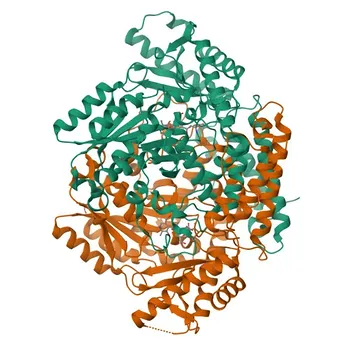
- Anti-IDE Rabbit Monoclonal Antibody [KD Validated] for WB, IHC-P, ELISA - P14735
![Anti-IDE Rabbit Monoclonal Antibody [KD Validated] for WB, IHC-P, ELISA - P14735](https://image.camelbiological.com/images/products/2462/main_image_6a6334713e5021.64342111-small.webp)