Polyclonal Antibodies
Anti-GLUD1 Polyclonal Antibody for WB, IHC-P, IF/ICC, IP, ELISA - P00367
Item Number : CM0028247
Price varies based on specs and customizations
- Application
- WB, IHC-P, IF/ICC, IP, ELISA
- Cross Reactivity
- Human, Mouse, Rat
- Protein Weight
- 61kDa

Shipping:
Contact us to get shipping details Enjoy On-time Dispatch Guarantee.
Why Choose Us
Easy ordering process, quality products, and dedicated support for your business success.
Core Product Specifications and Parameters
| Parameter | Value |
|---|---|
| Product Name | GLUD1 Rabbit pAb |
| Remarks/Alias | GDH; GDH1; GLUD; hGDH1; GLUD1 |
| Species | Human |
| Gene ID (Human) | 2746 |
| Gene ID | 2746 |
| Immunogen | Recombinant fusion protein containing a sequence corresponding to amino acids 54-242 of human GLUD1 (NP_005262.1) |
| Source | Rabbit |
| Category | Polyclonal Antibodies |
| Application | WB, IHC-P, IF/ICC, IP, ELISA |
| Cross Reactivity | Human, Mouse, Rat |
| SWISS | P00367 |
| Protein Weight | 61kDa |
| Shipping | Ice bag |
Biological Background: GLUD1 Function and Localization
- GLUD1 is a mitochondrial glutamate dehydrogenase that catalyzes the conversion of L-glutamate to alpha-ketoglutarate, playing a central role in glutamine anaplerosis and replenishing TCA cycle intermediates (PubMed:11032875, PubMed:11254391, PubMed:16023112). Related references: PMID:11032875 PMID:11254391 PMID:16023112
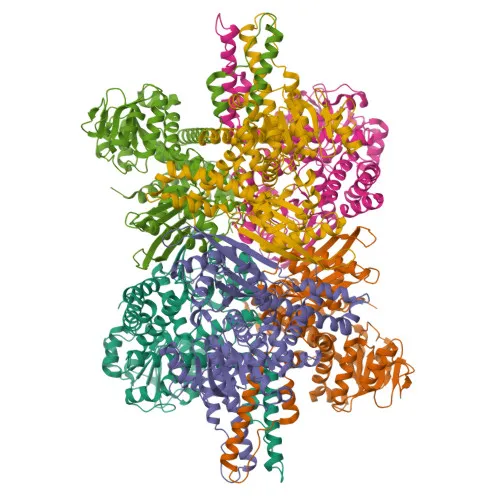
- As a member of the Glu/Leu/Phe/Val dehydrogenase family, GLUD1 forms a homohexamer and utilizes NAD(P)+/NAD(P)H as cofactors; it also binds ATP and GTP, linking energy status to glutamate metabolism.
- GLUD1 is crucial for insulin secretion regulation, and mutations in the gene are associated with congenital hyperinsulinism/hyperammonemia syndrome (PubMed:11297618, PubMed:9571255). Related references: PMID:11297618 PMID:9571255
- The protein localizes predominantly to the mitochondrial matrix but has also been detected at the endoplasmic reticulum, hinting at additional roles.
- GLUD1 activity is modulated by post-translational modifications, including acetylation, ADP-ribosylation, and phosphorylation, which affect its catalytic efficiency and metabolic fate.
- GLUD1 may contribute to neurotransmission and cognitive processes by influencing glutamate levels (By similarity).
- Alternative splicing generates multiple GLUD1 isoforms, potentially diversifying its tissue-specific functions.
Experimental Guidance and Technical Tips
- The immunogen consists of a recombinant fusion protein spanning amino acids 54–242 of human GLUD1; consider verifying the antibody’s reactivity in your specific sample system prior to large-scale experiments.
- For Western blotting, expect a band near 61 kDa; optimize blocking and antibody dilution to minimize background, especially with mouse and rat lysates due to high homology.
- In immunohistochemistry (paraffin-embedded sections), antigen retrieval may be required; validate the staining pattern in known positive tissues.
- For immunofluorescence and immunoprecipitation, use appropriate fixation/permeabilization and lysis buffers, respectively, and titrate the antibody concentration.
- The antibody is suitable for ELISA applications; consider using it as a capture or detection reagent after determining its binding affinity.
CamelBio: Your One-Stop Sourcing Bridge
CamelBio is a dedicated one-stop sourcing platform for IVD raw materials, technical services, and consulting, supporting diagnostic manufacturers and research laboratories from concept to clinic. For glutamate metabolism studies and target GLUD1, we supply validated antibody pairs, optimized polyclonal antibodies like this anti-GLUD1 antibody, and bulk ancillary reagents, and can also assist in sourcing rare raw materials to streamline your assay development and production needs.
REQUEST A QUOTE
Our professional team will reply to you within one business day. Please feel free to contact us!