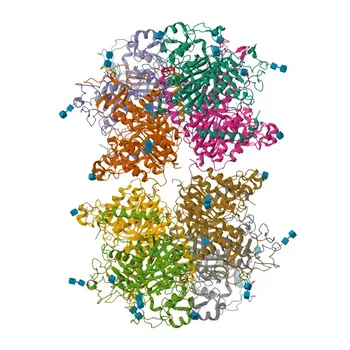
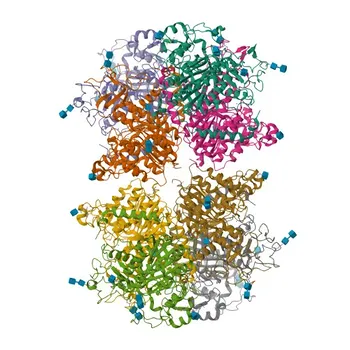
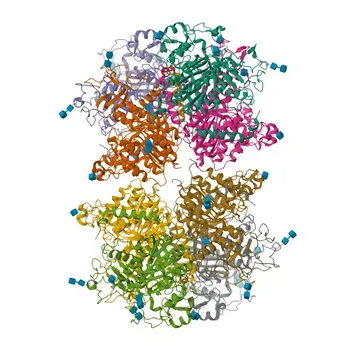
Detection down to 18 pmol/L of alkaline phosphatase—equivalent to just 0.4 fmol in a 20 µL sample—is readily achievable. Using 4‑aminophenyl phosphate (4‑APP) with disposable carbon electrode strips, a mere 2‑minute incubation generates an electroactive product (4‑aminophenol) that can be measured at low oxidative potentials (+50 to +100 mV vs Ag/AgCl). This approach delivers a limit of detection for alkaline phosphatase (ALP) of 18 pmol/L (0.4 fmol absolute), combining speed with the sensitivity required for therapeutic drug monitoring and quantitative biomarker panels.
Core Takeaway: An electrochemical immunoassay employing ALP and 4‑aminophenyl phosphate can reliably detect enzyme levels down to 18 pmol/L (0.4 fmol in a 20 µL sample). The key to this sensitivity is the substrate’s ability to produce a reversible redox product that is oxidized at low potentials, effectively eliminating sample matrix interference and yielding an exceptionally clean signal. This makes the system ideal for point‑of‑care and diagnostic kit applications where rapid, high‑sensitivity readouts are required.
How Electrochemical Detection Achieves This Sensitivity
The Unique Advantage of 4‑Aminophenyl Phosphate
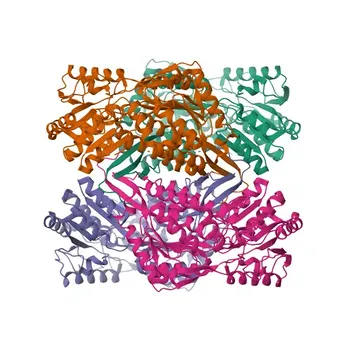
ALP removes the phosphate group from 4‑APP, generating 4‑aminophenol.
Unlike phenol (from phenyl phosphate), which requires high anodic potentials (>+800 mV) and suffers from severe background oxidation of serum components, 4‑aminophenol exhibits reversible electrochemistry.
This reversible behavior allows the use of chronoamperometric detection at a bare carbon electrode without the need for complex electrode modifications.
Low Potential, Clean Signal
Operating at +50 mV to +100 mV vs Ag/AgCl places the detection window below the oxidation threshold of most endogenous interferents (e.g., ascorbic acid, uric acid, proteins).
Background currents become negligible, dramatically improving the signal‑to‑noise ratio.
The result is a flat baseline where even the tiny current generated by 0.4 fmol of enzyme product can be distinguished with confidence.
Rapid Kinetics and Practical Incubation Times
The catalytic turnover of ALP on 4‑APP is fast under alkaline conditions (pH 8–10).
A 2‑minute incubation is sufficient to accumulate enough 4‑aminophenol for reliable quantification, permitting a total assay time of under 10 minutes when combined with a simple wash step.
This speed does not come at the expense of sensitivity; the low‑potential detection ensures that the short incubation still yields a signal well above the noise floor.
The Role of ALP as a Label in Immunoassays
In a typical sandwich immunoassay, ALP is conjugated to a detection antibody.
Because the enzyme label is the amplifier, the 18 pmol/L ALP limit translates directly into the detection limit for the target antigen—provided the antibody‑antigen binding is optimized and non‑specific binding is minimized.
Developers can therefore expect that the readout system itself will not be the bottleneck; the final assay sensitivity will be governed more by the affinity of the biological reagents than by the electrochemical transducer.
Understanding the Trade‑offs
Sensitivity vs. Ultimate Detection Limits
While 0.4 fmol is impressive for an electrochemical label, chemiluminescent substrates (e.g., adamantyl 1,2‑dioxetane phosphate) can push detection to zeptomole (10⁻²¹ mol) levels—about five orders of magnitude lower.
However, chemiluminescence requires a photodetector and optics, increasing instrument cost and complexity. The electrochemical route trades a degree of absolute sensitivity for simplicity, portability, and lower manufacturing costs, making it a superior choice when sub‑picomolar sensitivity is not required.
Matrix Effects and Sample Preparation
The low operating potential almost eliminates direct interference from blood or serum components, but sample pH and buffer strength must be carefully controlled.
ALP activity plummets outside pH 8–10; a poorly buffered sample can shift the local pH at the electrode surface and reduce apparent enzyme activity.
Pre‑diluting the sample in a robust alkaline buffer (e.g., diethanolamine or carbonate buffer) restores optimal kinetics and ensures the reported detection limit holds in real specimens.
Electrode Strip Reproducibility
Disposable carbon electrodes exhibit inherent lot‑to‑lot variability in surface area and edge‑plane defects.
This can shift the baseline current and slope of the calibration curve.
Incorporating an internal standard or using a ratiometric measurement approach (e.g., measuring the current before and after incubation) helps mitigate electrode variability and maintains the 18 pmol/L LOD across manufacturing batches.
Making the Right Choice for Your Diagnostic Goal
How you apply this electrochemical sensitivity depends on the intended use case. Use the following guide to align the technology with your priorities.
- If your primary focus is point‑of‑care speed: The 2‑minute incubation and low‑potential amperometry provide a complete readout in under 10 minutes—ideal for clinics and field settings where a quick “yes/no” answer is needed. Pair it with a small potentiostat and disposable strips for a compact, user‑friendly device.
- If your primary focus is ultrasensitive biomarker detection: When the target analyte circulates at sub‑picomolar concentrations (e.g., early cancer markers), the 18 pmol/L ALP limit may become the assay bottleneck. In that case, consider moving to a chemiluminescent substrate or a more sensitive label enzyme, accepting the added hardware complexity.
- If your primary focus is cost‑effective manufacturing: Electrochemical readers are simple to build and calibrate, and carbon‑based strips can be screen‑printed in high volumes at low cost. This combination yields a diagnostic kit that is affordable to produce while still delivering clinically meaningful sensitivity for many routine biomarkers.
Understanding the electrochemical performance of ALP with 4‑APP strips lets you design an immunoassay that balances sensitivity, speed, and cost—exactly the pragmatism that transforms a laboratory concept into a successful commercial diagnostic.
Summary Table:
| Feature / Parameter | Performance & Specification | Key Advantage in Immunoassays |
|---|---|---|
| Limit of Detection (LOD) | 18 pmol/L (0.4 fmol in 20 µL) | High sensitivity suitable for biomarker panels & TDM |
| Substrate / Product | 4-Aminophenyl phosphate (4-APP) → 4-Aminophenol | Reversible electrochemistry enabling simple carbon electrodes |
| Detection Potential | +50 mV to +100 mV vs Ag/AgCl | Below serum interference threshold; extremely low noise |
| Incubation Time | 2 minutes (Total assay time <10 min) | Rapid turnaround ideal for point-of-care (POC) devices |
| Hardware Requirement | Potentiostat & disposable screen-printed carbon strips | Low-cost manufacturing and compact, portable readers |
Accelerate Your Diagnostic Immunoassay Development
Looking to develop rapid point-of-care diagnostic kits or optimize high-sensitivity biosensors? CamelBio provides diagnostic manufacturers, labs, and research institutes with one-stop access to premium IVD raw materials, technical services, and expert consulting—covering every stage from concept to clinic.
Whether you need optimized enzyme-substrate formulations, custom assay reagents, or technical troubleshooting, our team is here to support your commercial journey. Contact us today to discover how CamelBio can elevate your assay performance!
Related Products
- Anti-Alkaline Phosphatase (ALPL) Rabbit Monoclonal Antibody for WB, IHC-P, ELISA - P05186
- Anti-Alkaline Phosphatase (ALPL) Rabbit Polyclonal Antibody for WB, IF-P, IHC-P, ELISA - P05186
- Anti-Alkaline Phosphatase (ALPL) Rabbit Polyclonal Antibody for WB, IHC-P, ELISA - P05186
- Anti-APLP1 Rabbit Polyclonal Antibody for WB, IHC-P, IF/ICC, ELISA - P51693
- Anti-APLP2 Rabbit Polyclonal Antibody for WB, IF/ICC, ELISA - Q06481