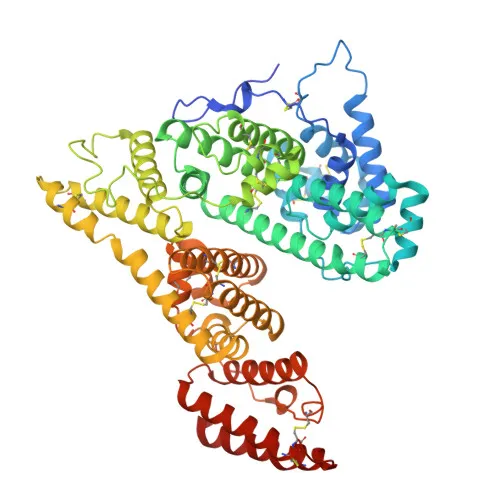
Monoclonal Antibodies
Anti-Alpha-Fetoprotein (AFP) Monoclonal Antibody for WB, IF/ICC, ELISA - P02771
Item Number : CM0003326
Price varies based on specs and customizations
- Application
- WB, IF/ICC, ELISA
- Cross Reactivity
- Human, Mouse, Rat
- Protein Weight
- 69kDa

Shipping:
Contact us to get shipping details Enjoy On-time Dispatch Guarantee.
Why Choose Us
Easy ordering process, quality products, and dedicated support for your business success.
Core Product Specifications and Parameters
| Parameter | Value |
|---|---|
| Product Name | Alpha-Fetoprotein (AFP) Mouse mAb |
| Remarks/Alias | AFPD; FETA; HPAFP; Alpha-Fetoprotein (AFP) |
| Species | Human |
| GeneID (Human) | 174 |
| GeneID | 174 |
| Immunogen | Recombinant protein of human Alpha-Fetoprotein (Alpha-Fetoprotein (AFP)) |
| Source | Mouse |
| Category | Monoclonal Antibodies |
| Application | WB, IF/ICC, ELISA |
| Cross Reactivity | Human, Mouse, Rat |
| SWISS | P02771 |
| Protein Weight | 69kDa |
| Shipping | Ice bag |
Biological Background: Alpha-Fetoprotein (AFP) Function and Localization
- Alpha-fetoprotein (AFP), also known as alpha-1-fetoprotein or alpha-fetoglobulin, is a fetal glycoprotein belonging to the albumin family, characterized by internal repeat structures.
- AFP serves as a transport protein for copper, nickel, fatty acids, and bilirubin, with lower bilirubin affinity compared to serum albumin.
- A minor fraction (less than 2%) of human AFP displays estrogen-binding properties.
- The protein is secreted and found in plasma, primarily synthesized by the fetal liver and yolk sac during development.
- AFP undergoes post-translational modifications including phosphorylation, sulfation, and N-linked glycosylation, and contains disulfide bonds.
- Its molecular weight is approximately 69 kDa (observed on SDS-PAGE) with a calculated mass of 68.7 kDa.
Experimental Guidance and Technical Tips
- The antibody was raised against recombinant full-length human AFP; thus, it may recognize native and denatured conformations depending on the application.
- For Western blot, consider using a reduced/denatured sample preparation, as the predicted molecular weight is 69 kDa.
- In IF/ICC, validate fixation and permeabilization conditions to ensure antibody access, as AFP is a secreted protein.
- Cross-reactivity with mouse and rat AFP is reported; however, verify performance in the relevant species’ sample system.
- For ELISA, use appropriate coating and detection conditions, and titrate the antibody for optimal signal-to-noise ratio.
CamelBio: Your One-Stop Sourcing Bridge
CamelBio is a comprehensive supplier of IVD raw materials, offering validated antibody pairs, optimized monoclonal/polyclonal antibodies, bulk ancillary reagents, and rare target sourcing. This anti-AFP antibody supports liver cancer biomarker research and diagnostic development. With an end-to-end supply and technical service model, CamelBio accelerates your path from concept to clinic.
REQUEST A QUOTE
Our professional team will reply to you within one business day. Please feel free to contact us!
Related Articles
Why Direct Hapten Coupling Changes the Economics of Small-Molecule Biosensors
Compare direct hapten coupling with protein conjugates to improve ligand density, signal quality, antibody efficiency, and chip reusability.
The Silent Well: How No Template Controls Protect Molecular Diagnostic Integrity
A practical guide to No Template Controls: how unexpected qPCR signals reveal contamination, reagent impurities, artifacts, and broken workflow controls.
From Molecular Binding to Manufacturing Discipline: How Reliable ELISA Kits Are Engineered
Explore the four operational mechanisms that govern ELISA kit performance, from passive coating and washing to signal generation and scalable IVD manufacturing.
When Fluorescence Becomes Evidence: Engineering a Competitive ELISA for Trace Molecule Detection
Learn how procedural discipline, blank correction, substrate selection, and reader configuration turn fluorometric ELISA sensitivity into reliable trace detection.
From Hapten to Reliable Result: Engineering Small-Molecule Immunoassays for Diagnostic Use
Discover how hapten chemistry, antibody selection, competitive formats, and validation determine small-molecule immunoassay performance.
From a 36-Hour Wait to a 30-Minute Decision: The Workflow Advantage of Rapid Antibody-Based Immunosensors
Rapid antibody-based immunosensors compress analyte detection from 24–36 hours to about 30 minutes, changing workflows, decisions, and assay design.
Why Competitive Immunoassays Read Higher Than GC-MS—and How Raw Materials Close the Gap
Discover why competitive immunoassays overestimate target levels versus GC-MS, and how hapten, antibody, blocker, and buffer choices reduce bias.