Polyclonal Antibodies
Anti-APPL1 Rabbit Polyclonal Antibody for WB, ELISA - Q9UKG1
Item Number : CM0030478
Price varies based on specs and customizations
- Application
- WB, ELISA
- Cross Reactivity
- Human, Mouse, Rat
- Protein Weight
- 80kDa

Shipping:
Contact us to get shipping details Enjoy On-time Dispatch Guarantee.
Why Choose Us
Easy ordering process, quality products, and dedicated support for your business success.
Core Product Specifications and Parameters
| Parameter | Value |
|---|---|
| Product Name | APPL1 Rabbit pAb |
| Remarks/Alias | APPL; MODY14; DIP13alpha; APPL1 |
| Species | Human |
| GeneID (Human) | 26060 |
| GeneID | 26060 |
| Immunogen | Recombinant protein: Recombinant fusion protein containing a sequence corresponding to amino acids 1-210 of human APPL1 (NP_036228.1). |
| Source | Rabbit |
| Category | Polyclonal Antibodies |
| Application | WB, ELISA |
| Cross Reactivity | Human, Mouse, Rat |
| SWISS | Q9UKG1 |
| Protein Weight | 80kDa |
| Shipping | Ice bag |
Biological Background: APPL1 Function and Localization
-
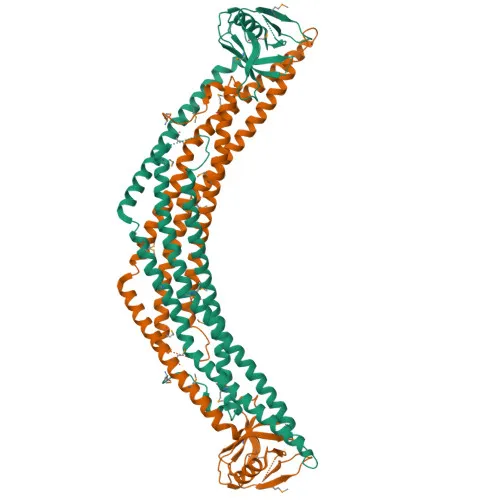
APPL1 is a multifunctional adapter protein that binds to various membrane receptors, nuclear factors, and signaling proteins to regulate cell proliferation, immune response, endosomal trafficking, and cell metabolism. Related references: PMID:10490823, PMID:15016378, PMID:19661063
-
Regulates signaling pathway leading to cell proliferation through interaction with RAB5A and the NuRD/MeCP1 complex. Related references: PMID:15016378
-
Plays a role in cell metabolism by regulating adiponectin and insulin signaling pathways. Related references: PMID:19661063, PMID:24879834, PMID:26073777
-
Involved in trafficking of the TGFBR1 from the endosomes to the nucleus via microtubules in a TRAF6-dependent manner. Related references: PMID:26583432
-
Positive regulator of beta-catenin/TCF-dependent transcription through interaction with RUVBL2/reptin. Related references: PMID:19433865
-
Subcellular localization includes early endosome membrane, nucleus, cytoplasm, endosome, cell projection ruffle, and cytoplasmic vesicle, phagosome.
-
Tissue specificity: High expression in heart, ovary, pancreas, and skeletal muscle.
-
Phosphoprotein; mutations in APPL1 are associated with maturity-onset diabetes of the young type 14 (MODY14).
Experimental Guidance and Technical Tips
- The immunogen used is a recombinant protein corresponding to the N-terminal region (aa 1-210) of human APPL1; this region may be conserved across species, enabling cross-reactivity with mouse and rat.
- For Western blotting, an expected band size of approximately 80 kDa should be observed; validate using tissues with high APPL1 expression such as heart, ovary, or skeletal muscle.
- For ELISA, consider optimizing coating conditions with the recombinant immunogen or endogenous APPL1 capture, and include appropriate species-matched controls.
- Due to the polyclonal nature, lot-to-lot variability may exist; perform validation for each new lot in the intended application and sample system.
CamelBio: Your One-Stop Sourcing Bridge
CamelBio provides diagnostic manufacturers, labs, and research institutes with one-stop access to IVD raw materials, technical services, and consulting—covering every stage from concept to clinic. This anti-APPL1 antibody supports research in cell signaling, metabolism, and diabetes; for IVD kit development, we offer validated antibody pairs, optimized monoclonal/polyclonal antibodies, and bulk ancillary reagents. Our platform streamlines procurement of rare-target raw materials, helping you accelerate assay development seamlessly.
REQUEST A QUOTE
Our professional team will reply to you within one business day. Please feel free to contact us!