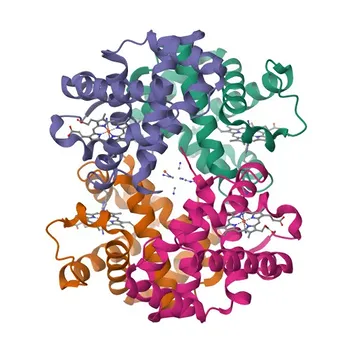
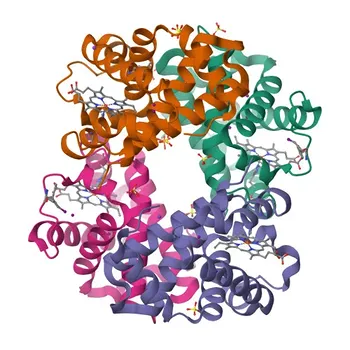
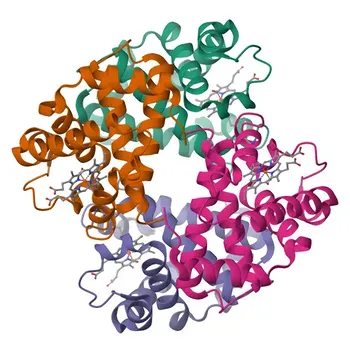
Developing a reliable Hb S solubility reagent requires a precise biochemical understanding of sickle hemoglobin polymerization and a rigorous plan to neutralize common sample interferences. The core mechanism is straightforward: deoxygenated Hb S polymerizes into insoluble fibers in a high-molarity phosphate buffer, creating turbidity that signals a positive screen. When formulating a reagent, the critical interferences you must address are low hemoglobin concentration that fails to generate visible turbidity, non-specific turbidity from lipids or proteins, cross‑reacting hemoglobin variants, and the misleading suppression of Hb S caused by high fetal hemoglobin or recent transfusions.
The value of an Hb S solubility test lives and dies by the buffer chemistry that drives selective polymerization and the sample‑preparation rules that filter out common confounders. Master these two levers, and you turn a simple turbidity test into a dependable screening gate—while never forgetting that a positive result must always be verified with an orthogonal high‑resolution method.
The Biochemical Basis of Hb S Polymerization
A solubility test for Hb S is not a generic precipitation assay; it exploits a specific, mutation‑driven aggregation behavior that occurs only in the deoxygenated state.
The Role of Deoxygenation and Reducing Agents
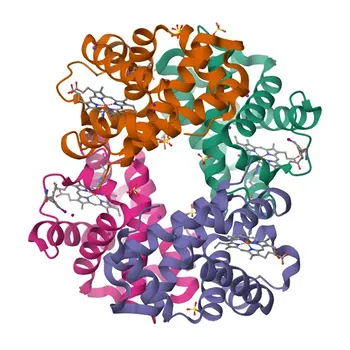
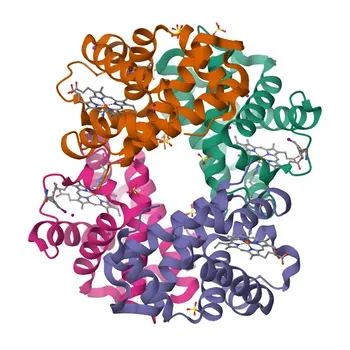
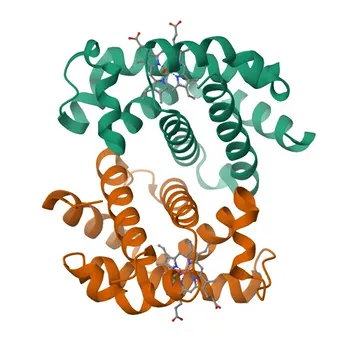
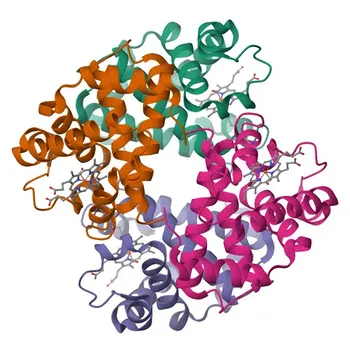
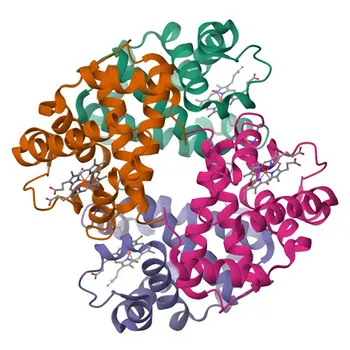
Normal adult hemoglobin stays soluble whether oxygenated or deoxygenated, but the substitution of valine for glutamic acid at position 6 of the β‑chain in Hb S creates a hydrophobic patch that is exposed only when oxygen is removed.
- Sodium metabisulfite is the most common reducing agent used to scavenge dissolved oxygen and rapidly shift hemoglobin into the deoxygenated conformation.
- Once deoxygenated, Hb S molecules undergo a linear polymerization, forming rigid, insoluble fibers that scatter light and produce the characteristic turbidity.
Your reagent formulation must deliver a reducing agent that achieves full deoxygenation within a consistent, short incubation time—insufficient deoxygenation is a direct cause of false-negative results.
High-Molarity Phosphate Buffer: The Solubility Switch
Deoxygenation alone is not enough; the polymerization is highly sensitive to the surrounding ionic environment.
- A high-molarity phosphate buffer (typically 2.5–3.0 mol/L) creates a “salting‑out” effect that drastically lowers the solubility of deoxy Hb S while leaving deoxy Hb A and most other hemoglobins in solution.
- The buffer’s pH and phosphate concentration must be tightly controlled: too low a molarity and solubility remains high; too high a molarity and you risk non‑specific precipitation of other proteins.
Optimizing this buffer system is the central engineering challenge—it defines the test’s analytical specificity and its ability to discriminate true hemoglobin S polymerization from background turbidity.
Critical Analytical Interferences and Formulation Mitigations
The most elegant buffer chemistry fails if the incoming sample carries inherent confounders. Reagent design must therefore extend beyond the vial to include explicit pre‑analytical handling instructions.
False Negatives from Low Hemoglobin Concentration
If the total hemoglobin mass is too low, even complete polymerization of Hb S will not produce turbidity visible to the naked eye or to a simple turbidimeter.
- Severe anemia (hemoglobin < 8 g/dL or hematocrit < 15%) is the primary culprit.
- Your protocol must mandate doubling the sample volume for low‑hematocrit specimens, a simple yet essential safeguard that compensates for the reduced hemoglobin load.
False-Positive Turbidity from Non‑Specific Sources
Not all cloudiness in the tube signals Hb S polymerization. Several common sample conditions can generate turbidity that mimics a positive result.
- Lipemic samples (elevated chylomicrons), high levels of monoclonal proteins (M‑proteins), and Heinz bodies (denatured hemoglobin precipitates) all scatter light independently.
- Cold agglutinins can also form aggregates that increase turbidity in the reaction mixture.
Reagent‑level mitigations include incorporating a lysing agent to release hemoglobin uniformly and reduce cellular debris, and providing a control tube (e.g., a buffer blank without metabisulfite) so the operator can subtract background turbidity. Written instructions should explicitly state that grossly lipemic or icteric specimens may require pre‑filtration or plasma replacement.
Cross-Reacting Hemoglobin Variants
While Hb S is the main target, a few rare variants also polymerize under the test conditions, producing true-positive turbidity that is clinically misleading.
- Hb C Harlem and Hb Memphis exhibit solubility behavior similar to Hb S in high‑phosphate buffers.
- The test cannot distinguish between Hb S trait (AS), homozygous Hb S (SS), or compound heterozygotes with other variants.
Because of this, your reagent kit must include a clear disclaimer: every positive solubility result requires confirmatory testing by HPLC or alkaline/acid electrophoresis. Building this step into the labeling is not a limitation—it is an essential risk‑management and quality‑assurance measure.
Inappropriate Sample Populations
Certain patient groups produce results that are fundamentally unreliable, regardless of how well the reagent is formulated.
- Newborns with high fetal hemoglobin (Hb F) levels resist deoxygenation‑triggered polymerization and yield false negatives.
- Recently transfused patients may have only a minor fraction of Hb S, diluted below the detection threshold.
Explicitly exclude these populations as “not for use” in the intended‑use statement, and recommend alternative primary screening methods (such as HPLC or IEF) for these groups.
Understanding the Trade‑offs and Limitations
Even a perfectly formulated solubility test carries inherent trade‑offs that must be communicated honestly to users.
Subjective Endpoint Reading and Operator Variability
Visual turbidity is inherently subjective. Two technicians observing the same tube can disagree on whether a faint haziness constitutes a positive result.
- Automating the readout with a nephelometric or turbidimetric detector can reduce variability, but increases instrument cost.
- In low‑resource settings where the test is most often deployed, you must accept some ambiguity and build in clear visual interpretation guides (e.g., comparison charts or a threshold image).
The Solubility Test as a Triage, Not a Diagnosis
This assay is a screening gate, not a definitive diagnostic tool. Its clinical value lies in rapidly ruling in or out the likely presence of Hb S, steering samples to high‑resolution confirmation.
- The inability to differentiate AS from SS or to detect concomitant beta‑thalassemia is a deliberate trade‑off for speed and simplicity.
- Never position the test as a stand‑alone diagnostic; instead, frame it as a critical first‑pass filter that reduces the burden on expensive, time‑consuming confirmatory methods.
Making the Right Choice for Your Reagent Formulation
The optimal balance between sensitivity, specificity, and workflow simplicity depends on the clinical scenario your kit is designed to serve.
- If your primary focus is maximizing screening sensitivity in high‑prevalence populations: Optimize the phosphate buffer ionic strength to the lower edge of the precipitation window, and enforce a strict double‑volume protocol for any sample with a hematocrit below 15%.
- If your goal is minimizing false‑positive referrals from interfering substances: Incorporate a lysing reagent and a dedicated control tube; build pre‑filtration steps into the protocol for visibly lipemic or protein‑rich samples.
- If you aim to support robust clinical decision‑making in all settings: Bundle the solubility kit with a direct line to confirmatory HPLC or electrophoresis, both in the labeling and through integrated laboratory workflows.
A well-formulated Hb S solubility reagent doesn’t just deliver a yes-or-no result—it engineers a controlled environment where true polymerization can speak loudly while noise from anemia, lipids, and protein interferences is systematically quieted, always with a direct path to definitive diagnosis for every positive screen.
Summary Table:
| Interference / Mechanism | Analytical Impact | Formulation & Protocol Mitigation |
|---|---|---|
| Hb S Deoxygenation & Polymerization | Drives selective fiber aggregation for turbidity | Sodium metabisulfite + 2.5–3.0 M high-molarity phosphate buffer |
| Low Hemoglobin / Severe Anemia | Risks false negatives due to low turbidity | Enforce double sample volume for specimens with Hb < 8 g/dL |
| Lipids, M-Proteins & Heinz Bodies | Causes false positives from background turbidity | Add lysing agents, incorporate control tubes, or require pre-filtration |
| Variant Cross-Reactivity & Hb F | Misleading positives (Hb C-Harlem) or false negatives | Exclude infants, mandate confirmatory testing (HPLC/electrophoresis) |
Optimize Your Diagnostic Reagent Formulation with CamelBio
Formulating accurate, interference-free Hb S solubility assays requires precise buffer chemistry and dependable raw materials. CamelBio provides diagnostic manufacturers, labs, and research institutes with one-stop access to IVD raw materials, technical services, and consulting—covering every stage from concept to clinic.
Whether you are scaling production, optimizing buffer systems, or troubleshooting assay interferences, our technical experts are ready to support your development pipeline.
Contact CamelBio Today to discuss your custom IVD formulation needs!
Related Products
- Anti-HMBS Rabbit Monoclonal Antibody for WB, ELISA - P08397
- Anti-HBB Polyclonal Antibody for WB, ELISA - P68871
- Anti-SDHB Rabbit Polyclonal Antibody for WB, IHC-P, ELISA - P21912
- Anti-Hemoglobin subunit alpha (HBA1) Rabbit Polyclonal Antibody for WB and ELISA - P69905
- Anti-HBD (Hemoglobin Subunit Delta) Rabbit Polyclonal Antibody for WB and ELISA - P02042