Monoclonal Antibodies
HBG1/2 Rabbit mAb (WB, IHC, IF, ELISA) - P69891/P69892
Item Number : CM0003094
Price varies based on specs and customizations
- Application
- WB, IF-P, IHC-P, ELISA
- Cross Reactivity
- Human
- Protein Weight
- 12 kDa

Shipping:
Contact us to get shipping details Enjoy On-time Dispatch Guarantee.
Why Choose Us
Easy ordering process, quality products, and dedicated support for your business success.
Core Product Specifications and Parameters
| Parameter | Value |
|---|---|
| Product Name | HBG1/2 Rabbit mAb |
| Remarks/Alias | HBG-T2; HBGA; HBGR; HSGGL1; PRO2979; HBG1/2 |
| Species | Human |
| GeneID | 3047/3048 |
| Immunogen | Synthetic Peptide | A synthetic peptide corresponding to a sequence within amino acids 1-100 of human HBG1 (P69891). |
| Source | Rabbit |
| Category | Monoclonal Antibodies |
| Application | WB, IF-P, IHC-P, ELISA |
| Cross Reactivity | Human |
| SWISS | P69891/P69892 |
| Protein Weight | 12 kDa |
| Shipping | Ice bag |
Biological Background: HBG1/2 Function and Localization
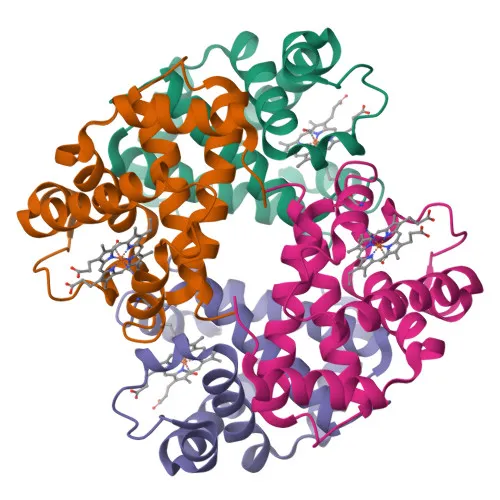
- Hemoglobin subunit gamma-1 (HBG1) and gamma-2 (HBG2) are the gamma-globin chains that, together with alpha-globin, form fetal hemoglobin (HbF, α2γ2), the predominant hemoglobin during fetal development.
- HbF has a higher oxygen affinity than adult hemoglobin (HbA), facilitating efficient oxygen transfer across the placenta from mother to fetus.
- Expression of gamma-globin genes is primarily restricted to red blood cells and is developmentally regulated, with a switch from gamma- to beta-globin expression occurring around birth.
- Postnatally, residual HbF is present at low levels in adults, and its reactivation is a therapeutic goal for sickle cell disease and beta-thalassemia.
- HBG1 and HBG2 are highly homologous and located within the human beta-globin gene cluster on chromosome 11p15.4.
- The protein undergoes various post-translational modifications, including acetylation, phosphorylation, and S-nitrosylation, which may influence its stability and function.
- Keywords related to HBG1 include 3D-structure, heme, iron, metal-binding, oxygen transport, and reference proteome, highlighting its central role in oxygen delivery.
Experimental Guidance and Technical Tips
- The immunogen corresponds to a peptide within the N-terminal region (aa 1-100) of HBG1, which may detect both HBG1 and HBG2 due to high sequence similarity.
- The observed protein weight in SDS-PAGE is approximately 12 kDa, consistent with the monomeric form of gamma-globin. Validate band size using appropriate molecular weight markers and fetal hemoglobin-positive control lysates.
- For Western blotting, consider using red blood cell lysates from fetal or cord blood samples, or cell lines induced to express fetal hemoglobin.
- In IHC and IF applications, expect cytoplasmic staining in erythroid cells. Paraffin-embedded and frozen sections of fetal liver or bone marrow are suitable samples.
- ELISA performance can be assessed using recombinant or purified fetal hemoglobin protein. Pairing with an alpha-globin antibody may enable sandwich assay development.
CamelBio: Your One-Stop Sourcing Bridge
CamelBio provides diagnostic manufacturers, core labs, and research institutes with streamlined access to premium IVD raw materials, covering every stage from concept to clinic. This HBG1/2 rabbit monoclonal antibody is part of our portfolio that includes validated antibody pairs, optimized monoclonal and polyclonal antibodies, bulk ancillary reagents, and custom rare-target sourcing to support hematology and developmental biology research and assay development. Count on CamelBio as your strategic partner for reliable, high-quality raw materials that accelerate your diagnostic pipeline.
REQUEST A QUOTE
Our professional team will reply to you within one business day. Please feel free to contact us!