Polyclonal Antibodies
HBG1/HBG2 Rabbit Polyclonal Antibody for WB, IF/ICC, ELISA - P69892
Item Number : CM0019407
Price varies based on specs and customizations
- Application
- WB, IF/ICC, ELISA
- Cross Reactivity
- Human
- Protein Weight
- 16kDa

Shipping:
Contact us to get shipping details Enjoy On-time Dispatch Guarantee.
Why Choose Us
Easy ordering process, quality products, and dedicated support for your business success.
Core Product Specifications and Parameters
| Parameter | Value |
|---|---|
| Product Name | HBG1/HBG2 Rabbit pAb |
| Remarks/Alias | TNCY; HBG-T1; HBG1/HBG2 |
| Species | Human |
| GeneID (Human) | 3048 |
| GeneID | 3048 |
| Immunogen | Synthetic peptide corresponding to a sequence within amino acids 1-100 of human HBG1/HBG2 (NP_000175.1) |
| Source | Rabbit |
| Category | Polyclonal Antibodies |
| Application | WB, IF/ICC, ELISA |
| Cross Reactivity | Human |
| SWISS | P69892 |
| Protein Weight | 16kDa |
| Shipping | Ice bag |
Biological Background: HBG1/HBG2 Function and Localization
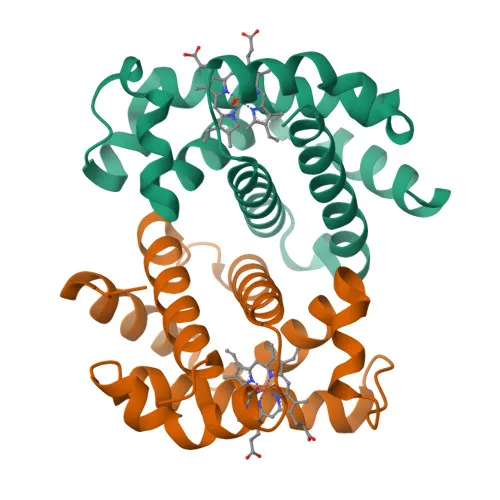
- HBG2 and HBG1 encode the gamma-2 (G-gamma) and gamma-1 (A-gamma) globin chains, respectively, which are nearly identical and together compose the gamma subunits of fetal hemoglobin (HbF).
- Fetal hemoglobin is a tetramer formed by two gamma chains and two alpha chains, and it exhibits a higher oxygen affinity than adult hemoglobin, facilitating oxygen transfer from mother to fetus.
- Both genes belong to the beta-globin gene cluster and are predominantly expressed during fetal development, with expression declining after birth as adult beta-globin synthesis begins.
- Hemoglobin is localized in the cytoplasm of red blood cells, where it performs oxygen transport and delivery.
- Post-translational modifications such as acetylation, phosphorylation, and S-nitrosylation have been reported for gamma-2 globin and may modulate hemoglobin function or stability.
- The gamma-2 chain is classified under keywords including heme, iron, metal-binding, oxygen transport, and transport, reflecting its essential role in oxygen carriage.
- Disease variants in HBG2 and HBG1 are linked to hereditary persistence of fetal hemoglobin (HPFH) and other benign or pathological hemoglobinopathies.
- Tissue specificity is limited to red blood cells, consistent with the primary site of hemoglobin production.
Experimental Guidance and Technical Tips
- The immunogen is a synthetic peptide from the N-terminal region (amino acids 1–100) of human HBG1/HBG2; due to the high sequence identity between the two gamma chains, this antibody is expected to recognize both HBG1 and HBG2 products.
- For western blotting, a band at approximately 16 kDa should be observed; validate the target identity using appropriate positive and negative controls, as cross-reactivity with other globin chains cannot be excluded.
- For IF/ICC, consider permeabilization conditions to allow antibody access to cytoplasmic hemoglobin; note that red blood cells may require specialized fixation or isolation protocols.
- In ELISA applications, the antibody may be used for quantitative detection of fetal hemoglobin levels; ensure specificity testing against adult hemoglobin if discrimination is required.
CamelBio: Your One-Stop Sourcing Bridge
CamelBio serves as a comprehensive partner for IVD developers, laboratories, and researchers by supplying high-quality raw materials such as this anti-HBG1/HBG2 polyclonal antibody for hemoglobin and hematological disorder studies. Our portfolio extends to validated antibody pairs, optimized monoclonal and polyclonal antibodies, bulk ancillary reagents, and sourcing of rare-target raw materials, all supported by technical and consulting services. Contact us to streamline your development workflow from concept to clinical application.
REQUEST A QUOTE
Our professional team will reply to you within one business day. Please feel free to contact us!