Polyclonal Antibodies
Anti-HBGP1 Rabbit Polyclonal Antibody for WB, ELISA - P69891
Item Number : CM0017613
Price varies based on specs and customizations
- Application
- WB, ELISA
- Cross Reactivity
- Human, Mouse, Rat
- Protein Weight
- 16kDa

Shipping:
Contact us to get shipping details Enjoy On-time Dispatch Guarantee.
Why Choose Us
Easy ordering process, quality products, and dedicated support for your business success.
Core Product Specifications and Parameters
| Parameter | Value |
|---|---|
| Product Name | HBG1 Rabbit pAb |
| Remarks/Alias | HBGA; HBGR; HBG-T2; HSGGL1; PRO2979; HBG1 |
| Species | Human |
| Gene ID (Human) | 3047 |
| Gene ID | 3047 |
| Immunogen | Synthetic Peptide: A synthetic peptide corresponding to a sequence within amino acids 1-100 of human HBG1 (NP_000550.2). |
| Source | Rabbit |
| Category | Polyclonal Antibodies |
| Application | WB, ELISA |
| Cross Reactivity | Human, Mouse, Rat |
| SWISS | P69891 |
| Protein Weight | 16kDa |
| Shipping | Ice bag |
Biological Background: Hemoglobin subunit gamma-1 Function and Localization
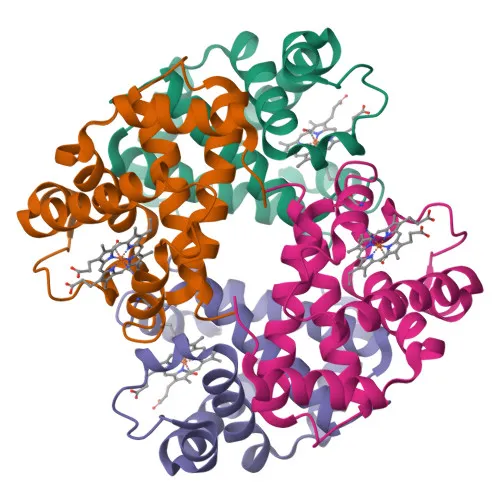
- Hemoglobin subunit gamma-1 (HBG1) is a component of fetal hemoglobin (HbF), which is a tetramer consisting of two alpha chains and two gamma chains.
- HbF is the predominant hemoglobin during fetal development, gradually replaced by adult hemoglobin (HbA) after birth. It has a higher oxygen affinity compared to adult hemoglobin, facilitating oxygen transfer from the mother to the fetus.
- The HBG1 gene belongs to the beta-globin gene cluster on chromosome 11. There is a closely related gamma-2 gene (HBG2) that differs by only one amino acid; the gamma-1 chain is also known as the A-gamma chain, while gamma-2 is the G-gamma chain.
- HBG1 is specifically expressed in red blood cells and its expression is developmentally regulated, being silenced in adult erythroid cells except in certain pathological conditions or hereditary persistence of fetal hemoglobin (HPFH).
- The protein is a heme-binding protein, essential for oxygen transport. It contains iron and is subject to post-translational modifications including acetylation, phosphorylation, and S-nitrosylation, as indicated by proteomic studies.
- Structural studies (3D-structure keyword) have elucidated the conformation of fetal hemoglobin. Direct protein sequencing has confirmed the primary structure.
Experimental Guidance and Technical Tips
- The immunogen is a synthetic peptide corresponding to the N-terminal region (aa 1-100) of human HBG1. Due to high sequence similarity with HBG2 (differing by only one amino acid in this region), the antibody may cross-react with HBG2. Validate specificity in relevant sample systems.
- For Western blot, a band around 16 kDa is expected. Use positive controls such as fetal liver lysate or cord blood lysate, which express high levels of HBG1. Ensure proper protein loading and transfer.
- For ELISA, consider using recombinant HBG1 protein or purified HbF as the coating antigen. The reported cross-reactivity with mouse and rat suggests conserved epitopes, but confirm reactivity in these species by sequence alignment and pilot experiments.
- Always include appropriate positive and negative controls to interpret results accurately. Titrate the antibody for optimal signal-to-noise ratio in your specific experimental setup.
CamelBio: Your One-Stop Sourcing Bridge
CamelBio is your dedicated one-stop source for IVD raw materials, offering validated antibody pairs and optimized polyclonal antibodies such as this anti-HBG1 antibody. Whether your research focuses on fetal hemoglobin development, oxygen transport, or hemoglobinopathies, we supply bulk ancillary reagents and can assist in sourcing rare target raw materials. Our platform supports your entire development pipeline, from concept to clinical application.
REQUEST A QUOTE
Our professional team will reply to you within one business day. Please feel free to contact us!