The Assay That Sees Only Six Residues
A food safety laboratory receives a batch of samples after a routine inspection. The samples may contain traces of several related veterinary drugs, but the laboratory has one practical question:
Are residues from this chemical family present above the regulatory limit?
The assay on the bench recognizes six analogs. It performs well for those six. Its signal is clean, its calibration curve is familiar, and its antibody has passed the standard validation steps.
But the chemical family contains seventeen relevant structures.
The problem is not that the antibody is weak. The problem is that it is precise in the wrong way.
A small change in a drug molecule can alter the shape, charge, or flexibility of the epitope. A monoclonal antibody raised against one hapten may bind tightly to that structure and then lose most of its affinity when a peripheral group changes.
For single-analyte quantification, this narrow recognition can be an advantage.
For class-wide screening, it creates blind spots.
Broad-Spectrum Screening Requires a Different Definition of Specificity
The usual assumption is that sensitivity and breadth exist on opposite sides of a trade-off.
A broader antibody is expected to bind less strongly. A more sensitive antibody is expected to recognize fewer compounds. That assumption is often true when breadth is discovered accidentally.
It is not the only way to design an antibody.
Antibody engineering allows the binding site to be deliberately reshaped around a conserved structural core. The goal is not to make the antibody bind everything. The goal is to make it recognize the part that a chemical family shares, while tolerating controlled variation in the groups attached around it.
That distinction matters.
A well-engineered antibody can move from recognizing approximately six analogs to recognizing twelve, fifteen, or even all seventeen relevant structures with meaningful signal inhibition. The result is not simply a more reactive reagent. It is a different raw material strategy for the assay.
| Development objective | Preferred antibody profile |
|---|---|
| Precise measurement of one compound | High-specificity antibody |
| Screening an entire residue family | Engineered broad-spectrum antibody |
| Multi-class detection in one device | Several engineered, class-specific antibodies |
| Rapid development with consistent lots | Recombinant antibody and matched antigen supply |
The choice should be made before assay optimization begins. Otherwise, developers may spend months improving a test that was never designed to answer the right question.
Why Wild-Type Monoclonals Often Stop at a Narrow Panel
The limitation begins with the immune response.
A conventional monoclonal antibody is typically generated against a hapten representing one target compound or a closely related structure. The resulting binding pocket is shaped by selection pressure toward that particular molecular surface.
It may recognize a shared core. But it may also depend heavily on a side chain, substituent, or three-dimensional feature that is absent from neighboring analogs.
This creates what can be called the six-analog ceiling: a useful antibody that covers part of the family, but not enough of it to support reliable class-wide screening.
The Cost of Missing Analogues
A partial panel creates more than a scientific inconvenience.
It can require:
- Multiple antibodies for one chemical class
- Separate test lines or assay wells
- Additional conjugates and calibration materials
- More complex validation protocols
- Higher manufacturing and quality-control costs
- Greater risk that one relevant residue remains undetected
A laboratory may believe it is screening for a drug family while the assay is actually screening for a subset.
That difference is easy to miss because the assay can look excellent when tested only against the compounds used during initial development.
The Regulatory Question
In many food safety, veterinary, and environmental applications, the operational question is not “Which exact analogue is present?”
It is closer to:
Does this sample contain any member of the residue family at or above the relevant maximum residue limit?
At thresholds around 100 µg/kg, broad and uniform coverage may be more valuable than exact molecular discrimination in the first screening step.
The assay must still be validated carefully. But its purpose is different: identify presumptive positives efficiently, then direct them toward confirmation when necessary.
Start With the Conserved Chemical Core
Antibody engineering cannot compensate for poor antigen design.
The hapten or conjugate used during immunization and screening must present the conserved region of the chemical family in a way that the immune system and later assay chemistry can access. The shared core should remain exposed and positioned away from the carrier protein.
This creates the initial opportunity for antibodies to recognize a family-level feature rather than a private feature of one analogue.
But hapten design alone usually produces a conventional wild-type antibody. It may show some cross-reactivity, yet still fail to cover the full panel with consistent sensitivity.
The next step is to alter the antibody itself.
Reshaping the Binding Pocket With scFv Engineering
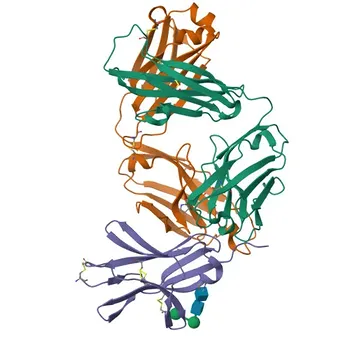
The most direct engineering targets are the variable regions of the antibody, especially the complementarity-determining regions in an scFv or Fab fragment.
These regions form the binding pocket. Small changes can influence:
- Pocket volume
- Hydrogen-bonding patterns
- Electrostatic interactions
- Steric tolerance
- Flexibility around the conserved core
- Relative affinity for different analogs
A targeted point mutation may allow the pocket to accommodate a side-chain variation that previously blocked binding. Several mutations may shift the antibody's recognition profile more substantially, moving its primary interaction away from a variable peripheral group and toward the shared molecular scaffold.
This is not the removal of specificity.
It is the relocation of specificity.
The engineered antibody remains selective for the intended chemical family, but it becomes less dependent on the structural details that separate one family member from another.
From Mutant Fragment to Production Reagent
Once a lead scFv or Fab mutant demonstrates the desired cross-reactivity profile, it can be reformatted as a full IgG or used directly as a fragment, depending on the assay format.
Recombinant production offers several practical benefits:
- The mutation sequence is defined and traceable.
- Animal-derived variability is reduced.
- Lot-to-lot performance can be controlled more closely.
- The antibody can be produced at a scale suitable for IVD manufacturing.
- The same molecular design can support different assay formats.
Purification is equally important.
Protein A or Protein G affinity purification can provide the purity required for ELISA, chemiluminescence immunoassay, and lateral flow applications. Broad binding is only useful when it produces a readable signal. Aggregates, host-cell impurities, and inconsistent antibody quality can increase background and obscure the very inhibition pattern the engineered antibody was designed to create.
The Antibody Does Not Work Alone
A broad-spectrum antibody is one part of a recognition system.
The competing antigen, solid-phase chemistry, sample preparation, label, and cutoff all influence whether the intended cross-reactivity appears in the final device.
Match the Coated Derivative to the Recognition Strategy
In a competitive assay, the coated derivative should also present the conserved chemical core in a way that supports competition from the relevant family members.
If the coating antigen emphasizes a variable portion of one analogue, the assay may unintentionally favor that analogue. The antibody may be broad in solution, but narrow on the plate or membrane.
A generic derivative that exposes the common core can create better chemical alignment between:
- The antibody binding pocket
- The coated antigen
- The residue structures in the sample
This alignment is a key condition for uniform cross-reactivity.
Choose the Signal Format Around the Use Case
Engineered antibodies can support several IVD architectures.
| Assay format | Practical role |
|---|---|
| ELISA | Laboratory screening with scalable throughput |
| Lateral flow | Rapid testing at inspection sites, farms, or collection points |
| CLIA | High-sensitivity automated laboratory workflows |
| Multiplex array | Parallel screening of several unrelated residue classes |
| Confirmatory workflow | Presumptive screening before LC-MS/MS analysis |
In a single-plex lateral flow assay, one test line may represent an entire residue class.
In a multiplex device, adjacent lines can use different engineered antibodies for different classes, such as sulphonamides, fluoroquinolones, or aminoglycosides. A shared recombinant development platform can help maintain more consistent lot performance across the panel.
The Central Choice: Exclusivity or Coverage
Raw material selection is ultimately a decision about what the assay is expected to protect against.
A high-specificity antibody is appropriate when the assay must identify one analyte with minimal interference from related structures. This is often the right choice for quantitative applications, where a false positive or inaccurate concentration has a significant cost.
An engineered broad-spectrum antibody is appropriate when the assay must efficiently rule out a chemical family. It can reduce the number of reagents, test lines, and manufacturing steps required to achieve meaningful coverage.
Neither profile is universally better.
| Feature | High-specificity antibody | Engineered broad-spectrum antibody |
|---|---|---|
| Primary recognition | One analyte or narrow epitope | Conserved core across a chemical family |
| Typical analog coverage | Limited, often around six related structures | Expanded, potentially twelve to seventeen or more |
| Best use | Quantitative or highly exclusive detection | Class-wide screening |
| Production route | Hybridoma or recombinant monoclonal platform | Engineered scFv or Fab, often reformatted as IgG |
| Main strength | Lower risk of unintended cross-reactivity | Broader coverage with fewer assay components |
| Main limitation | Higher cost and complexity for multi-residue panels | Greater need to assess matrix and analogue effects |
The mistake is not choosing breadth.
The mistake is choosing breadth without defining the assay's decision boundary.
What Broadening the Antibody Can Break
Every gain in coverage introduces a new validation responsibility.
Matrix Effects and False Positives
A binding pocket that tolerates more structural variation may also interact with a closely related non-target compound or a matrix component.
Food, environmental, and veterinary samples are chemically crowded. Proteins, pigments, lipids, salts, and naturally occurring metabolites can affect extraction and signal generation.
Risk controls may include:
- Matrix-specific sample cleanup
- Appropriate dilution and extraction protocols
- Cutoff validation with representative negative samples
- Interference testing against structurally related compounds
- Confirmatory LC-MS/MS testing for presumptive positives
The objective is not to eliminate every interaction in the abstract. It is to ensure that the final result remains reliable under the intended operating conditions.
Qualitative Screening Is Not Exact Quantification
Broad-spectrum antibodies are especially valuable for qualitative and semi-quantitative decisions:
- Below the screening threshold
- At or above the screening threshold
- Requires confirmatory testing
They are less suitable for reporting a precise concentration of one analogue when affinity differs across the family.
A sample containing compound A and a sample containing compound B may produce different inhibition at the same mass concentration. That variation is inherent in the cross-reactivity profile.
For exact quantification, developers may need a high-specificity antibody, analyte-specific calibration, or a separate confirmatory method.
Mutation Integrity and Lot Consistency
Genetic engineering establishes the intended design. It does not automatically guarantee stable performance at manufacturing scale.
The expression construct, culture conditions, purification process, aggregation state, and molecular integrity must all be controlled. Even subtle changes can influence apparent affinity and assay background.
A robust raw material package should therefore include:
- Sequence-defined recombinant production
- Purity and identity characterization
- Lot-to-lot functional comparison
- Mass spectrometry or equivalent molecular analysis
- Testing against a defined analogue panel
- Performance data in the intended assay format
Testing only the strongest analogue is insufficient. The relevant question is whether the antibody retains useful response across the full panel.
A Practical Selection Framework for IVD Developers
The development objective should determine the raw material specification.
When the Goal Is Low-Cost Class-Wide Screening
Prioritize an engineered recombinant antibody with demonstrated coverage across more than 90 percent of the target analogue panel at or below the required detection limit.
Pair it with a generic conjugate that presents the conserved core and validate the assay in realistic matrices.
When the Goal Is Single-Analyte Quantification
Select a high-specificity monoclonal antibody with minimal cross-reactivity to structural relatives.
Build the validation panel around exclusivity, interferents, recovery, precision, and analyte-specific calibration.
When the Goal Is Multi-Class Detection
Consider a multiplex lateral flow, array, or chip format.
Each line or region can use a distinct class-specific antibody while preserving a common recombinant production and quality-control strategy.
When Time-to-Market Matters
Reduce development risk by sourcing the antibody, matched antigen, technical services, and assay consultation through a coordinated raw material partner.
This can shorten the feedback loop between molecular design and device performance. It also reduces the chance that an antibody is optimized in isolation from the conjugate or assay format in which it must function.
The Raw Material Partner Becomes Part of the Assay Design
The most useful antibody is not necessarily the one with the highest affinity in a datasheet experiment.
It is the one whose recognition profile matches the intended decision, whose purity supports the signal system, whose sequence can be reproduced, and whose performance has been tested against the compounds that matter.
That requires information beyond a product name:
- Which analogues are recognized?
- At what concentration and in which matrix?
- How uniform is the inhibition profile?
- Which conjugate and assay format were used?
- What are the known cross-reactants?
- How is each production lot released?
- Can the antibody be paired with custom hapten design or assay optimization?
CamelBio supports diagnostic manufacturers, laboratories, and research institutes with one-stop access to IVD raw materials, technical services, and consulting from concept through clinical development.
Its support can include batch-consistent recombinant antibodies, custom hapten design, matched antigens, and assay optimization aligned with the required screening objective.
The Engineering Decision Behind a Broader Assay
A broad-spectrum multi-residue assay is not created by accepting weaker specificity.
It is created by deciding which molecular features deserve the antibody's strongest attention.
Wild-type antibodies often preserve the details of one target. Engineered antibodies can be designed to preserve the identity of a whole family. When that molecular design is matched with the right conjugate, purification strategy, signal format, and validation panel, a single assay can cover compounds that would otherwise require a costly collection of separate reagents.
The result is a diagnostic system that is simpler for the operator and more deliberate for the engineer.
To select the antibody, antigen, and technical strategy that fit your next IVD project, Contact Our Experts.
Related Products
- Anti-Emerin/EMD Polyclonal Antibody for WB, IHC-P, IF/ICC, ELISA - P50402
- EED Rabbit Polyclonal Antibody for WB, IF, IP, ELISA - O75530
- Anti-Emerin/EMD Polyclonal Antibody for WB, IHC-P, IF/ICC, ELISA - P50402
- Anti-EED Rabbit Polyclonal Antibody for WB, IF/ICC, ELISA - O75530
- Anti-IL-6 Polyclonal Antibody for WB and ELISA - P20607
Related Articles
- Matrix Interference in ELISA Development: Designing Accuracy Into Complex-Sample Assays
- From Molecular Binding to Manufacturing Discipline: How Reliable ELISA Kits Are Engineered
- Engineering the Weakest Link: Recombinant Antibodies for Reliable Multi-Analyte Biosensors
- Designing Generic Antibodies: How Hapten Engineering Enables Broad-Spectrum Pesticide Detection
- Why Rapid Immunoassays and GC-MS Work Better Together in Diagnostic Screening