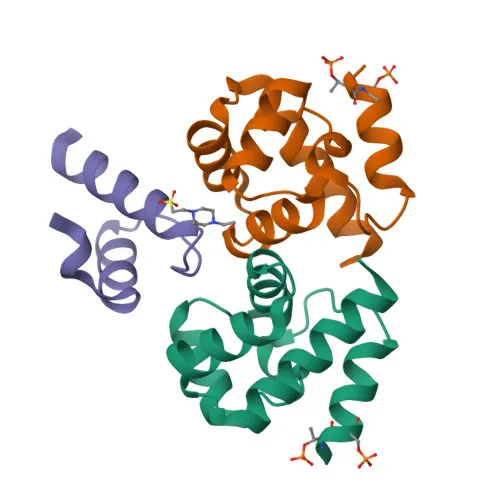
Polyclonal Antibodies
Anti-Emerin/EMD Polyclonal Antibody for WB, IHC-P, IF/ICC, ELISA - P50402
Item Number : CM0017146
Price varies based on specs and customizations
- Application
- WB, IHC-P, IF/ICC, ELISA
- Cross Reactivity
- Human, Mouse
- Protein Weight
- 29kDa

Shipping:
Contact us to get shipping details Enjoy On-time Dispatch Guarantee.
Why Choose Us
Easy ordering process, quality products, and dedicated support for your business success.
Core Product Specifications and Parameters
| Parameter | Value |
|---|---|
| Product Name | Emerin/EMD Rabbit pAb |
| Remarks/Alias | STA; EDMD; LEMD5; Emerin/EMD |
| Species | Human |
| GeneID (Human) | 2010 |
| GeneID | 2010 |
| Immunogen | Recombinant fusion protein containing a sequence corresponding to amino acids 1-220 of human Emerin/Emerin/EMD (NP_000108.1). |
| Source | Rabbit |
| Category | Polyclonal Antibodies |
| Application | WB, IHC-P, IF/ICC, ELISA |
| Cross Reactivity | Human, Mouse |
| SWISS | P50402 |
| Protein Weight | 29kDa |
| Shipping | Ice bag |
Biological Background: Emerin Function and Localization
- Emerin/EMD is a 29 kDa type II integral membrane protein of the nuclear envelope, encoded by the EMD gene (aliases STA, EDMD, LEMD5; UniProt P50402).
- Stabilizes the nuclear actin cortical network and stimulates actin polymerization by binding the pointed end of actin filaments (PubMed:15328537). Related references: PMID:15328537
- Acts as an inhibitor of beta-catenin activity by facilitating its nuclear export via a CRM1-dependent pathway (PubMed:16858403). Related references: PMID:16858403
- Links centrosomes to the nuclear envelope through microtubule association (PubMed:17785515). Related references: PMID:17785515
- Required for proper localization of non-farnesylated prelamin-A/C, important for nuclear lamina architecture (PubMed:19323649). Related references: PMID:19323649
- Cooperates with NEMP1 to maintain nuclear envelope stiffness in germ cells (PubMed:32923640). Related references: PMID:32923640
- Localizes to both the inner and outer nuclear membranes; highly expressed in skeletal muscle, heart, colon, testis, ovary, and pancreas, and is implicated in Emery-Dreifuss muscular dystrophy.
Experimental Guidance and Technical Tips
- Immunogen design covers the N-terminal 220 amino acids of human Emerin, targeting the nucleoplasmic region; the antibody may detect full-length endogenous protein and potential isoforms.
- For Western blot (WB), reduce samples and load 20–30 µg of total protein; expect a band at approximately 29 kDa in human and mouse tissue lysates.
- In immunohistochemistry (IHC-P), antigen retrieval and permeabilization may be required for nuclear envelope labeling; validate in tissues with high Emerin expression (e.g., skeletal muscle, heart).
- For immunofluorescence (IF/ICC), fix cells with paraformaldehyde and permeabilize with Triton X-100; Emerin shows a characteristic nuclear rim pattern.
- ELISA and other applications should be optimized in the relevant sample system; consider using known positive controls (e.g., HeLa, C2C12).
CamelBio: Your One-Stop Sourcing Bridge
CamelBio is your dedicated IVD raw-material sourcing partner, offering this high-quality anti-Emerin polyclonal antibody alongside a comprehensive portfolio of validated antibody pairs, monoclonals, and ancillary reagents for nuclear envelope and muscular dystrophy research. With expert technical support and flexible supply, we bridge the gap from discovery to diagnostic development.
REQUEST A QUOTE
Our professional team will reply to you within one business day. Please feel free to contact us!
Related Articles
Matrix Interference in ELISA Development: Designing Accuracy Into Complex-Sample Assays
Learn how to diagnose and control ELISA matrix interference through sample cleanup, buffer design, calibration, and smarter reagent selection.
From Matrix Noise to Measurable Signal: A Practical Extraction Strategy for ELISA Testing
Learn how pentane extraction, alkaline back-extraction, and neutral buffering remove matrix effects before sensitive ELISA analysis.
From Molecular Binding to Manufacturing Discipline: How Reliable ELISA Kits Are Engineered
Explore the four operational mechanisms that govern ELISA kit performance, from passive coating and washing to signal generation and scalable IVD manufacturing.
Engineering Antibodies for Broad-Spectrum Multi-Residue IVD Screening
How engineered antibodies expand analog coverage, balance specificity and sensitivity, and improve the design of cost-effective multi-residue IVD assays.
Why Broad-Spectrum Antibodies Lose Quantitative Precision in Multi-Residue Pesticide Immunoassays
Explore how differential reactivity and matrix interference limit generic antibody accuracy, and how assay engineering restores reliable pesticide screening.
Engineering the Weakest Link: Recombinant Antibodies for Reliable Multi-Analyte Biosensors
Learn how engineered recombinant antibodies improve multi-analyte biosensors through uniform recognition, oriented surfaces, avidity, and wider dynamic range.
Designing Generic Antibodies: How Hapten Engineering Enables Broad-Spectrum Pesticide Detection
Learn how strategic hapten design exposes conserved pesticide structures, improves antibody cross-reactivity, and guides reliable multi-residue assays.
Why Rapid Immunoassays and GC-MS Work Better Together in Diagnostic Screening
Discover how immunoassays and GC-MS divide screening and confirmation to improve diagnostic speed, cost control, and analytical certainty.
Engineering Trace-Level Sensitivity in Indirect Competitive ELISA for Small-Molecule Contaminants
How heterologous haptens, indirect signal amplification, and raw-material control push competitive ELISA sensitivity into the low-ng/mL range.
Designing Broad-Spectrum Immunoassays: The Antibody and Conjugate Strategy Behind Multi-Residue Detection
Learn how engineered antibodies, hapten conjugates, and affinity blending enable sensitive, broad-spectrum screening of small-molecule residues.
The Signal You Lose Before the qPCR Run Begins: A Practical System for Protecting Primers and Fluorogenic Probes
Learn how aliquoting, dark storage, controlled thawing, and buffer choice protect qPCR fluorescence, Cq reproducibility, and assay sensitivity.
Primer Melting Temperature in IVD Design: From Simple Rules to Thermodynamic Uniformity
Learn how sequence, GC content, salt, concentration, and secondary structure shape primer Tm and determine reliable molecular diagnostic performance.