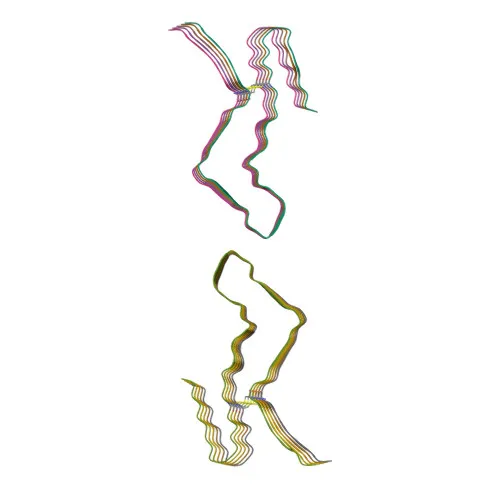
Polyclonal Antibodies
Anti-Prion Protein Polyclonal Antibody for WB, ELISA - P04156
Item Number : CM0024107
Price varies based on specs and customizations
- Application
- WB, ELISA
- Cross Reactivity
- Mouse
- Protein Weight
- 28kDa

Shipping:
Contact us to get shipping details Enjoy On-time Dispatch Guarantee.
Why Choose Us
Easy ordering process, quality products, and dedicated support for your business success.
Core Product Specifications and Parameters
| Parameter | Value |
|---|---|
| Product Name | Prion Protein Rabbit pAb |
| Remarks/Alias | CJD; GSS; PrP; ASCR; KURU; PRIP; PrPc; CD230; AltPrP; p27-30; PrP27-30; PrP33-35C; Prion Protein |
| Species | Human |
| GeneID (Human) | 5621 |
| GeneID | 5621 |
| Immunogen | Recombinant fusion protein containing a sequence corresponding to amino acids 23-230 of human Prion Protein (NP_001073592.1) |
| Source | Rabbit |
| Category | Polyclonal Antibodies |
| Application | WB, ELISA |
| Cross Reactivity | Mouse |
| SWISS | P04156 |
| Protein Weight | 28kDa |
| Shipping | Ice bag |
Biological Background: Prion Protein Function and Localization
- The major prion protein is encoded by the PRNP gene and is also known as ASCR, PrP27-30, PrP33-35C, CD230, and p27-30.
- Its physiological function is not fully understood; it may contribute to neuronal development and synaptic plasticity, and is potentially required for myelin sheath maintenance.
- PrP may promote myelin homeostasis by acting as an agonist for the ADGRG6 receptor.
- It has been implicated in cellular iron uptake and iron homeostasis.
- In vitro studies indicate that soluble oligomers of PrP are toxic to cultured neuroblastoma cells and can induce apoptosis.
- The protein localizes to the cell membrane and the Golgi apparatus, anchored by a GPI moiety.
- PrP is a glycoprotein with a disulfide bond and binds copper and zinc ions; it may provide these metals for the ascorbate-mediated degradation of heparan sulfate chains on GPC1.
- Post-translational modifications and metal-binding properties are key features of this prion protein.
Experimental Guidance and Technical Tips
- The immunogen corresponds to amino acids 23-230 of human prion protein (NP_001073592.1), covering the N-terminal domain. This antibody may recognize both full-length and truncated forms of PrP.
- In Western blotting, the predicted molecular weight is approximately 28 kDa, but glycation and GPI anchor modifications can cause bands to appear at different sizes. Validate the observed band against appropriate controls.
- For ELISA applications, consider using this polyclonal antibody as a capture or detection reagent, paired with a monoclonal antibody to improve specificity.
- As the antibody cross-reacts with mouse PrP, it can be employed in mouse model studies of prion diseases; however, confirm cross-reactivity in your specific system.
- Optimal dilutions and incubation conditions should be determined empirically for each experimental setup.
CamelBio: Your One-Stop Sourcing Bridge
CamelBio provides diagnostic manufacturers, laboratories, and research institutes with a comprehensive one-stop platform for IVD raw materials, technical services, and consulting. For prion protein research and neurodegenerative disease diagnostics, we offer validated antibody pairs, optimized monoclonal and polyclonal antibodies, bulk ancillary reagents, and sourcing of rare targets to support your assay development from concept to clinic. Partner with CamelBio to streamline your raw material procurement and accelerate your project timelines.
REQUEST A QUOTE
Our professional team will reply to you within one business day. Please feel free to contact us!
Related Articles
qPCR Primer Design: The Small Decisions That Determine Assay Reliability
A practical guide to qPCR primer design, from amplicon length and 3' stability to validation for efficient, reproducible diagnostics.
ROX in qPCR: The Quiet Reference That Makes Diagnostic Signals Trustworthy
Learn how ROX normalizes qPCR fluorescence, stabilizes Ct calls, and shapes the trade-off between instrument compatibility and multiplexing.
Why Minor Groove Binders Turn Short Hydrolysis Probes into Precision Diagnostic Tools
MGB chemistry improves probe stability, SNP discrimination, signal-to-noise ratio, and low-copy detection in demanding molecular assays.
Why Similar Molecules Produce Different ELISA Sensitivity: The Engineering of PCP and PCA Assays
Explore how antibody affinity, hapten architecture, conjugate design, and sample extraction shape sensitivity in competitive PCP and PCA ELISAs.
Engineering the Weakest Link: Recombinant Antibodies for Reliable Multi-Analyte Biosensors
Learn how engineered recombinant antibodies improve multi-analyte biosensors through uniform recognition, oriented surfaces, avidity, and wider dynamic range.
Designing Generic Antibodies: How Hapten Engineering Enables Broad-Spectrum Pesticide Detection
Learn how strategic hapten design exposes conserved pesticide structures, improves antibody cross-reactivity, and guides reliable multi-residue assays.
Competitive ELISA vs. GC/MS: Building a Faster, Defensible Strategy for Trace Detection
Learn how competitive ELISA compares with GC/MS for trace detection and how to validate immunoassay kits for reliable laboratory screening.
pH Is a Hidden Variable: Engineering More Reliable Competitive ELISA Kits for Small-Molecule Contaminants
Learn how precise pH control protects antibody binding, HRP activity, sensitivity, and reproducibility during competitive ELISA development.
qPCR Efficiency: The Mathematical Foundation of Reliable Molecular Diagnostics
Learn how qPCR efficiency is calculated, why the 90–100% range matters, and how it protects diagnostic accuracy, sensitivity, and compliance.
Where Ct Values Become Trustworthy: Establishing the qPCR Fluorescence Threshold
Learn how baseline noise, statistical thresholds, exponential-phase placement, and validation turn qPCR fluorescence into reliable Ct values.
Why Open Chemistry and Flexible Reaction Volumes Define Better Diagnostic PCR Systems
Learn how open chemistry compatibility and flexible reaction volumes improve PCR assay control, sensitivity, cost, scalability, and supply independence.
The Signal You Lose Before the qPCR Run Begins: A Practical System for Protecting Primers and Fluorogenic Probes
Learn how aliquoting, dark storage, controlled thawing, and buffer choice protect qPCR fluorescence, Cq reproducibility, and assay sensitivity.