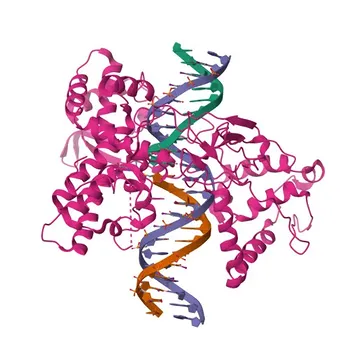
Formulating a one-step real-time RT-PCR master mix for viral RNA detection requires a precise combination of enzymes, nucleotides, primers, probes, and stabilizing agents. The core raw materials are a one-step RT-PCR enzyme mix (containing a reverse transcriptase and a hot-start DNA polymerase), a compatible reaction buffer, a dNTP mix, supplementary magnesium chloride, target-specific forward and reverse primers, a dual-labeled fluorogenic hydrolysis probe (TaqMan probe), an RNase inhibitor, and a passive reference dye like ROX for signal normalization. All components are brought together in a nuclease-free water matrix, creating a stable, reproducible master mix that is combined with viral RNA template for detection.
A standard TaqMan one-step RT-PCR master mix is not a single reagent—it is a nine‑part formulation where each component plays a discrete, non‑negotiable role in reverse transcription, target amplification, fluorescence generation, and signal normalization. Getting the raw materials and their ratios right is what separates a sensitive, robust diagnostic assay from an unreliable one.
The Essential Raw Materials and Their Functional Roles
The master mix functions as an integrated system. Every ingredient is selected to solve a specific biochemical challenge inherent to converting viral RNA into a measurable fluorescence signal in a single closed tube.
The Enzyme Mix: The Catalytic Core
A one-step RT-PCR enzyme mix bundles two essential activities into one reagent. It contains a reverse transcriptase to synthesize cDNA from the viral RNA template, and a hot-start DNA polymerase (usually a variant of Taq) to amplify that cDNA during thermal cycling.
The hot-start property is critical. It keeps the polymerase inactive at room temperature, preventing non‑specific amplification during reaction setup. Activity is only triggered at the initial denaturation step, ensuring that amplification begins precisely and specifically.
The enzyme mix is supplied at a high concentration and added directly to the master mix in very small volumes—typically just a fraction of a microliter per reaction—underscoring its potency and the need for accurate pipetting.
The 5× Reaction Buffer: The Ionic Environment
A dedicated 5× reaction buffer provides the optimal pH, salt concentration, and stabilizing agents required for both enzyme reactions. It creates the chemical environment in which the reverse transcriptase and DNA polymerase can operate with maximum efficiency.
The buffer is formulated at a 5× concentration so that when combined with the other master mix components, the final 1× working concentration is perfectly balanced. This buffer often already contains a baseline amount of magnesium, detergents, and enhancers, but additional MgCl₂ is frequently added to fine-tune the reaction.
Nucleotides and the Magnesium Cofactor
A balanced dNTP mix (dATP, dCTP, dGTP, dTTP) is the building block for both cDNA synthesis and subsequent DNA amplification. High-purity nucleotides are essential, as impurities can inhibit polymerases or introduce sequencing errors.
Supplemented magnesium chloride (MgCl₂, often from a 25 mM stock) acts as a critical cofactor. Magnesium ions form soluble complexes with dNTPs—these complexes are the true substrates recognized by DNA polymerases. Free Mg²⁺ concentration also influences primer‑template annealing stability and enzyme processivity. Because dNTPs chelate magnesium, the total dNTP concentration directly impacts the free Mg²⁺ available; formulators must carefully titrate the extra MgCl₂ to hit the activity sweet spot for their specific primer‑probe system.
Target-Specific Primers and the TaqMan Hydrolysis Probe
The analytical specificity of the assay comes from two sequence‑specific primers (forward and reverse) and a fluorogenic hydrolysis probe.
Primers define the amplicon boundaries. They are designed to flank a conserved region of the viral genome, ensuring that only the target pathogen’s RNA generates a product.
The TaqMan probe sits between the primers. It is a short oligonucleotide dual‑labeled with a reporter fluorophore (such as FAM) at the 5′ end and a dark quencher (such as BHQ‑1) at the 3′ end. When the probe is intact, the quencher suppresses the reporter’s fluorescence through Förster resonance energy transfer. During amplification, the Taq polymerase’s 5′→3′ exonuclease activity cleaves the probe, separating reporter from quencher and generating a fluorescence signal that increases in direct proportion to the amount of target amplicon.
RNA Protective Agents: The RNase Inhibitor
Viral RNA is inherently fragile. Ubiquitous RNases in the environment and on lab surfaces can degrade the template even as the reaction is being set up. An RNase inhibitor (typically a recombinant protein that binds and inactivates common RNases) is added to the master mix to protect the sample RNA during pipetting and before the reverse transcription step begins. This is especially vital when working with low‑titer clinical samples where any loss of RNA directly pushes the assay below its limit of detection.
Passive Reference Dye: ROX for Signal Normalization
ROX reference dye does not participate in the amplification reaction. It is an inert fluorescent molecule that provides a constant, internal fluorescent signal.
Real‑time PCR instruments use ROX to normalize for non‑PCR‑related fluorescence fluctuations. Well‑to‑well variations in volume, bubbles, or optical inconsistencies are corrected by comparing the reporter signal (FAM) to the steady ROX signal. Without ROX normalization, even minor pipetting errors can be misinterpreted as changes in target concentration, reducing the assay’s quantitative precision.
Nuclease-Free Water: The Matrix That Holds It All Together
All components are diluted and combined in nuclease‑free water. This ensures that the master mix itself does not introduce RNases, DNases, or ionic contaminants that could degrade the template or interfere with enzyme activity. It is the simplest ingredient, yet using non‑sterile or low‑grade water is one of the most common causes of assay failure.
Understanding the Trade-offs in Master Mix Formulation
Designing a master mix is an exercise in balancing competing biochemical demands. Even with the right raw materials, the final performance hinges on how they are combined.
The Magnesium‑dNTP Interplay
A higher free Mg²⁺ concentration increases polymerase activity and can improve yield, but it also lowers the melting temperature (Tm) of primer‑template duplexes, increasing the risk of non‑specific amplification and primer‑dimer formation. Since dNTPs bind Mg²⁺, a master mix with a higher dNTP concentration demands proportionally more total magnesium. Miscalculating this balance leads to complete loss of assay specificity.
Enzyme Activity Versus Background
Using an excessive amount of reverse transcriptase or DNA polymerase may speed up the reaction, but it often introduces elevated background fluorescence and can increase the activity of any residual nucleases. Conversely, too little enzyme extends the cycling time and reduces sensitivity. The optimal enzyme ratio is determined empirically but must remain consistent between batches.
RNase Inhibitor Stability
RNase inhibitors are often sensitive to oxidation and repeated freeze‑thaw cycles. A master mix that sits too long at room temperature or is improperly stored loses this protective activity. This is a silent failure mode: the assay will still appear to work with high‑copy‑number controls while failing to detect low viral loads in real patient samples.
The Hidden Role of Water
Even nuclease‑free water can contain trace metals or organic contaminants that inhibit polymerases. For commercial diagnostic kits, water quality must be validated by lot, as seemingly minor changes in source purification can measurably shift the assay’s baseline fluorescence or reaction efficiency.
Making the Right Choice for Your Goal
Your selection of raw materials and their concentrations must align with the intended use of the assay. The following recommendations translate the biochemical principles into practical guidance.
- If your primary focus is maximum sensitivity for low‑titer clinical samples: Prioritize an ultra‑pure hot‑start enzyme mix with minimal exonuclease side‑activity, include a high‑activity RNase inhibitor, and titrate MgCl₂ carefully to favor high amplification efficiency without sacrificing specificity. Use HPLC‑purified primers and probes to eliminate short‑mer synthesis artifacts.
- If your primary focus is robust, batch‑to‑batch consistency for a commercial IVD kit: Source all raw materials as certified IVD‑grade to guarantee lot traceability and low endotoxin levels. Standardize working concentrations (e.g., primers at 10 pmol/µL, probe at 5 pmol/µL) across all batches, and include ROX at a concentration validated for the specific real‑time PCR instrument your customers will use.
- If your primary focus is rapid assay development and screening: Opt for a pre‑formulated 2× one‑step RT‑PCR master mix that already contains buffer, dNTPs, magnesium, and ROX. You then only add your custom primers, probe, and enzyme mix, dramatically reducing the number of pipetting steps and the potential for error.
Mastering a one‑step TaqMan RT‑PCR master mix comes down to treating each component not as an isolated ingredient, but as a member of a tightly coupled chemical system where the enzyme, nucleotides, ions, and protective agents must be perfectly harmonized to deliver a reliable result from the first viral copy to the last.
Summary Table:
| Component | Functional Role | Key Formulation Consideration |
|---|---|---|
| One-Step Enzyme Mix | Converts viral RNA to cDNA (RT) and amplifies target (Hot-Start Taq) | Hot-start mechanism prevents non-specific room-temperature amplification. |
| 5× Reaction Buffer | Maintains optimal pH, ionic strength, and enzyme stability | Requires precise balance of salts and titrations for dual enzyme activity. |
| dNTP Mix | Building blocks for cDNA synthesis and PCR amplification | High purity essential; chelates Mg²⁺ ions, affecting free magnesium levels. |
| Magnesium Chloride (MgCl₂) | Essential enzyme cofactor; stabilizes primer/probe annealing | Must be titrated against total dNTP concentration to balance yield vs. specificity. |
| Primers & TaqMan Probe | Specific target recognition and fluorescence signal generation | Dual-labeled probe (reporter/quencher) cleaved by 5′→3′ exonuclease activity. |
| RNase Inhibitor | Protects fragile viral RNA templates from enzymatic degradation | Crucial for maintaining limit of detection (LoD) in low-titer clinical samples. |
| ROX Reference Dye | Passive fluorescent control for signal normalization | Corrects for non-PCR optical and volume variations across real-time PCR wells. |
| Nuclease-Free Water | Solvent matrix ensuring absence of nucleases and contaminants | Lot-validated water quality prevents silent enzyme inhibition or high background. |
Accelerate Your RT-PCR Assay Development with CamelBio
Formulating a sensitive, batch-to-batch consistent TaqMan-based RT-PCR master mix requires ultra-pure raw materials and precise chemical tuning. CamelBio provides diagnostic manufacturers, clinical labs, and research institutes with one-stop access to premium IVD raw materials, technical services, and formulation consulting—supporting your assay at every stage from concept to clinic.
Ready to elevate your diagnostic assay performance? Contact CamelBio Today to discuss your raw material and OEM requirements.
Related Products
- Anti-BTLA Rabbit Polyclonal Antibody for WB, ELISA - Q7Z6A9
- Anti-tPA/PLAT Rabbit Monoclonal Antibody for WB, IF/ICC, IF-P, ELISA - P00750
- Monoclonal Mouse IgG1 Isotype Control Antibody (Conjugate) for Flow Cytometry - Mouse IgG 1 isotype control
- Anti-NRAS Rabbit Polyclonal Antibody for WB - P01111
- Anti-TPMT Rabbit Polyclonal Antibody for WB, IF/ICC, ELISA - P51580
People Also Ask
- How do molecular beacon probes function in multiplex diagnostic assays? Key design strategies for qPCR.
- What are the limitations of MS in E. coli vs. Shigella identification? Boost Accuracy with Biochemical Reagents
- What lot-to-lot validation procedure for incoming RT-PCR primers and probes? Ensure Assay Integrity
- How do automated IVD analyzers prevent sample aspiration errors, probe crashes, and clot-related failures?
- How do latex particle physical and chemical properties influence the performance of light scattering immunoassays?