The Clean Cut That Creates a Difficult Reaction
A DNA fragment can arrive at the ligation step looking perfectly prepared: both strands are intact, the ends are clean, and the sequence is exactly what the workflow requires.
Yet the reaction may still fail.
The reason is often hidden in the geometry of the DNA terminus. A blunt-ended fragment ends precisely at a base pair. There is no single-stranded tail extending beyond the duplex, no temporary base pairing, and no built-in signal telling one DNA end how to find its partner.
The cut is clean.
The chemistry is not.
This distinction matters in diagnostic library preparation, recombinant positive-control development, and vector construction. In each application, the reliability of a downstream assay can depend on whether a ligase is capable of converting a low-probability molecular collision into a stable phosphodiester bond.
What Blunt-Ended DNA Actually Means
A Flush Duplex Terminus
A blunt end is formed when both strands of a DNA duplex terminate at the same nucleotide position.
The resulting structure contains:
- A double-stranded DNA fragment with no overhang
- A 5' phosphate group on one strand
- A 3' hydroxyl group on the opposing strand
- No unpaired nucleotides available for temporary base pairing
Structurally, it is simple. Functionally, it is unforgiving.
Sticky ends, by contrast, contain complementary single-stranded overhangs. Those overhangs can recognize one another and briefly anneal before the enzyme completes the bond. The DNA molecules effectively help position themselves.
Blunt-ended molecules have no such assistance.
The Absence of Molecular Guidance
With sticky ends, sequence complementarity creates a degree of selectivity. With blunt ends, almost any compatible blunt terminus can potentially join another.
That non-specificity can be useful. It can also be dangerous.
In a sequencing library, the goal may be to attach universal adapters to a diverse population of DNA fragments. Non-specific joining is desirable because the workflow must treat many different sequences equally.
In plasmid construction, however, non-specificity can create unwanted products. Inserts may join to themselves, vectors may recircularize, and tandem repeats may form.
The same physical property can therefore be an advantage in one workflow and a source of background in another.
Why Ligation Becomes a Kinetic Problem
Blunt-end ligation is not simply a less convenient version of sticky-end ligation. It follows a more difficult reaction path.
For a successful ligation event, the enzyme must:
- Encounter two freely diffusing DNA ends.
- Capture both molecules before they separate.
- Position the ends with the correct geometry.
- Activate the DNA termini.
- Catalyze formation of the phosphodiester bond.
- Release a joined product without introducing process variability.
Sticky ends reduce the burden on several of these steps because complementary bases help hold the fragments together.
Blunt ends do not remain associated. The enzyme must provide much of the positioning function itself. As a result, the reaction is slower and more dependent on the concentration, purity, and intrinsic activity of the ligase.
This is why high-activity T4 DNA ligase is not merely a convenient reagent choice. It is a response to the underlying kinetics of the substrate.
The Role of High-Activity T4 DNA Ligase
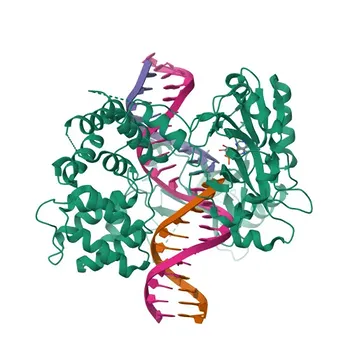
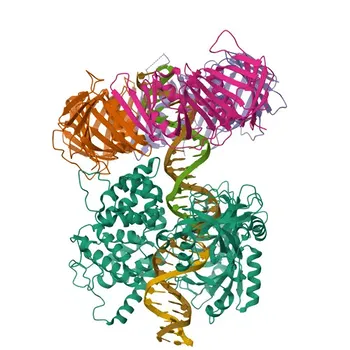
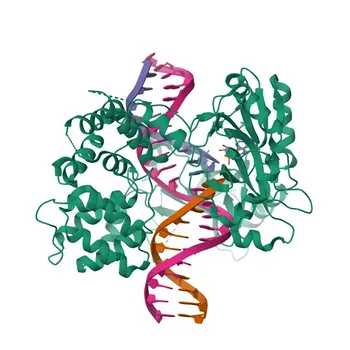
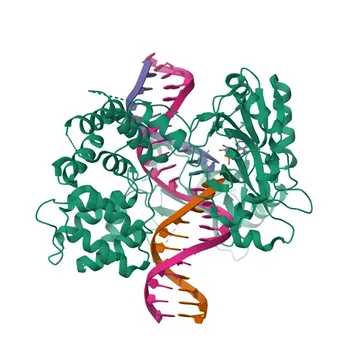
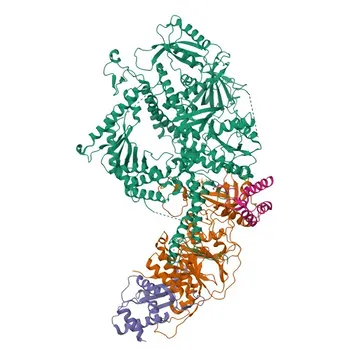
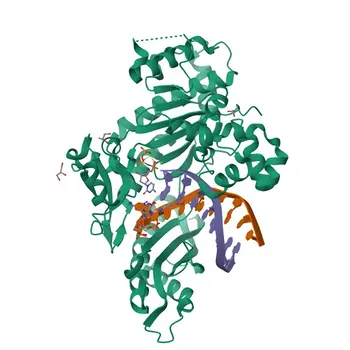
T4 DNA ligase catalyzes the joining of DNA fragments by forming a covalent phosphodiester bond between a 5' phosphate and a neighboring 3' hydroxyl.
In blunt-end workflows, the enzyme must work against a weakly favorable encounter between DNA termini. High activity improves the probability that transient collisions become productive ligation events.
That improvement has several practical consequences:
- More complete joining within a defined incubation period
- Better recovery of usable library molecules
- Higher recombinant clone yield
- Lower dependence on repeated troubleshooting
- Greater consistency across samples and production lots
Activity alone is not enough. Diagnostic workflows also require purity and reproducibility. An enzyme with strong nominal activity but inconsistent lot performance can shift ligation efficiency from one manufacturing run to the next.
For regulated products, that variability is not a minor inconvenience. It can become a documentation problem, a release risk, or a direct threat to control-material availability.
Blunt Ends in NGS Library Preparation
NGS library preparation reveals why blunt-end ligation can be both technically difficult and strategically valuable.
Fragmented DNA is often processed through end repair. The purpose is to produce ends with a defined structure, commonly including blunt termini and 5' phosphorylation. Once the fragments have been standardized, sequencing adapters can be ligated onto them.
At this stage, every lost fragment changes the library.
Uniform Adapter Attachment
A diagnostic library should preserve as much of the original sample complexity as possible. If some fragments ligate efficiently while others do not, the resulting library may no longer represent the original DNA population.
The consequences can include:
- Uneven genomic coverage
- Increased sequence bias
- Reduced detection of low-abundance targets
- Greater risk of allelic dropout
- Lower sensitivity near the assay's limit of detection
A high-activity, high-purity ligase helps increase the number of fragments that receive adapters. It does not eliminate every source of bias, but it strengthens one of the most consequential steps in the workflow.
The Adapter-Dimer Problem
The same non-specific chemistry that helps attach adapters to sample fragments can also allow adapters to ligate to one another.
Adapter dimers consume sequencing capacity without contributing meaningful sample information. They can also complicate purification and reduce the proportion of productive library molecules.
The solution is not simply to add more enzyme. A robust process must balance:
- Adapter concentration
- DNA input amount
- Molar ratios
- Reaction time
- Enzyme activity
- Purification strategy
- Removal of short unwanted products
The ligase is central, but it operates inside a system. Good library performance comes from controlling the whole reaction environment.
Blunt-End Vector Construction and Positive Controls
The challenge appears differently when constructing a recombinant positive control for a PCR-based diagnostic assay.
A synthetic DNA fragment may contain the target sequence needed to represent a pathogen, mutation, or analyte. That fragment must be inserted into a plasmid vector so it can be amplified, quantified, stabilized, and incorporated into a controlled testing process.
A failed ligation does more than waste a reaction tube. It can delay verification, extend development timelines, and create a shortage of dependable control material.
Maximizing Correct Recombinant Yield
Because blunt ends do not provide directional pairing, the reaction often requires deliberate optimization.
Common considerations include:
- Using a molar excess of insert relative to vector
- Maintaining a suitable DNA concentration
- Extending incubation when necessary
- Using a high-activity T4 DNA ligase
- Preventing vector self-ligation
- Screening for correct insert orientation and copy number
An insert-to-vector molar ratio greater than 3:1 is often a useful starting point, although the optimal ratio depends on fragment length, vector concentration, and the specific construction strategy.
The goal is not to force every molecule into a product. The goal is to shift the probability distribution toward the desired recombinant construct.
Controlling Concatemers
Blunt-ended inserts can ligate to one another before they encounter the vector. The result may be a concatemer: a tandem arrangement of repeated insert sequences.
Concatemers are especially problematic when the intended positive control requires a defined copy number or a single target arrangement. They can create ambiguous screening results and complicate downstream characterization.
Vector dephosphorylation can reduce vector self-ligation by removing the 5' phosphate required for bond formation. Crowding agents such as PEG may also increase the effective concentration of DNA ends and favor productive intermolecular encounters.
These interventions do not change the fundamental chemistry. They change which reactions are most likely to occur.
The Trade-Off: Power Does Not Remove Constraints
High-activity ligase improves blunt-end joining, but it does not turn blunt ends into sticky ends.
The inherent limitations remain:
| Workflow factor | Blunt-ended DNA challenge | Practical response |
|---|---|---|
| Molecular recognition | No complementary overhangs guide pairing | Use an active ligase and carefully control DNA concentration |
| Reaction speed | Productive collisions are relatively infrequent | Optimize incubation time and enzyme amount |
| Library complexity | Unligated fragments may be lost | Protect input diversity through efficient adapter ligation |
| Adapter dimers | Adapters can join to one another | Optimize molar ratios and purification |
| Vector background | The vector may self-ligate | Consider vector dephosphorylation |
| Concatemers | Inserts may join in tandem | Adjust insert concentration and screen recombinant products |
| Manufacturing consistency | Lot variation can alter yield | Use validated, batch-consistent enzyme supply |
This is where technical judgment matters. A reagent cannot compensate indefinitely for an unbalanced reaction design.
Choosing the Right Enzyme for the Intended Outcome
The best ligase decision begins with the product requirement, not the catalog description.
For NGS Library Preparation
Prioritize:
- High catalytic activity
- High purity
- Low nuclease contamination
- Compatibility with the buffer and adapter system
- Consistent performance across sample types
- Reliable recovery of complex libraries
Here, the enzyme contributes directly to the representation of the original sample. Small efficiency differences can become meaningful after amplification and sequencing.
For Vector Construction
Prioritize:
- Strong blunt-end ligation performance
- Compatibility with the vector and insert preparation method
- Reproducible performance at the intended DNA concentration
- Support for screening and optimization
- A protocol that limits self-ligation and concatemer formation
The desired outcome is not simply "more ligation." It is more correctly assembled molecules.
For Regulated Diagnostic Positive Controls
Prioritize:
- Rigorous lot-to-lot consistency
- Defined activity specifications
- Stable formulation and storage performance
- Technical documentation
- Supply continuity
- Application support during method development and transfer
A positive control becomes part of the diagnostic system's evidence chain. Its production process therefore deserves the same discipline applied to other critical raw materials.
From Reagent Selection to Clinical Reliability
The path from a DNA fragment to a diagnostic result contains many small transitions.
A fragment is repaired. An adapter is attached. A construct is screened. A control is quantified. A kit is transferred to manufacturing. A laboratory eventually uses that kit to make a decision about a patient.
At each transition, variability can accumulate.
High-activity T4 DNA ligase does not solve the entire workflow. It does something more precise: it makes a difficult molecular step more predictable. That predictability supports higher library complexity, stronger recombinant yields, and more stable control production.
For diagnostic manufacturers, the practical question is therefore broader than whether an enzyme can ligate DNA.
The better questions are:
- Can its activity be reproduced from lot to lot?
- Has its purity been validated for the intended application?
- Does the supplier understand the surrounding workflow?
- Can technical support continue from early development through manufacturing?
- Is supply reliable enough for a regulated product?
Why an Integrated Raw-Material Partner Matters
For laboratories and research institutes, a ligase may be one component among many.
For diagnostic manufacturers, it is part of a larger chain that includes raw-material qualification, assay development, process transfer, documentation, troubleshooting, and scale-up.
CamelBio provides diagnostic manufacturers, laboratories, and research institutes with one-stop access to IVD raw materials, technical services, and consulting. Its support extends from concept to clinic, helping teams evaluate molecular enzymes in the context of the complete diagnostic workflow.
That context matters because the most effective solution is rarely the strongest reagent in isolation. It is the reagent, protocol, quality profile, and supply strategy that work together.
Final Perspective
Blunt-ended DNA is deceptively minimal. Its flush geometry removes the molecular guidance that makes sticky-end ligation efficient.
That absence creates a kinetic barrier.
High-activity T4 DNA ligase helps overcome the barrier by capturing transient DNA encounters and converting them into stable bonds. In NGS library preparation, this supports broad fragment recovery and reduced bias. In vector construction, it improves the probability of obtaining the intended recombinant molecule while demanding careful control of background products.
The engineering lesson is simple: when a system lacks natural alignment, performance depends on the quality of the mechanism that supplies it.
For dependable enzymes, application guidance, and diagnostic raw-material support across development and manufacturing, begin with Contact Our Experts.
Related Products
- Anti-DNA Ligase IV Rabbit Monoclonal Antibody for WB, ELISA - P49917
- Anti-DNA Ligase IV Rabbit Polyclonal Antibody for WB, IHC-P, ELISA - P49917
- Anti-DNA Ligase III/LIG3 Rabbit Polyclonal Antibody for WB, IP, ELISA - P49916
- Anti-DNA Ligase I Monoclonal Antibody for WB, IHC-P, IF/ICC, ELISA - P18858
- Anti-DNA Ligase III/LIG3 Rabbit Polyclonal Antibody for WB, IHC-P, IF/ICC, ELISA - P49916