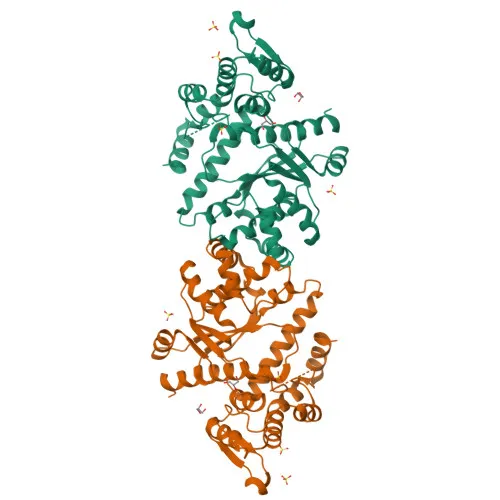
Polyclonal Antibodies
Anti-YARS Rabbit Polyclonal Antibody for WB, IP, ELISA - P54577
Item Number : CM0028740
Price varies based on specs and customizations
- Application
- WB, IP, ELISA
- Cross Reactivity
- Human, Mouse, Rat
- Protein Weight
- 59kDa

Shipping:
Contact us to get shipping details Enjoy On-time Dispatch Guarantee.
Why Choose Us
Easy ordering process, quality products, and dedicated support for your business success.
Core Product Specifications and Parameters
| Parameter | Value |
|---|---|
| Product Name | YARS Rabbit pAb |
| Remarks/Alias | YRS; YTS; YARS; TYRRS; CMTDIC; IMNEPD2 |
| Species | Human |
| GeneID (Human) | 8565 |
| GeneID | 8565 |
| Immunogen | Recombinant fusion protein containing a sequence corresponding to amino acids 1-300 of human YARS (NP_003671.1) |
| Source | Rabbit |
| Category | Polyclonal Antibodies |
| Application | WB, IP, ELISA |
| Cross Reactivity | Human, Mouse, Rat |
| SWISS | P54577 |
| Protein Weight | 59kDa |
| Shipping | Ice bag |
Biological Background: YARS Function and Localization
- Encodes cytoplasmic tyrosine--tRNA ligase (tyrosyl-tRNA synthetase, TyrRS), a member of the class-I aminoacyl-tRNA synthetase family essential for protein biosynthesis.
- Catalyzes the attachment of tyrosine to tRNA(Tyr) in a two-step reaction: tyrosine is activated by ATP to form Tyr-AMP and then transferred to the acceptor end of tRNA(Tyr). Also acts as a positive regulator of poly-ADP-ribosylation in the nucleus, independently of its tRNA ligase activity. Activity is switched upon resveratrol-binding: resveratrol strongly inhibits the tyrosine--tRNA ligase activity and promotes relocalization to the nucleus, where YARS1 specifically stimulates the poly-ADP-ribosyltransferase activity of PARP1. Related references: PMID:25533949
- Localizes predominantly in the cytoplasm but undergoes stimulus-dependent translocation to the nucleus.
- Contains ATP-binding and tRNA-binding domains characteristic of aminoacyl-tRNA synthetases; post-translational modifications include acetylation and phosphorylation.
- Genetic variants in YARS1 are associated with Charcot-Marie-Tooth disease type DIC and other neuropathies, highlighting its role in neuronal maintenance.
- Key biological processes: protein translation, tRNA aminoacylation, poly-ADP-ribosylation, and cellular stress responses.
Experimental Guidance and Technical Tips
- The immunogen corresponds to the N-terminal region (a.a. 1–300) of human YARS, enabling detection of full-length protein as well as potential N-terminal fragments or isoforms.
- For Western blot (WB), consider using whole-cell lysates from human, mouse, or rat cell lines; validate antibody dilution and exposure conditions in your specific sample system.
- In immunoprecipitation (IP), verify the antibody’s efficiency in pulling down endogenous YARS from your chosen cell type, as binding may be influenced by post-translational modifications or binding partners.
- For ELISA, use recombinant YARS protein as a positive control; perform appropriate blocking and washing steps to minimize non-specific binding.
- Because cross-reactivity with mouse and rat has been demonstrated, this antibody is suitable for comparative studies across these species; however, always confirm specificity in your experimental model.
CamelBio: Your One-Stop Sourcing Bridge
CamelBio provides diagnostic manufacturers, laboratories, and research institutes with seamless access to IVD raw materials, technical services, and consulting—from concept to clinic. For studies on aminoacyl-tRNA synthetases, protein synthesis, or neurodegeneration, we offer validated antibody pairs, optimized monoclonal and polyclonal antibodies, bulk ancillary reagents, and specialized sourcing for rare-target raw materials. Let CamelBio be your bridge to reliable, high-quality research supplies.
REQUEST A QUOTE
Our professional team will reply to you within one business day. Please feel free to contact us!