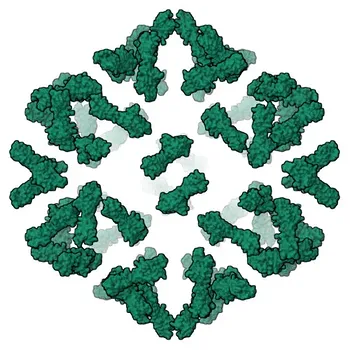
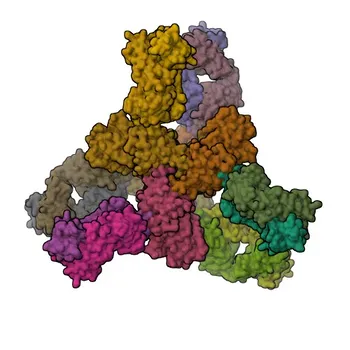
Carrier proteins and hapten conjugates are indispensable for building light-scattering inhibition immunoassays that detect small-molecule analytes. These molecules—like therapeutic drugs, hormones, or pesticides—cannot directly trigger an immune response or form a light-scattering lattice on their own. To solve this, the target hapten is chemically linked to a high-molecular-weight carrier protein both to generate specific antibodies and to create a synthetic competitor. In the assay, free hapten from a patient sample competes with this hapten-carrier conjugate for antibody binding sites, attenuating the light-scattering signal in direct proportion to the analyte concentration.
Small molecules are invisible to traditional agglutination-based detection—they lack the size and multivalency to cross-link antibodies into a measurable precipitate. The entire assay hinges on intelligently designed hapten-carrier conjugates: one conjugate to raise antibodies that recognize the free analyte, and another to act as a multivalent competitor that generates a quantifiable, inversely proportional signal when the free analyte is absent.
Why Small Molecules Remain Invisible Without a Scaffold
The Hapten Limitation
Small-molecule analytes, or haptens, typically weigh less than 1,000 Da. Their minuscule size means they are non-immunogenic—they cannot independently stimulate the immune system to produce antibodies. Even if antibodies are obtained, free haptens possess only a single antigenic determinant, so they cannot cross-link two antibodies to form the large insoluble complexes needed for precipitation or agglutination-based light-scattering measurements.
The Critical Role of Carrier Proteins
A large carrier protein (e.g., 50–150 kDa) supplies the missing structural context. Conjugating the hapten to such a protein creates two distinct tools:
- An immunogen: a hapten-carrier conjugate injected into a host to elicit high-affinity antibodies specific to the free hapten.
- A multivalent competitor: a hapten-carrier conjugate or hapten-coated microparticle that presents many hapten copies, enabling antibody cross-linking and the generation of a turbidimetric or nephelometric signal.
Engineering an Effective Immunogen
Choosing the Right Carrier: KLH, BSA, and Beyond
The carrier must be foreign to the host species so that the resulting antibody response is driven by the hapten, not the carrier backbone. Common choices include:
- Keyhole Limpet Hemocyanin (KLH): Extremely immunogenic due to its phylogenetic distance from mammals; ideal for weakly immunogenic haptens. Recommended molar coupling ratios are 80:1 (hapten:carrier) or higher.
- Bovine Serum Albumin (BSA): Modestly immunogenic, highly soluble, and rich in accessible functional groups. Optimal derivatization falls between 15 and 30 hapten molecules per BSA molecule, with an initial conjugation ratio of at least 10:1.
- Thyroglobulin: Strongly immunogenic; often used when a carrier of intermediate size and high foreignness is desired. A molar ratio of 20:1 is recommended.
- Ovalbumin (OVA): Sometimes used as a coating antigen in the assay to avoid cross-reactivity with antibodies raised on a different carrier.
Mastering Conjugation Chemistry
The chemistry preserves the hapten’s core structure while introducing a reactive anchor. For haptens bearing a terminal carboxyl group, the activated ester method is standard: the carboxyl is converted to an N-succinimidyl (NHS) ester, which is then dissolved in a water-miscible organic solvent (e.g., DMF) and added dropwise to a carrier protein solution under gentle stirring. Haptens with amino groups are typically coupled via diazotization or glutaraldehyde crosslinking.
Purification: Removing the Unwanted Reactants
After conjugation, residual free hapten, crosslinkers, and organic solvents must be eliminated to prevent assay interference. Gel filtration chromatography (e.g., Sephadex G-25) eluted with physiological buffers like 100 mM sodium phosphate (pH 7.4) yields purified hapten-protein conjugates ready for immunization or assay coating.
Assembling the Competitive Inhibition Assay
The Competition Principle
The assay relies on a fixed quantity of anti-hapten antibodies and a fixed quantity of multivalent hapten-carrier conjugate. When a patient sample containing the free target hapten is introduced, the free molecules compete with the conjugate for antibody binding sites.
Translating Binding into a Measurable Light-Scattering Signal
In the absence of free hapten, antibodies bind the multivalent conjugate, forming large cross-linked light-scattering immunoprecipitates that produce a strong signal. As free hapten occupies antibody binding sites, it blocks this lattice formation, reducing the turbidity or nephelometric signal. The degree of signal attenuation is proportional to the free analyte concentration—a classic inhibition curve.
Assay Configuration: Conjugates vs. Microparticles
While soluble hapten-carrier conjugates are common, hapten-coated microparticles can also serve as the multivalent competitor. These particles produce even stronger light scattering upon agglutination, improving sensitivity. The core principle remains: free hapten inhibits the aggregation, decreasing the signal.
Navigating Trade-offs in Conjugate Design
Carrier Immunogenicity vs. Assay Specificity
A carrier like KLH generates robust antibody titers, but its own immunodominant epitopes can cause antigenic competition with the hapten. Using a different carrier for the coating conjugate (e.g., OVA) avoids bridging by anti-carrier antibodies and ensures that signal reduction is strictly hapten-mediated.
Hapten Density: The Goldilocks Zone
Too few haptens per carrier and the conjugate is poorly immunogenic or fails to cross-link. Too many and the haptens may sterically hinder antibody access or alter epitope conformation. Empirical titration within the recommended molar ratios is essential.
Linker Chemistry and Epitope Preservation
The bridge linking hapten to carrier must not distort the molecule’s three-dimensional structure. Linker length and flexibility must be optimized so that the antibody sees the hapten in its native form, otherwise you risk producing antibodies that recognize only the conjugated form.
Aggregation and Solubility Pitfalls
Over-conjugation or improper purification can yield conjugates with reduced solubility, leading to spontaneous aggregation and high background signals. Monitoring conjugate solubility and using gentle, physiological purification conditions mitigates this risk.
Making the Right Choice for Your Assay Development Goals
The optimal carrier protein and conjugation strategy depend entirely on your diagnostic assay’s end requirements. Use the following guidelines to align your materials with your objectives.
- If your primary focus is maximum antibody sensitivity: Choose KLH or thyroglobulin as the carrier for immunization, using molar ratios of 80:1 or 20:1 respectively, and pair with a BSA- or OVA-based coating conjugate to maintain signal specificity.
- If your primary focus is assay robustness and lot-to-lot consistency: Standardize on BSA as a universal immunogen carrier, keeping derivatization between 15–30 haptens per molecule, which balances immunogenicity with solubility and minimizes aggregate formation.
- If your primary focus is rapid particle-based signal enhancement: Couple your hapten to latex or polystyrene microparticles rather than a soluble protein conjugate; the larger particle size dramatically amplifies light scattering for faster, more sensitive inhibition readings.
- If your primary focus is eliminating anti-carrier interference: Use a different carrier protein for the competing conjugate than you used for immunization (e.g., OVA conjugate on the assay side if KLH was used for antibody generation) to ensure all signal modulation comes from the free analyte.
A well-designed hapten-carrier system transforms an undetectable small molecule into a robust, quantifiable light-scattering signal—your mastery of that chemistry directly defines the quality of the assay.
Summary Table:
| Carrier Protein | Recommended Molar Ratio | Key Features | Primary Application |
|---|---|---|---|
| KLH | 80:1 or higher | Extremely immunogenic due to mammalian distance | Immunogen for weakly immunogenic haptens |
| BSA | 10:1 (initial), 15–30:1 (final) | Highly soluble, rich in functional groups | Standard immunogen; assay consistency |
| Thyroglobulin | 20:1 | Intermediate size, strong immunogenicity | Alternate carrier for high antibody response |
| OVA | Varies | Different backbone prevents cross-reactivity | Ideal coating/competing conjugate |
Accelerate your immunoassay development with premium IVD materials and expert support. CamelBio provides diagnostic manufacturers, labs, and research institutes with one-stop access to IVD raw materials, technical services, and consulting—covering every stage from concept to clinic. Whether you need custom hapten-carrier conjugates, linker optimization, or assay validation support, our team is ready to assist. Contact CamelBio today to get started!
Related Products
- APC-conjugated Anti-CD223/LAG-3 Rabbit Monoclonal Antibody for Flow Cytometry - P18627
- Anti-Hsc70/HSPA8 Rabbit Monoclonal Antibody for WB, ELISA - P11142
- Rabbit anti-FITC/5-FAM/6-FAM mAb - FITC
- Rabbit anti-FITC/5-FAM/6-FAM Monoclonal Antibody - FITC
- Hsc70/HSPA8 Rabbit pAb for WB, IHC-P, IF/ICC, ELISA - P11142
![Anti-HSP27/HSPB1 Rabbit Monoclonal Antibody [KD Validated] for WB, IP, IF/ICC, IHC-P, ELISA - P04792](https://image.camelbiological.com/images/products/5032/main_image_6a636ecda1bf07.59412497-small.webp)