Monoclonal Antibodies
Anti-Hsc70/HSPA8 Rabbit Monoclonal Antibody for WB, ELISA - P11142
Item Number : CM0002936
Price varies based on specs and customizations
- Application
- WB, ELISA
- Cross Reactivity
- Human, Mouse, Rat
- Protein Weight
- 71kDa

Shipping:
Contact us to get shipping details Enjoy On-time Dispatch Guarantee.
Why Choose Us
Easy ordering process, quality products, and dedicated support for your business success.
Core Product Specifications and Parameters
| Parameter | Value |
|---|---|
| Product Name | Hsc70/HSPA8 Rabbit mAb |
| Remarks/Alias | LAP1; HSC54; HSC70; HSC71; HSP71; HSP73; LAP-1; NIP71; HEL-33; HSPA10; HEL-S-72p; Hsc70/HSPA8 |
| Species | Human |
| GeneID (Human) | 3312 |
| GeneID | 3312 |
| Immunogen | A synthetic peptide corresponding to a sequence within amino acids 547-646 of human Hsc70/HSPA8 (P11142) |
| Source | Rabbit |
| Category | Monoclonal Antibody |
| Application | WB, ELISA |
| Cross Reactivity | Human, Mouse, Rat |
| SWISS | P11142 |
| Protein Weight | 71kDa |
| Shipping | Ice bag |
Biological Background: Hsc70/HSPA8 Function and Localization
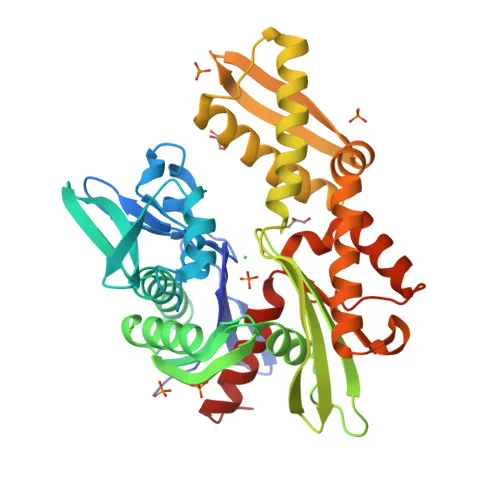
- HSPA8 (heat shock protein family A member 8), also referred to as Hsc70, HSP73, or LAP-1, is a ubiquitously expressed 71 kDa molecular chaperone. It belongs to the HSP70 family and is the constitutively expressed cognate of stress-inducible HSP70 proteins.
- As a central protein quality control chaperone, HSPA8 facilitates protein folding, refolding of misfolded proteins, and targeting of substrates for degradation through cycles of ATP binding, hydrolysis, and ADP release. These cycles are tightly regulated by co-chaperones (PubMed:12526792, PubMed:21148293, PubMed:21150129). Related references: PMID:12526792, PMID:21148293, PMID:21150129
- Co-chaperone networks precisely modulate HSPA8 function: J-domain proteins (HSP40) stimulate ATPase activity, nucleotide exchange factors (BAG1/2/3) promote ADP release, and TPR-domain co-chaperones (HOPX, STUB1) direct client fate toward folding or degradation (PubMed:24121476, PubMed:24318877, PubMed:26865365). Related references: PMID:24121476, PMID:24318877, PMID:26865365
- HSPA8 mediates chaperone-mediated autophagy (CMA) by specifically recognizing cytosolic proteins bearing a KFERQ motif and delivering them to lysosomal LAMP2 for degradation (PubMed:11559757, PubMed:2799391, PubMed:36586411). Related references: PMID:11559757, PMID:2799391, PMID:36586411
- In the immune context, HSPA8 binds bacterial lipopolysaccharide (LPS) and promotes TNF secretion by monocytes (PubMed:10722728, PubMed:11276205). It also assists in MHC class II presentation of cytoplasmic antigens via interaction with LAMP2 (PubMed:15894275). Related references: PMID:10722728, PMID:11276205, PMID:15894275
- Additionally, HSPA8 participates in ER-associated degradation (ERAD) with the E3 ligase STUB1 (PubMed:23990462) and in clathrin-mediated vesicle uncoating via DNAJC6 (By similarity). Related references: PMID:23990462
- The protein localizes to multiple cellular compartments, including the cytoplasm, nucleus, nucleolus, melanosomes, cell membrane, and lysosomal membrane, reflecting its diverse functions.
- HSPA8 undergoes various post-translational modifications, including acetylation, phosphorylation, methylation, ISGylation, and sumoylation, which may fine-tune its activity and interactions.
Experimental Guidance and Technical Tips
- The antibody was raised against a synthetic peptide spanning amino acids 547–646 in the C‑terminal region of human HSPA8. This epitope is conserved in mouse and rat (based on cross‑reactivity), making the antibody suitable for studies in these species.
- For Western blotting, a band at approximately 71 kDa is expected. Endogenous HSPA8 is abundant in most cell lines and tissues; consider starting with 20–50 µg of whole‑cell lysate from human (HeLa, HEK293), mouse (NIH/3T3), or rat (PC12) cells.
- In ELISA applications, use the antibody as a capture or detection reagent in a sandwich format; verify the coating antigen and detection system with a known HSPA8 recombinant protein or peptide standard.
- Since HSPA8 interacts with numerous co‑chaperones and client proteins under native conditions, non‑reducing and native PAGE may be explored to preserve protein complexes.
CamelBio: Your One-Stop Sourcing Bridge
CamelBio is your trusted one‑stop partner for IVD raw material procurement, offering validated monoclonal antibodies, recombinant proteins, and ancillary reagents. This anti‑HSPA8 antibody supports research into protein quality control, autophagy, and stress biology—complemented by our capabilities to supply optimized antibody pairs, bulk quantities, and rare‑target sourcing solutions to accelerate your assay development.
REQUEST A QUOTE
Our professional team will reply to you within one business day. Please feel free to contact us!