The First Decision in an RNA Diagnostic Assay
A molecular diagnostic test can appear to begin with a fluorescent curve on a qPCR instrument.
In reality, it begins earlier, in a reaction tube where a fragile RNA molecule must be recognized, copied, and preserved long enough to be measured.
That first copy is made by reverse transcriptase.
For assays targeting RNA viruses, messenger RNA, or other RNA biomarkers, reverse transcriptase is the bridge between the biological target and the DNA-based amplification system used by most laboratories. Its performance influences whether a low-copy target becomes a reliable signal or disappears into background noise.
The instrument may report a cycle threshold. The reverse transcriptase often determines whether there is enough target to report at all.
Why RNA Cannot Go Directly Into Standard PCR
PCR and qPCR are built around DNA.
DNA polymerases extend DNA strands from primers. Hydrolysis probes and intercalating dyes are designed to detect amplified DNA. The entire downstream workflow assumes that the target exists in a stable, amplifiable DNA form.
RNA does not fit that assumption.
RNA is typically single-stranded and chemically less stable than DNA. It also folds into hairpins, loops, and other secondary structures that can hide primer-binding regions. RNA viruses such as HIV, HCV, and SARS-CoV-2 carry their genetic information in RNA, as do many clinically relevant transcripts.
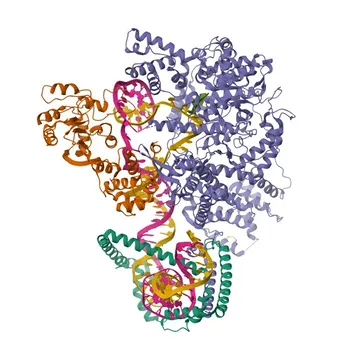
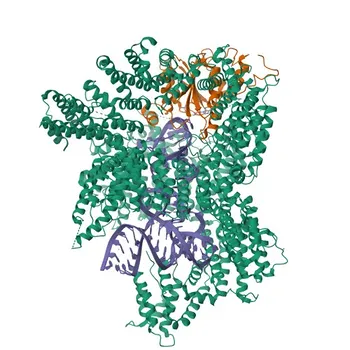
Reverse transcriptase solves this compatibility problem by synthesizing complementary DNA, or cDNA, from an RNA template.
The resulting cDNA can then be amplified and quantified by PCR or qPCR.
| Stage | Molecular event | Diagnostic significance |
|---|---|---|
| RNA input | The target exists as a fragile, single-stranded molecule | Sample integrity and target abundance are vulnerable to degradation |
| Reverse transcription | Reverse transcriptase copies RNA into cDNA | RNA becomes compatible with DNA amplification |
| PCR or qPCR | DNA polymerase amplifies the cDNA | The target becomes measurable through fluorescence or endpoint detection |
| Result interpretation | Signal is correlated with target abundance | The assay produces a qualitative or quantitative result |
Without the reverse transcription step, conventional PCR cannot reliably see an RNA target.
Reverse Transcriptase as an RNA-Dependent DNA Polymerase
Reverse transcriptase reads an RNA strand and adds complementary DNA nucleotides.
The first product is an RNA:DNA hybrid duplex. The newly synthesized cDNA contains the sequence information needed for downstream amplification. Depending on the assay design, the cDNA may represent a short diagnostic region or a much longer transcript.
This distinction matters.
A short amplicon can sometimes be generated even when reverse transcription is incomplete, provided the relevant region has been copied. For long transcripts, whole-genome targets, or assays where primer placement is distant from the initial priming site, incomplete cDNA synthesis can remove the very sequence the assay is designed to detect.
Reverse transcription is therefore not merely a preliminary reaction. It is the first analytical filter in the workflow.
The Three Properties That Shape cDNA Quality
Processivity: How Far the Enzyme Can Travel
Processivity describes how many nucleotides an enzyme adds before it detaches from its template.
A highly processive reverse transcriptase is more likely to produce long, continuous cDNA molecules. This is especially important when:
- The target is present at low copy number.
- The RNA template is long.
- The primer-binding site is separated from the region used for amplification.
- The sample contains inhibitors that increase the likelihood of premature termination.
- The assay must detect several targets from the same RNA molecule.
When reverse transcription stops early, the result is not always an obvious failure. The reaction may still generate some cDNA and produce a weak or inconsistent signal. In a clinical setting, that ambiguity can matter more than a complete negative result.
A missed low-level target may be interpreted as absence. Biochemically, it may simply be an incomplete copy.
Fidelity: Preserving the Information That PCR Needs
Fidelity is the enzyme's ability to copy the template accurately.
Reverse transcriptase fidelity is usually discussed less than DNA polymerase fidelity because diagnostic PCR often amplifies a short region and because a small number of copying errors may not prevent detection. Nevertheless, errors can affect primer binding, probe recognition, or the interpretation of sequence-sensitive assays.
Fidelity becomes more consequential when the workflow involves:
- Variant discrimination.
- Mutation detection.
- Sequencing after reverse transcription.
- Quantification of closely related targets.
- Analysis of low-abundance transcripts.
The goal is not simply to produce DNA. It is to produce DNA that still represents the original RNA well enough for the next analytical step.
Thermostability: Working Against RNA Structure
RNA does not behave like a straight molecular thread.
It folds back on itself. Some regions form stable secondary structures that block primer extension or cause the enzyme to pause. A reverse transcriptase operating only at lower temperatures may struggle to move through these structures.
Thermostable enzymes allow cDNA synthesis at approximately 55–65°C. Higher reaction temperatures can destabilize RNA secondary structures and improve access to concealed sequence regions. This can increase the completeness and uniformity of cDNA synthesis, particularly for structured viral genomes and long transcripts.
Native AMV RT generally operates most effectively around 42–50°C. It is not known primarily for extreme heat tolerance. Its value comes from a different engineering profile: strong intrinsic processivity and useful robustness in challenging sample matrices.
That difference creates a practical choice rather than a universal ranking.
AMV RT: A Workhorse With a Distinct Performance Profile
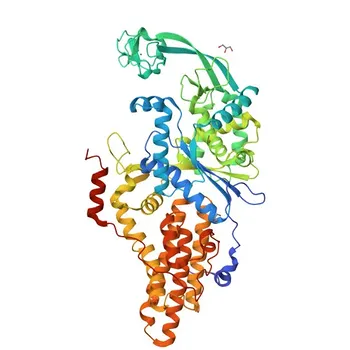
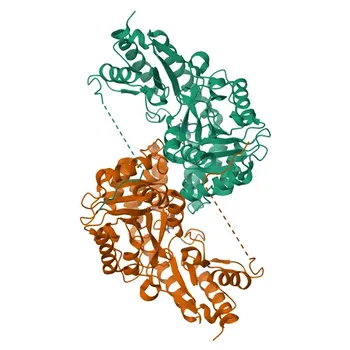
Avian Myeloblastosis Virus Reverse Transcriptase, commonly called AMV RT, is a naturally occurring reverse transcriptase derived from avian myeloblastosis virus.
Its appeal in molecular diagnostic development comes from the way several properties work together:
- High processivity.
- Strong performance across variable reaction conditions.
- Useful tolerance to common clinical inhibitors.
- Compatibility with RT-PCR and RT-qPCR workflows.
- Availability as a high-purity IVD raw material.
Clinical samples are rarely chemically clean. Heme, heparin, salts, residual extraction reagents, and other matrix components can interfere with enzymatic reactions. An enzyme that performs well only in an ideal buffer may produce excellent development data and disappointing clinical data.
AMV RT is often attractive because it can retain activity in the presence of inhibitors such as heme and heparin. This robustness can help manufacturers build more consistent assays across crude lysates and diverse sample types.
In diagnostics, consistency is a form of sensitivity.
An assay that reaches a low limit of detection in one carefully purified sample but varies substantially across real-world matrices may be less valuable than a slightly less sensitive assay that behaves predictably.
The Trade-Offs Behind the Enzyme Choice
No reverse transcriptase optimizes every variable at once.
The correct choice depends on the target, sample matrix, amplicon design, and intended workflow.
| Requirement | AMV RT profile | Development implication |
|---|---|---|
| High processivity | Strong | Useful for long or low-copy RNA targets |
| Inhibitor tolerance | Generally robust | Valuable for complex clinical matrices |
| High-temperature synthesis | More limited than engineered thermostable enzymes | May require careful handling of structured RNA |
| RNase H activity | Significant native activity | Can support hybrid processing but may reduce intact RNA availability |
| One-tube integration | Practical with optimized chemistry | Can simplify workflow and reduce handling steps |
RNase H Activity: Useful, but Not Neutral
Many reverse transcriptases contain an RNase H domain that degrades the RNA strand of an RNA:DNA hybrid.
This activity can help process the hybrid and support later stages of cDNA synthesis. But timing matters. If the RNA template is degraded before the reverse transcriptase has copied the relevant region, the reaction may produce shorter or incomplete cDNA.
That risk is more pronounced when the assay depends on:
- Full-length transcript analysis.
- Long-range amplification.
- Low-abundance RNA.
- Distant primer placement.
- Preservation of several regions on one template.
Engineered reverse transcriptases with reduced RNase H activity are often selected when preserving long RNA templates is a priority. AMV RT retains meaningful native RNase H activity, so its buffer, reaction time, primer strategy, and target length should be optimized as a system.
The enzyme cannot be evaluated in isolation from the assay architecture.
Matching the Enzyme to the Diagnostic Problem
When Maximum Sensitivity Is the Primary Goal
For extremely low-copy targets or heavily structured RNA, an engineered reverse transcriptase with high thermostability and reduced RNase H activity may be the stronger starting point.
The rationale is straightforward:
- Higher temperature helps open secondary structures.
- Reduced RNase H activity helps preserve the RNA template.
- Higher processivity supports longer, more complete cDNA.
- More complete cDNA increases the probability that the downstream amplicon exists.
This configuration is particularly relevant when the limit of detection is the central performance metric.
When Sample Robustness Is More Important
When a diagnostic workflow must handle diverse clinical matrices, AMV RT is a compelling candidate.
Its inhibitor tolerance and processivity can help stabilize performance when sample purity varies. This is relevant for laboratories that need reliable results across large specimen volumes, not only under ideal development conditions.
The main considerations are lower operating temperature and native RNase H activity. Reaction buffers and target design should compensate for these characteristics where necessary.
When Workflow Simplicity Determines Adoption
A technically excellent assay can still fail operationally if it requires too many transfers, long turnaround times, or complex training.
A one-step RT-PCR or RT-qPCR master mix combines reverse transcription and DNA amplification in a single tube. When built around a thermostable reverse transcriptase and a hot-start DNA polymerase, this format can:
- Reduce hands-on time.
- Lower contamination risk.
- Improve suitability for high-throughput testing.
- Shorten time to result.
- Simplify laboratory training.
The most convenient workflow is not automatically the most sensitive. The chemistry must be validated against the intended sample type, target structure, and cycling conditions.
The Psychology of a Diagnostic Result
Laboratory teams often focus on the visible parts of an assay: the amplification plot, the instrument, and the reported cycle threshold.
But users experience the test through uncertainty.
A weak signal creates a question. An inconsistent signal creates a workflow problem. A false negative creates a clinical and operational consequence that may never be traced back to an incomplete cDNA molecule.
This is why enzyme selection has a psychological dimension as well as a biochemical one.
Reliability reduces the number of results that require explanation. It reduces repeat testing, manual review, and distrust in the platform. For diagnostic manufacturers, that confidence influences adoption as much as a specification sheet does.
The best assay is not only the one that performs well under controlled conditions. It is the one that gives users fewer reasons to doubt what they are seeing.
A Practical Development Checklist
Before selecting AMV RT or another reverse transcriptase, evaluate the entire workflow against the following questions:
- What is the expected copy number of the RNA target?
- How long is the RNA region between the priming site and the diagnostic amplicon?
- Does the target contain stable secondary structures?
- Will the assay use purified RNA, extracted clinical material, or crude lysate?
- Which inhibitors are likely to remain after sample preparation?
- Is full-length cDNA required, or only a short target region?
- Could RNase H activity compromise template integrity?
- Is a separate reverse transcription step acceptable?
- Would a one-step format improve throughput and contamination control?
- Which reaction temperature, buffer composition, and incubation time produce the most consistent result?
These questions convert a general enzyme choice into a testable development strategy.
From Enzyme Specification to Assay Performance
Reverse transcriptase is often purchased as a small component in a larger diagnostic kit. Its influence is much larger than its volume suggests.
A high-purity enzyme must be compatible with the rest of the formulation. Activity units alone do not describe performance in a clinical matrix. Manufacturers should also examine lot consistency, inhibitor tolerance, reaction compatibility, storage stability, and supply continuity.
This is where raw-material sourcing becomes part of assay design.
CamelBio supports diagnostic manufacturers, laboratories, and research institutes with one-stop access to IVD raw materials, technical services, and consulting. Its support can extend from selecting high-purity reverse transcriptases to optimizing reaction chemistry and addressing the practical requirements of moving a molecular diagnostic concept toward clinical use.
For organizations developing RNA assays, the value is not simply access to an enzyme. It is access to a more complete path from biochemical decision to manufacturable, reliable product.
Conclusion: The Right Enzyme Makes RNA Measurable
Reverse transcriptase performs the conversion that makes RNA visible to standard molecular diagnostic systems.
Its processivity affects whether long targets are copied. Its thermostability affects how well it handles RNA structure. Its RNase H activity affects template preservation. Its inhibitor tolerance affects whether the assay remains dependable outside a clean development buffer.
AMV RT remains a practical workhorse when robust performance and tolerance to difficult sample conditions are central priorities. Engineered thermostable, reduced-RNase H enzymes may be better suited to highly structured targets or extreme sensitivity requirements.
The decision should follow the biology of the target and the reality of the workflow.
To match reverse transcriptase chemistry with your assay, sample matrix, and path to commercialization, connect with Contact Our Experts.