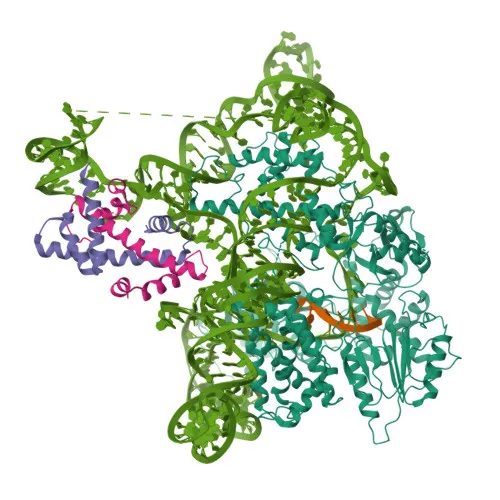
Polyclonal Antibodies
Anti-TERT Polyclonal Antibody for WB, ELISA - O14746
Item Number : CM0026795
Price varies based on specs and customizations
- Application
- WB, ELISA
- Cross Reactivity
- Human, Rat
- Protein Weight
- 127kDa

Shipping:
Contact us to get shipping details Enjoy On-time Dispatch Guarantee.
Why Choose Us
Easy ordering process, quality products, and dedicated support for your business success.
Core Product Specifications and Parameters
| Parameter | Value |
|---|---|
| Product Name | TERT Rabbit pAb |
| Remarks/Alias | TP2; TRT; CMM9; EST2; TCS1; hTRT; DKCA2; DKCB4; hEST2; PFBMFT1; TERT |
| Species | Human |
| GeneID (Human) | 7015 |
| GeneID | 7015 |
| Immunogen | Synthetic peptide corresponding to a sequence within amino acids 1000-1100 of human TERT (NP_937983.2) |
| Source | Rabbit |
| Category | Polyclonal Antibodies |
| Application | WB, ELISA |
| Cross Reactivity | Human, Rat |
| SWISS | O14746 |
| Protein Weight | 127kDa |
| Shipping | Ice bag |
Biological Background: TERT Function and Localization
- Telomerase reverse transcriptase (TERT) is the catalytic subunit of the telomerase holoenzyme complex, a ribonucleoprotein enzyme essential for the replication of chromosome termini in most eukaryotes.
- Its primary function is to elongate telomeres by reverse transcription, adding the 6-nucleotide telomeric repeat sequence 5'-TTAGGG-3' to chromosome ends, using an internal RNA template within the telomerase RNA component.
- Telomerase activity is high in progenitor and cancer cells but low or absent in normal somatic cells; TERT plays critical roles in aging and antiapoptosis.
- TERT localizes to multiple subcellular compartments including the nucleus (nucleolus, nucleoplasm), chromosome telomeres, cytoplasm, and PML bodies.
- The protein undergoes alternative splicing and is subject to phosphorylation (Phosphoprotein) and ubiquitin-like conjugation (Ubl conjugation).
- Tissue-specific expression studies indicate high expression in thymocyte subpopulations, intermediate in tonsil T-lymphocytes, and low to undetectable in peripheral blood T-lymphocytes.
- Mutations in TERT are associated with dyskeratosis congenita and other telomere biology disorders.
Experimental Guidance and Technical Tips
- The immunogen corresponds to amino acids 1000–1100 of human TERT; verify the epitope accessibility in your experimental context, especially in native versus denaturing conditions.
- For Western blotting, consider using nuclear-enriched lysates from cell lines with known telomerase activity (e.g., HeLa, 293T) to enhance detection, as TERT expression is often low in normal somatic cells.
- The antibody may cross-react with rat TERT; if using rat samples, validate performance in your specific tissue or cell type.
- For ELISA applications, optimize coating conditions and antibody concentration, and include appropriate positive and negative controls.
CamelBio: Your One-Stop Sourcing Bridge
CamelBio partners with diagnostic manufacturers and research laboratories to provide comprehensive IVD raw material procurement solutions, including validated antibodies, bulk ancillary reagents, and customized sourcing for rare targets. This anti-TERT polyclonal antibody is part of our expanding portfolio for telomere biology and cancer research, and our team can assist with matching complementary reagents such as antibody pairs or recombinant proteins to accelerate your assay development pipeline.
REQUEST A QUOTE
Our professional team will reply to you within one business day. Please feel free to contact us!
Related Articles
Choosing the Thermal Architecture That Makes a Molecular Assay Transferable
Compare Peltier blocks and air-heated carousels across speed, uniformity, sample flexibility, optimization, and throughput for qPCR development.
Reverse Transcriptase in RNA Diagnostics: The Enzyme That Determines What PCR Can See
Learn how AMV reverse transcriptase converts fragile RNA into amplifiable cDNA, and how processivity, inhibitors, and heat shape assay reliability.