Conjugation success hinges on a few non-negotiable parameters. To optimize peptide hapten conjugation to a carrier protein, you must meticulously control peptide length (a minimum of 5–7 amino acids is a practical floor), eliminate competing amines or carboxylates from your reaction buffer, and rigorously purify the final conjugate using gel filtration or dialysis. The quality of your downstream immunoassay depends entirely on the discipline you apply at this foundational step.
The small size of peptide haptens inherently prevents a robust immune response. Solving this surface-level conjugation problem requires navigating a deeper set of chemical and immunological design choices—from carrier selection and linker chemistry to a precise purification strategy—to create reagents that are immunogenic, specific, and reproducible.
The Fundamental Imperative: Why Conjugation Matters
A peptide alone is immunologically invisible. The carrier protein provides the structural context and T-cell help required to mount a high-affinity, high-titer antibody response. This is the problem you are solving, and it dictates every parameter that follows.
The Immunogenicity Challenge
Peptide haptens under 2,000–5,000 Daltons simply cannot cross-link B-cell receptors effectively for activation. Their small size prevents the necessary clustering of surface immunoglobulins, leading to weak, non-specific responses suitable neither for hybridoma generation nor for reliable immunoassay development.
The Role of the Carrier as an Immune Adjuvant
The carrier protein supplies large, complex T-cell epitopes that engage helper T cells. This cellular collaboration is what converts a weak hapten signal into a high-titered, class-switched antibody response. The carrier is not just a scaffold; it is an active immunological partner.
Critical Design Parameters for Successful Conjugation
Before you add a single reagent, you must lock down these five parameters. They are the difference between a rigorously defined conjugate and an irreproducible failure.
Peptide Length and Epitope Integrity
Your target peptide should be at least 5 to 7 amino acids long, slightly larger than the minimum linear epitope footprint. This length ensures the peptide has enough structural independence on the carrier surface to be recognized by B-cell receptors in its native-like conformation. A peptide that is too short may be buried in the protein matrix or present in an artificially constrained orientation.
Carrier Protein Selection and Its Impact
The choice of carrier dictates immunogenicity, solubility, and potential assay interference.
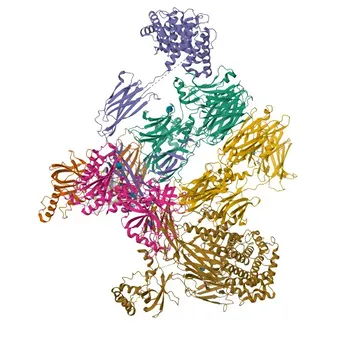
- Keyhole Limpet Hemocyanin (KLH) is the most potent due to its extreme foreignness, but it risks antigenic competition—where immunodominant KLH epitopes overshadow the peptide.
- Bovine Serum Albumin (BSA) is inexpensive, highly soluble, and well-characterized, with an optimal derivatization of 15–30 haptens per molecule. Avoid BSA as an immunization carrier if your test samples will contain native albumin, as this creates catastrophic background interference.
- Ovalbumin (OVA) offers a cleaner alternative for screening or coating conjugates, especially when you must use a carrier different from the one used for immunization.
Reaction Chemistry and Buffer Composition
Buffer selection is a primary reference point: all competing primary amines and carboxylates must be excluded. If you are using amine-reactive chemistry (e.g., NHS-ester or EDC coupling to lysines), buffers like Tris or glycine will quench your reaction. For carboxylate-activation chemistries, avoid acetate or citrate buffers. A 50 mM carbonate-bicarbonate buffer (pH 9.6) is a classic starting point for amine-reactive active esters, while phosphate buffers (pH 7.2–7.4) are ideal for EDC-mediated zero-length coupling. The solvent for hapten dissolution, often anhydrous DMF, must be free of water to prevent premature hydrolysis of the active ester.
Optimizing the Degree of Derivatization
Too few haptens per carrier generate a weak immune response; too many can mask access to antigenic determinants or cause precipitation. For high-molecular-weight carriers like BSA, aim for 15–30 hapten molecules per protein. Lower molecular weight carriers like OVA require a reduced density to maintain solubility and epitope exposure. You can quantify this ratio by UV absorbance difference spectroscopy, comparing the conjugate’s spectrum with that of the free protein and free hapten, or by incorporating a trace radio-labeled hapten.
Purification: The Non-Negotiable Step for Quality
Post-reaction processing is where most conjugation protocols fail silently. Free haptens, cross-linking reagents, and organic solvents all degrade assay performance.
Monitoring Conjugation Efficiency
Size exclusion/gel filtration chromatography is your most direct quality check. Watch for the disappearance of the free peptide peak and the coincident shift of the carrier protein peak to a higher molecular weight. This visual confirmation tells you that conjugation occurred and gives a qualitative sense of the yield before you proceed to purification.
Removing Unreacted Species via Gel Filtration
Purify the conjugate using gel filtration chromatography (e.g., Sephadex G-25 column) eluted with a physiologically compatible buffer like 100 mM sodium phosphate (pH 7.4). This step cleanly separates the high-molecular-weight conjugate from unreacted haptens, hydrolyzed ester by-products, and organic solvents. The result is a conjugate stock that is free of assay interference and stable for storage at −20 °C.
Dialysis as an Alternative Purification Method
For some conjugates, dialysis against the same phosphate buffer can be a gentler and equally effective alternative. It removes small-molecule contaminants while avoiding the dilution that occurs during gel filtration. Choose dialysis when you need to concentrate the conjugate or when handling very small volumes where column loading losses become significant.
Understanding the Trade-offs and Pitfalls
No conjugation strategy is perfect. Acknowledging the fundamental trade-offs is what separates a trusted technical advisor from a simple protocol compiler.
The Danger of Over- or Under-Derivatization
Over-derivatization can cause protein aggregation and precipitation, especially with lower molecular weight carriers. It can also distort the peptide’s epitope beyond recognition. Under-derivatization fails to provoke a sufficient immune response. There is no universal ratio; you must titrate the hapten-to-carrier molar input and measure the final outcome.
Antigenic Competition and Its Consequences
Highly immunogenic carriers like KLH can induce a dominant antibody response against the carrier itself, leaving the hapten ignored. In monoclonal antibody production, this leads to fusion partners that secrete anti-KLH antibodies instead of anti-hapten antibodies. Counter this by using a different carrier (e.g., OVA) for screening to eliminate carrier-specific clones.
Linker Chemistry and Anti-Linker Antibody Generation
Using heterobifunctional crosslinkers introduces a spacer arm that can itself be immunogenic, generating antibodies against the linker region. These anti-linker antibodies cause cross-reactivity in assays. A zero-length crosslinker like EDC avoids this risk entirely by forming a direct amide bond. However, EDC risks self-polymerization if the peptide contains both amines and carboxyl groups, and it can modify residues within the critical binding epitope, destroying antibody recognition.
Making the Right Choice for Your Goal
Your specific immunoassay objective must drive every parameter decision. There is no one-size-fits-all protocol, only a clear-eyed strategy.
- If your primary focus is maximum immunogenicity for antibody generation: Use KLH as the carrier, keep the peptide length above 7 amino acids, and screen hybridomas with an OVA conjugate to eliminate carrier-specific clones.
- If your primary focus is avoiding anti-carrier interference in serum-based assays: Use OVA or a non-albumin carrier for the immunogen and a different carrier (not present in the sample) for the detection conjugate.
- If your primary focus is a linker-free, defined conjugate to avoid anti-linker artifacts: Employ EDC zero-length coupling in amine-free phosphate buffer and verify that no critical epitopic residues are modified.
- If your primary focus is speed and simplicity without specialized reagents: Choose BSA as the carrier, monitor derivatization by UV spectroscopy, and purify by gel filtration using a pre-packed Sephadex G-25 column.
The difference between a reagent that works consistently and one that fails unpredictably is rarely the chemistry itself—it is the disciplined attention to these key conjugation parameters and the unwavering commitment to post-reaction purification.
Summary Table:
| Factor / Method | Key Characteristics | Recommended Application | Critical Pitfall to Avoid |
|---|---|---|---|
| KLH Carrier | Highly immunogenic, large complex structure | High-titer antibody generation | Risk of dominant anti-carrier response |
| BSA Carrier | High solubility, optimal 15–30 haptens/protein | Standard assay development | Background interference in serum assays |
| OVA Carrier | Clean background, distinct antigenic profile | Differential screening & coating | Lower hapten load capacity to avoid aggregation |
| Gel Filtration | Rapid clean-up via Sephadex G-25 columns | Efficient separation of free haptens/linkers | Potential sample dilution |
| Dialysis | Gentle purification maintaining concentration | Small-volume or dilute sample clean-up | Longer processing time compared to columns |
Need to optimize your peptide hapten conjugation protocols or scale up immunoassay development?
CamelBio provides diagnostic manufacturers, labs, and research institutes with one-stop access to IVD raw materials, technical services, and consulting—covering every stage from concept to clinic. Whether you require custom carrier protein conjugates, high-performance linkers, or assay optimization support, our technical experts are here to elevate your reagent quality and reproducibility.
Contact CamelBio Today to discuss your project requirements and request tailored solutions!
Related Products
- PE Rabbit anti-Human CD38 Monoclonal Antibody for FC - P28907
- PE Rabbit anti-Human IgG (Fc) Monoclonal Antibody for Flow Cytometry - P01857
- PE Rabbit anti-Human/Monkey HLA-DR Monoclonal Antibody for Flow Cytometry - P01903
- PE Rabbit anti-Human CD13/ANPEP Monoclonal Antibody for FC - P15144
- PE Rabbit anti-Human TIM-3/HAVCR2 Monoclonal Antibody for FC - Q8TDQ0