Toggle Categories
Get Instant Support
Choose your preferred way to connect with our team
-
Get Free Quote Fill out form for detailed pricing
-
Send Email Detailed inquiry support
-
WhatsApp Quick mobile chat
Response Time
Within 8 hours on working days, 24 hours on holidays
Other Modified Antibodies
Anti-Lactyl-Histone H4 (K5) Rabbit Polyclonal Antibody (P62805) for WB, DB, ELISA
Item Number: CM0000074
Coenzyme NAD Rabbit Monoclonal Antibody for DB and ELISA
Item Number: CM0000008
2'-O-methylcytidine/Cm Rabbit Polyclonal Antibody for Dot Blot and ELISA Applications
Item Number: CM0000020
Lactic acid-Histone H3-K18 Rabbit Polyclonal Antibody (Q16695/P68431) for WB, DB, ELISA
Item Number: CM0000086
Nitro-Tyrosine Rabbit Polyclonal Antibody for WB, ELISA
Item Number: CM0000011
Pan-Crotonyl-K Rabbit Polyclonal Antibody for WB and ELISA
Item Number: CM0000030
Pan Lactic acid-Lysine Rabbit Polyclonal Antibody (WB, ELISA)
Item Number: CM0000053
2'-O-methylcytidine (Cm) Rabbit Monoclonal Antibody for Dot Blot and ELISA
Item Number: CM0000038
2'-O-Methylguanosine (Gm) Rabbit Polyclonal Antibody for Dot Blot and ELISA
Item Number: CM0000024
PE Rabbit anti-4-Hydroxynonenal (4-HNE) Monoclonal Antibody for Flow Cytometry
Item Number: CM0000056
Hydroxyl-Histone H2A-Y39 (P04908/P0C0S8) Rabbit Monoclonal Antibody for WB, IHC-P, ELISA
Item Number: CM0000072
Pseudouridine (5-ribosyluracil) Rabbit Polyclonal Antibody for Dot Blot and ELISA
Item Number: CM0000042
pan-Ubiquitin Remnant Motif (K-ε-GG) Rabbit Polyclonal Antibody for WB, ELISA
Item Number: CM0000039
pan-Nitrific-Y Rabbit Polyclonal Antibody for Western Blot and ELISA
Item Number: CM0000036
K33-linkage Specific Polyubiquitin Rabbit Polyclonal Antibody for WB, DB, ELISA
Item Number: CM0000043
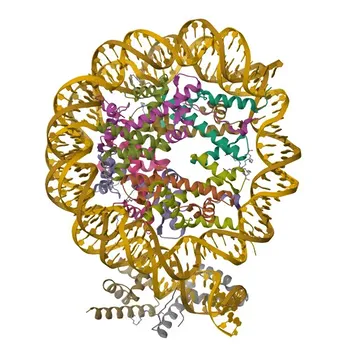
Lactylated Histone H3 (K14) Rabbit Polyclonal Antibody for WB/ELISA (Q16695/P68431)
Item Number: CM0000089
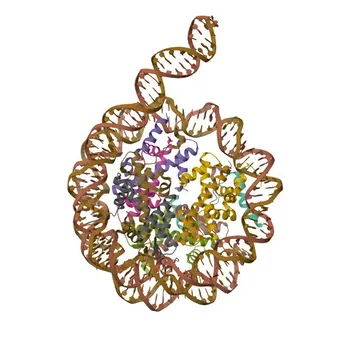
Formyl-Histone H2B-K120 Rabbit Monoclonal Antibody (P62807/Q16778) for WB, IHC-P, ELISA
Item Number: CM0000092
2'-O-Methyluridine (Um) Rabbit Monoclonal Antibody for Dot Blot and ELISA
Item Number: CM0000070
Pseudouridine / 5-ribosyluracil Rabbit Monoclonal Antibody for DB and ELISA Applications
Item Number: CM0000045
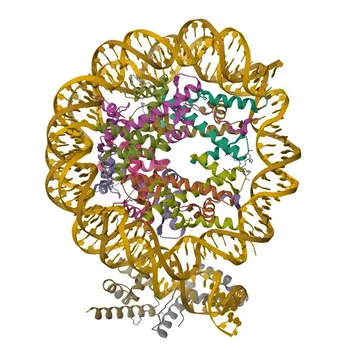
Anti-H3Q5ser (Histone H3.1, P68431) Rabbit Polyclonal Antibody for WB, IF, ELISA
Item Number: CM0000083
Edit This Page
REQUEST A QUOTE
Our professional team will reply to you within one business day. Please feel free to contact us!
Related Articles

Primer-Dimers in qPCR: The Smallest Artifact with the Largest Diagnostic Consequences
Learn how primer-dimers undermine qPCR sensitivity and specificity, and how design, hot-start enzymes, probes, and controls restore assay reliability.
When a Straight Line Lies: How R and R² Define qPCR Reliability
Learn how R, R², slope, efficiency, and replicate precision work together to validate qPCR standard curves for reliable IVD results.
When qPCR Assays Leave Their Home Cycler: The Engineering of Cross-Platform Reliability
Why qPCR performance changes across thermal cyclers, and how thermal profiling, resilient chemistry, and stress validation create portable assays.
Two Positive Controls, One Clear Answer: Isolating RT and PCR Failure in qRT-PCR Diagnostics
Learn how dual positive controls isolate reverse transcription and PCR failures, improve qRT-PCR reliability, and support compliant diagnostic workflows.
When the Dye Sees Everything: A Systematic Strategy for Cleaner, More Reliable qPCR
Learn how primer design, Mg2+ control, thermal optimization, and melt curves reduce background signal in dye-based qPCR assays.
The Thermal Block Is the Hidden Variable in Real-Time PCR Performance
How ramp rate, gradient control, block geometry, and thermal uniformity shape qPCR speed, optimization, reproducibility, and sample volume.
The Annealing Temperature Decision: Building Real-Time PCR Assays That Can Carry Clinical Responsibility
Annealing temperature controls the balance between PCR specificity and sensitivity. Learn how to optimize it for robust, clinically reliable diagnostics.
The Three-Room Strategy: Designing Molecular Diagnostic Workflows That Resist False Positives
Learn how three-room molecular workflows, UNG chemistry, and purified IVD raw materials prevent amplicon contamination and protect diagnostic accuracy.
Annealing Temperature: The Thermodynamic Decision Behind Reliable Diagnostic PCR
Learn how annealing temperature controls PCR specificity, sensitivity, LOD, and manufacturing consistency across real diagnostic workflows.
Where Ct Values Become Trustworthy: Establishing the qPCR Fluorescence Threshold
Learn how baseline noise, statistical thresholds, exponential-phase placement, and validation turn qPCR fluorescence into reliable Ct values.
What Your qPCR Signal Really Means: Choosing Between SYBR Green I and TaqMan Chemistry
Compare SYBR Green I and TaqMan qPCR detection chemistry, from false-positive risk and multiplexing to workflow design for reliable IVD assays.
qPCR Primer Design: The Small Decisions That Determine Assay Reliability
A practical guide to qPCR primer design, from amplicon length and 3' stability to validation for efficient, reproducible diagnostics.

Engineering High-Sensitivity Electrochemical Immunosensors for Small-Molecule Detection
How competitive assay design, high-affinity antibodies, HRP labels, and interface control enable reliable trace small-molecule detection.
ROX in qPCR: The Quiet Reference That Makes Diagnostic Signals Trustworthy
Learn how ROX normalizes qPCR fluorescence, stabilizes Ct calls, and shapes the trade-off between instrument compatibility and multiplexing.
Why Minor Groove Binders Turn Short Hydrolysis Probes into Precision Diagnostic Tools
MGB chemistry improves probe stability, SNP discrimination, signal-to-noise ratio, and low-copy detection in demanding molecular assays.
qPCR Efficiency: The Mathematical Foundation of Reliable Molecular Diagnostics
Learn how qPCR efficiency is calculated, why the 90–100% range matters, and how it protects diagnostic accuracy, sensitivity, and compliance.