Toggle Categories
Get Instant Support
Choose your preferred way to connect with our team
-
Get Free Quote Fill out form for detailed pricing
-
Send Email Detailed inquiry support
-
WhatsApp Quick mobile chat
Response Time
Within 8 hours on working days, 24 hours on holidays
Other Modified Antibodies
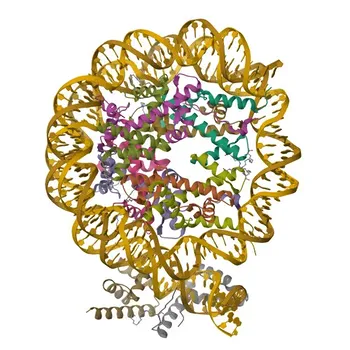
Lactylated Histone H3-K18 Rabbit Monoclonal Antibody (Q16695/P68431) for Epigenetic Research
Item Number: CM0000080
Affinity Gel-conjugated Pan Succinyl-Lysine Rabbit Monoclonal Antibody for IP-MS
Item Number: CM0000044
K48-linkage Specific Polyubiquitin Rabbit Polyclonal Antibody for WB, Dot Blot, ELISA
Item Number: CM0000033
pan-Myristyl-G Rabbit Polyclonal Antibody for WB and ELISA
Item Number: CM0000006
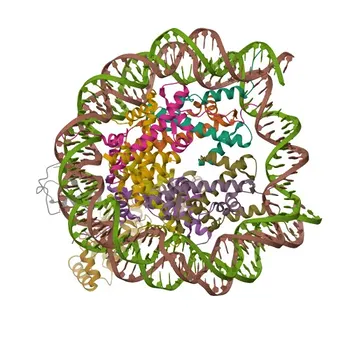
Ubiquityl-Histone H2A-K119 (P04908/P0C0S8) Rabbit Polyclonal Antibody for WB and ELISA
Item Number: CM0000075
5-methylcytidine (m5C) RNA Rabbit mAb for DB and ELISA
Item Number: CM0000002
Pan Lactic acid-Lysine Rabbit Monoclonal Antibody for WB, IP, ELISA | Lactylation Detection
Item Number: CM0000061
Pan-Succinyl-K Rabbit Polyclonal Antibody for WB and ELISA Applications
Item Number: CM0000009
Rabbit Anti-4-Hydroxynonenal (4-HNE) Monoclonal Antibody for Intracellular Flow Cytometry
Item Number: CM0000052
Biotin Rabbit Monoclonal Antibody for Biotin Detection in WB and ELISA Applications
Item Number: CM0000014
Anti-Biotin Rabbit Monoclonal Antibody for WB and ELISA
Item Number: CM0000021
Anti-Digoxigenin/Digoxin Rabbit Monoclonal Antibody for DB and ELISA Applications
Item Number: CM0000004
Pan-Succinyl-K Rabbit mAb – Succinylated Lysine Antibody for WB, IP, DB, ELISA
Item Number: CM0000013
Edit This Page
REQUEST A QUOTE
Our professional team will reply to you within one business day. Please feel free to contact us!
Related Articles
Dioxin-Like Compound Screening by ELISA: The Engineering Trade-Off Between Speed and Certainty
Understand how competitive ELISA kits screen dioxin-like compounds, where matrix effects undermine accuracy, and how to build reliable workflows.
Designing a Dioxin ELISA That Detects Risk Before It Becomes a Regulatory Failure
How antibody quality, conjugate stability, sample preparation, and TEQ calibration determine reliable low-picogram dioxin ELISA performance.
Two Positive Controls, One Clear Answer: Isolating RT and PCR Failure in qRT-PCR Diagnostics
Learn how dual positive controls isolate reverse transcription and PCR failures, improve qRT-PCR reliability, and support compliant diagnostic workflows.
When the Dye Sees Everything: A Systematic Strategy for Cleaner, More Reliable qPCR
Learn how primer design, Mg2+ control, thermal optimization, and melt curves reduce background signal in dye-based qPCR assays.
The Annealing Temperature Decision: Building Real-Time PCR Assays That Can Carry Clinical Responsibility
Annealing temperature controls the balance between PCR specificity and sensitivity. Learn how to optimize it for robust, clinically reliable diagnostics.
The Three-Room Strategy: Designing Molecular Diagnostic Workflows That Resist False Positives
Learn how three-room molecular workflows, UNG chemistry, and purified IVD raw materials prevent amplicon contamination and protect diagnostic accuracy.
pH Is a Hidden Variable: Engineering More Reliable Competitive ELISA Kits for Small-Molecule Contaminants
Learn how precise pH control protects antibody binding, HRP activity, sensitivity, and reproducibility during competitive ELISA development.
Why Direct Hapten Coupling Changes the Economics of Small-Molecule Biosensors
Compare direct hapten coupling with protein conjugates to improve ligand density, signal quality, antibody efficiency, and chip reusability.
What Your qPCR Signal Really Means: Choosing Between SYBR Green I and TaqMan Chemistry
Compare SYBR Green I and TaqMan qPCR detection chemistry, from false-positive risk and multiplexing to workflow design for reliable IVD assays.
Why Dioxin Immunoassays Fail in Complex Matrices—and How to Engineer Them for Reliable Screening
Explore how matrix interference, antibody cross-reactivity, and sample preparation limit dioxin immunoassays—and how better materials and workflows improve accuracy.