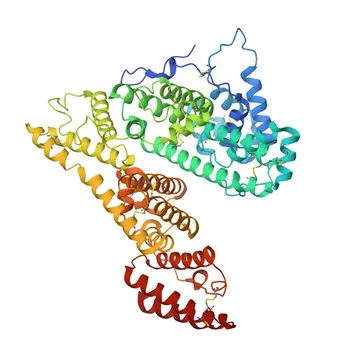
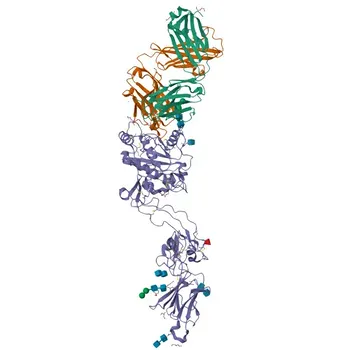
Factor VIII is famously labile. Storing unseparated whole blood at 2 to 4 °C for even a few hours before centrifugation artificially decreases Factor VIII activity through cold-induced inactivation. Diagnostic manufacturers must therefore specify that whole blood specimens for Factor VIII testing be kept strictly at ambient temperature (18–25 °C) prior to processing, or that they be immediately centrifuged to yield platelet‑poor plasma.
The core challenge is that Factor VIII loses functional activity when chilled as whole blood. To prevent misdiagnosis and ensure assay reliability, protocols must eliminate cold exposure before plasma separation—either by maintaining ambient collection tubes or by centrifuging without delay.
The Biochemical Instability of Factor VIII
Factor VIII circulates as a fragile protein complex, stabilized in vivo by its carrier, von Willebrand factor. Outside the body, this stability rapidly erodes if the sample is mishandled.
How Cold Storage Skews Factor VIII Results
The primary reference confirms that whole blood stored at 2–4 °C for several hours prior to centrifugation shows a significant, artificial decline in Factor VIII activity. This is not a slow degradation; it is a specific, cold‑triggered inactivation.
The Mechanism of Cold-Induced Inactivation
While the exact molecular cascade is complex, the practical take‑away is clear: cold exposure before plasma separation disrupts the Factor VIII–von Willebrand factor complex. The result is a loss of measurable coagulant activity that does not reflect the patient’s true physiological state.
The Critical Window Before Centrifugation
The damage occurs prior to centrifugation. Once the plasma is separated and frozen, Factor VIII remains relatively stable. The pre‑analytical window—the time from blood draw to spin—is therefore the most dangerous period for this analyte.
Designing Robust Handling Protocols for Diagnostic Manufacturers
For manufacturers of IVD assays, the handling instructions embedded in kit inserts and sample preparation guides are not generic—they are the first line of defense against pre‑analytical error. Controlling temperature in this critical window is non‑negotiable.
Specifying Temperature Requirements at Collection
Protocols must explicitly state that whole blood must never be refrigerated before plasma separation. Use unambiguous language: “Maintain whole blood at 18–25 °C. Do not chill. Do not place on ice.” This should be highlighted in bold or as a warning box.
Enforcing Immediate Plasma Separation
The most robust protection is to centrifuge the sample immediately after collection to obtain platelet‑poor plasma. For settings where immediate centrifugation is impossible, the protocol must define a maximum ambient holding time validated during kit development, and require that the tube remain in a temperature‑monitored ambient rack.
Validating Pre-Analytical Stability
Each assay’s instructions should be backed by a documented stability study. Manufacturers must test their collection system under worst‑case ambient delays, confirming that Factor VIII activity remains within acceptable bias limits. Only then can the label claim that “plasma must be separated within X hours at 18–25 °C.”
Understanding the Trade-Offs in Sample Handling
While the rule “never chill whole blood” is absolute for Factor VIII, the broader pre‑analytical landscape introduces needed nuance. Supplementary references remind us that room‑temperature storage is not universally protective; it can degrade other analytes.
Ambient Storage: Protective for Factor VIII, Risky for Others
Prolonged room‑temperature holding prior to processing accelerates the decay of many labile markers, including certain hormones and enzymes. If a diagnostic panel includes both Factor VIII and such analytes, a single tube protocol may force a compromise. The solution is either to immediately separate plasma for all tests, or to use a dedicated, ambient‑held citrate tube solely for Factor VIII.
Practical Constraints in Clinical Settings
Field collections, courier delays, and high‑throughput labs can make immediate centrifugation difficult. Here, manufacturers must design logistically feasible workflows. This may include providing pre‑validated ambient transport kits with temperature indicators and clear instructions to reject samples exposed to cold during shipment.
The Danger of Vagueness
A vague instruction like “process as soon as possible” invites error. Without a defined temperature and time limit, well‑intentioned staff may refrigerate the sample to “preserve” it, inadvertently destroying the Factor VIII signal. Specificity is the ultimate guardian of accuracy.
Making the Right Choice for Your Diagnostic Goal
The handling protocol you specify must align with the trade‑offs your end users face. Here is how to tailor your guidance:
- If your primary focus is diagnostic accuracy for hemophilia A: Mandate immediate centrifugation and platelet‑poor plasma preparation. Create a step‑by‑step cold‑avoidance checklist that includes verifying room‑temperature storage before the spin.
- If your primary focus is a multi‑analyte panel that includes Factor VIII: Clearly separate the collection and handling requirements. Specify one tube for immediate centrifugation (Factor VIII) and another for analytes with different temperature needs, preventing a single workflow from compromising the panel.
- If your primary focus is decentralized or remote testing: Engineer your collection kit around a validated ambient stability window. Include a time‑sensitive temperature monitor and design the instructions to trigger sample rejection if the tube is chilled, even briefly.
By translating the biochemistry of cold‑induced inactivation into precise, enforceable handling language, you transform a fragile protein’s vulnerability into a robust, trustworthy test result.
Summary Table:
| Handling Phase | Recommended Condition | Impact of Non-Compliance | IVD Protocol Requirement |
|---|---|---|---|
| Pre-Centrifugation Whole Blood | Ambient (18–25 °C) | Chilling (2–4 °C) causes cold-induced Factor VIII inactivation | Label clearly: Do not refrigerate or place on ice before spinning |
| Plasma Separation | Immediate centrifugation | Prolonged holding degrades labile coagulation factors | Specify maximum validated ambient hold time |
| Separated Plasma Storage | Platelet-poor plasma, frozen | Multiple freeze-thaw cycles cause loss of coagulant activity | Define strict frozen storage temperatures & rejection criteria |
Enhance Assay Accuracy & Reliability with CamelBio
Navigating pre-analytical variables and optimizing assay performance requires robust raw materials and expert guidance. CamelBio provides diagnostic manufacturers, clinical labs, and research institutes with one-stop access to premium IVD raw materials, technical services, and consulting—supporting your assay development at every stage from concept to clinic.
Whether you need assistance with coagulation assay validation, raw material sourcing, or workflow optimization, our experts are here to help.
Contact Us Today to discover how CamelBio can streamline your diagnostic development.
Related Products
- Rabbit anti-Human IL8 Monoclonal Antibody for Flow Cytometry (Intracellular) - P10145
- Anti-APITD1 Rabbit pAb - Q8N2Z9
- Anti-Coagulation Factor X (F10) Rabbit Polyclonal Antibody for WB, IF/ICC, ELISA - P00742
- Rabbit anti-Human/Monkey HLA-DR mAb for FC - P01903
- Anti-Alpha-Fetoprotein (AFP) Monoclonal Antibody for WB, IF/ICC, ELISA - P02771