Monoclonal Antibodies
Rabbit anti-Human/Monkey HLA-DR mAb for FC - P01903
Item Number : CM0010751
Price varies based on specs and customizations
- Application
- FC
- Cross Reactivity
- Human, Cynomolgus
- Protein Weight
- 29kDa

Shipping:
Contact us to get shipping details Enjoy On-time Dispatch Guarantee.
Why Choose Us
Easy ordering process, quality products, and dedicated support for your business success.
Core Product Specifications and Parameters
| Parameter | Value |
|---|---|
| Product Name | Rabbit anti-Human/Monkey HLA-DR mAb |
| Remarks/Alias | HLA-DRA1 |
| Species | Human |
| GeneID (Human) | 3122 |
| GeneID | 3122 |
| Immunogen | Recombinant protein of human HLA-DRA |
| Source | Rabbit |
| Category | Monoclonal Antibodies |
| Application | FC |
| Cross Reactivity | Human, Cynomolgus |
| SWISS | P01903 |
| Protein Weight | 29kDa |
| Shipping | Ice bag |
Biological Background: HLA-DRA Function and Localization
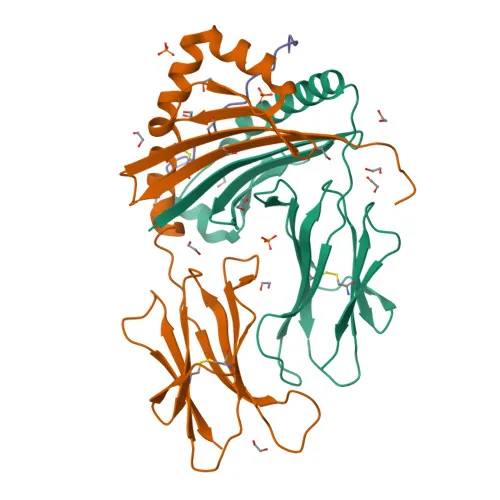
- HLA-DRA encodes the alpha chain of MHC class II molecules, which heterodimerize with beta chains (e.g., HLA-DRB) to present antigenic peptides to CD4+ T cells, driving T-helper–mediated antibody responses and macrophage activation for pathogen and tumor clearance. Related references: PMID:15265931 PMID:15322540 PMID:17334368
- The MHCII complex typically binds extracellular peptide antigens of 10–30 amino acids that are generated by proteolysis of endocytosed antigens in lysosomes. Related references: PMID:8145819
- In the tumor microenvironment, HLA-DR presents antigenic peptides derived from phagocytosis of apoptotic tumor cells or macropinocytosis of secreted tumor proteins by resident APCs, contributing to anti-tumor immunity. Related references: PMID:31495665
- Intracellular antigens trapped in autolysosomes after macroautophagy can also be presented by MHCII, a process critical for T cell selection in the thymus and central immune tolerance. Related references: PMID:17182262 PMID:23783831
- Selection of immunodominant epitopes follows two processing modes: “bind first, cut/trim later” for pathogen-derived peptides and “cut first, bind later” for self-peptides, with a large hydrophobic anchor residue at peptide position 1 being essential for high-affinity MHCII interaction. Related references: PMID:25413013 PMID:8145819
- Subcellular localization includes the cell membrane and intracellular compartments such as the endoplasmic reticulum, early and late endosomes, lysosomes, and autolysosomes, reflecting its trafficking through the antigen-processing pathway.
- Tissue expression is restricted to professional antigen-presenting cells (macrophages, dendritic cells, B cells) and thymic epithelial cells, as confirmed at the protein level. Related references: PMID:15322540 PMID:23783831 PMID:31495665
Experimental Guidance and Technical Tips
- The immunogen is a recombinant full-length human HLA-DRA protein; the antibody may recognize native conformation and linear epitopes.
- For flow cytometry, use standard staining protocols with appropriate isotype controls and viability dyes.
- Consider performing an antibody titration to determine the optimal staining index for your specific sample type.
- Cross-reactivity with cynomolgus monkey enables translational studies in non-human primate models; validate in the relevant sample system.
CamelBio: Your One-Stop Sourcing Bridge
CamelBio offers diagnostic manufacturers and researchers streamlined access to high-quality IVD raw materials for immune monitoring and oncology applications, with this anti-HLA-DR monoclonal antibody as part of our validated portfolio. Our supply capabilities include optimized antibody pairs, multiple clone options for MHC class II targets, and bulk ancillary reagents to accelerate assay development. Our global sourcing network supports rare target and custom raw-material procurement, helping you advance projects from concept to clinic with reliable, scalable supply.
REQUEST A QUOTE
Our professional team will reply to you within one business day. Please feel free to contact us!
Related Articles
Why Direct Hapten Coupling Changes the Economics of Small-Molecule Biosensors
Compare direct hapten coupling with protein conjugates to improve ligand density, signal quality, antibody efficiency, and chip reusability.
Specificity Is Built in Gates: A Hybridoma Screening Workflow for Reliable Immunoassay Raw Materials
A practical hybridoma screening workflow that removes carrier binders, proves native-target recognition, and limits cross-reactivity in IVD assays.
When the Surface Becomes the Assay: Direct Hapten Coating for More Efficient IVD Biosensors
Compare direct hapten derivative coating with protein conjugates to improve SPR assay sensitivity, reduce antibody use, and extend chip life.
From Hapten to Reliable Result: Engineering Small-Molecule Immunoassays for Diagnostic Use
Discover how hapten chemistry, antibody selection, competitive formats, and validation determine small-molecule immunoassay performance.
Why Rapid Immunoassays and GC-MS Work Better Together in Diagnostic Screening
Discover how immunoassays and GC-MS divide screening and confirmation to improve diagnostic speed, cost control, and analytical certainty.
Multiplex Micro-Array Immunoassays: The Antibody Bottleneck Behind Faster, Smarter Diagnostics
Explore how multiplex micro-array immunoassays increase speed and data density, and why antibody specificity, conjugates, and consistency limit scale.
Designing Broad-Spectrum Immunoassays: The Antibody and Conjugate Strategy Behind Multi-Residue Detection
Learn how engineered antibodies, hapten conjugates, and affinity blending enable sensitive, broad-spectrum screening of small-molecule residues.