The answer is a matter of timing and specificity. Relying solely on plasma tyrosine to screen for Tyrosinemia Type 1 (TYR1) results in a dangerously high false-negative rate because tyrosine levels in affected newborns are often indistinguishable from healthy infants during the first critical days of life. Succinylacetone must be the cornerstone of any IVD screening panel because it is the direct, pathognomonic metabolite of the underlying enzymatic block, enabling unambiguous detection before irreversible organ damage occurs.
Succinylacetone is the mandatory primary biomarker because tyrosine is a non-specific, frequently delayed signal that misses early-stage Tyrosinemia Type 1. Only succinylacetone—produced directly from the missing fumarylacetoacetate hydrolase activity—provides the analytical sensitivity and clinical specificity needed to prevent false-negative results and ensure life-saving intervention.
The Diagnostic Inadequacy of Tyrosine
The core problem with plasma tyrosine is that it can appear perfectly normal when a TYR1 infant is most viable for screening. This is not a minor technical limitation—it is a fundamental biological obstacle.
Tyrosine Elevation Lags Behind Pathology
In the first few days of life, the enzyme deficiency in TYR1 has not yet caused a significant, measurable rise in blood tyrosine. The body’s metabolic load from dietary protein is still very low, so the substrate doesn’t accumulate fast enough to cross the threshold used by typical screening algorithms.
Overlap With Benign Conditions
Even when tyrosine is slightly elevated, it creates a diagnostic minefield. Transient neonatal tyrosinemia—a common, temporary, and harmless immaturity of liver enzymes—produces the exact same biochemical signal. High-protein feeds can also spike tyrosine levels, generating false positives and unnecessary parental anxiety.
The False-Negative Consequence
When an IVD panel relies solely on tyrosine, these factors conspire to produce false-negative results. An affected infant can slip through screening undetected, only to re-emerge weeks later with acute liver failure, renal Fanconi syndrome, or neurological crisis from accumulated toxins like succinylacetone. By then, the window for the simplest preventive treatment has narrowed drastically.
Succinylacetone: The Pathognomonic Biomarker
Succinylacetone is not just a better marker; it is the only direct molecular evidence of the disease mechanism. It solves both the timing and the specificity failures of tyrosine in a single, elegant analytical target.
Formed Directly from the Blocked Enzyme
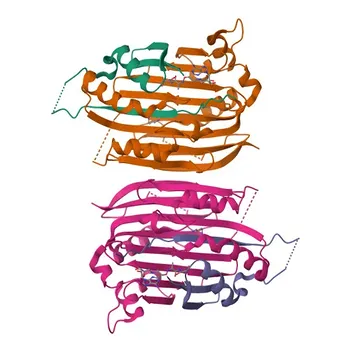
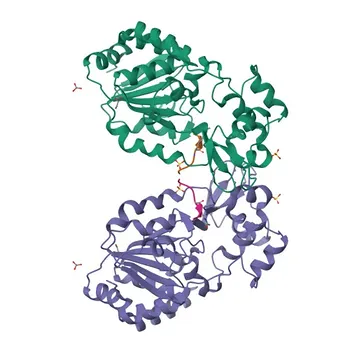
Tyrosinemia Type 1 is caused by a deficiency of fumarylacetoacetate hydrolase (FAH), the final enzyme in the tyrosine degradation pathway. When FAH is absent, the unstable upstream intermediate fumarylacetoacetate accumulates and degrades into succinylacetone. This compound is not a generic derangement—it is a unique, toxic fingerprint of the exact block.
Absolute Diagnostic Specificity
Succinylacetone is pathognomonic for TYR1. No other inborn error of metabolism or transient neonatal condition produces this metabolite in blood or urine. Its presence means the FAH enzyme is defective. Its absence—provided the assay is sensitive enough—virtually rules out the disease, completely eliminating the ambiguity that plagues tyrosine-based screening.
Early and Stable Accumulation
Because succinylacetone forms from backed-up metabolites independent of dietary protein intake, it accumulates early and consistently. In LC-MS/MS newborn screening, the molecule can be detected in a dried blood spot even when tyrosine levels are still well within the normal neonatal range, transforming a potential false-negative into a true positive.
Designing IVD Assays for Reliable Succinylacetone Detection
Simply deciding to measure succinylacetone is not enough. The molecule’s chemical properties demand specific assay architecture to achieve the extreme low-level sensitivity required for mass screening.
The Need for Targeted Sample Preparation
Succinylacetone is present in minute concentrations and can form adducts with proteins. Robust IVD kit designs must include an efficient extraction step from dried blood spots and a derivatization reaction (often with hydrazine or dansyl reagents) to convert succinylacetone into a stable, volatile form suitable for tandem mass spectrometry (MS/MS). Without this, the signal is lost in baseline noise.
High-Purity Reference Standards and Internal Controls
To quantify an analyte at nanomolar levels, the reference material used for calibration must be ultrapure. An IVD reagent manufacturer must supply high-purity succinylacetone standards and a matching stable isotope internal standard (e.g., 13C-labeled succinylacetone). The internal standard corrects for ionization variability and recovery losses, guaranteeing analytical precision across thousands of samples.
Preventing Cross-Interference
The mass spectrometric transitions for succinylacetone can fall in a region crowded by other low-molecular-weight organic acids. A well-designed assay couples the derivatization with a liquid chromatography step or uses highly specific MS/MS multiple-reaction monitoring (MRM) to avoid cross-talk from adjacently eluting metabolites. This prevents false-positives from interfering species.
Understanding the Trade-offs
Incorporating succinylacetone into a screening panel introduces extra complexity, but the alternative is clinically unacceptable. Objectively assessing these trade-offs ensures your IVD platform is built on a sound risk-benefit basis.
Increased Assay Complexity and Cost
Adding a separate derivatization and extraction workflow for succinylacetone increases hands-on time, reagent costs, and the potential for pre-analytical error compared to a simple amino acid profile for tyrosine. A lab must weigh this against the catastrophic cost—both human and financial—of a missed TYR1 diagnosis.
Risk of Degradation and Instability
Succinylacetone can degrade during sample transport if not properly stabilized. Assay designers must validate collection devices (e.g., treated filter paper) and shipping conditions to ensure the marker remains stable from the point of heel prick to the mass spectrometer. Inadequate stabilization leads to falsely low values and missed diagnoses.
The False-Positive Due to Reagent Impurity
If the derivatization reagent or reference standard contains trace contaminants that share the same MRM transition, false-positive results can occur. This underscores why IVD manufacturers must rigorously purify reagents and supply validated, lot-tested standards. Cutting corners in raw material sourcing defeats the entire purpose of using a specific marker.
Making the Right Choice for Your Diagnostic Goal
Your decision to prioritize succinylacetone in an IVD panel must align with your specific clinical or manufacturing priorities. Here are targeted recommendations based on common primary goals.
- If your primary focus is achieving near-zero false-negatives in newborn screening: You must invest in a fully optimized succinylacetone assay with derivatization, stable isotope internal standards, and high-purity reference material. Tyrosine-only panels are not an acceptable option for primary TYR1 detection.
- If your primary focus is operational efficiency in a high-volume screening lab: Streamline the succinylacetone workflow by integrating it into a preparative LC-MS injection sequence that simultaneously measures amino acids and acylcarnitines. Use ready-to-use extraction kits with pre-formulated stable isotope spikes to reduce manual steps without sacrificing the sensitivity of the marker.
- If your primary focus is developing an IVD kit for broader metabolic panels: Position succinylacetone as the critical, non-negotiable tier-2 reflex marker. When a sample shows a borderline tyrosine elevation, the same dried blood spot must be automatically re-extracted and derivatized for succinylacetone confirmation, closing the diagnostic gap that would otherwise exist.
Succinylacetone transforms the impossible task of guessing from a delayed, non-specific signal into the definitive act of measuring the disease itself. An IVD screening panel that includes it is built on the principle of detecting cause, not consequence—and that is the foundation of trustworthy early diagnosis.
Summary Table:
| Diagnostic Feature | Plasma Tyrosine Elevation | Succinylacetone (SA) |
|---|---|---|
| Diagnostic Specificity | Low (overlaps with benign transient tyrosinemia) | Absolute (pathognomonic for FAH enzyme deficiency) |
| Detection Timing | Delayed (elevates only after metabolic protein load) | Immediate (accumulates early in dried blood spots) |
| False-Negative Risk | High during critical early newborn screening window | Minimal when paired with optimized LC-MS/MS assays |
| Analytical Role | Non-specific / non-conclusive indicator | Mandatory primary or tier-2 reflex biomarker |
Enhance Your IVD Screening Precision with CamelBio
Developing sensitive, reliable newborn screening assays requires uncompromising reagent purity and robust technical backing. CamelBio provides diagnostic manufacturers, labs, and research institutes with one-stop access to premium IVD raw materials, technical services, and expert consulting—covering every stage from concept to clinic.
Whether you need high-purity reference standards, stable isotope controls, or custom assay optimization for succinylacetone detection, we are here to streamline your workflow.
👉 Contact CamelBio today to elevate your diagnostic performance and secure trustworthy clinical results.
Related Products
- Anti-AMD1 Polyclonal Antibody for WB, ELISA - P17707
- Anti-ACSS1 Polyclonal Antibody for WB, IHC-P, IF/ICC, ELISA - Q9NUB1
- Anti-SCD5 Rabbit Polyclonal Antibody for WB, ELISA - Q86SK9
People Also Ask
- Why are N-sulfonylacridinium-9-carboxamides preferred over acridinium phenyl esters in CLIAs? Key IVD Advantages
- How do substituent modifications on acridinium carboxamides impact kinetics & stability? Master IVD Label Tuning
- What are the critical molar ratios for SMCC-streptavidin conjugates? Optimize Yield & Stability
- What heterobifunctional strategy conjugates streptavidin with HRP/AP lacking native SH? Master Sulfo-SMCC & SATA.