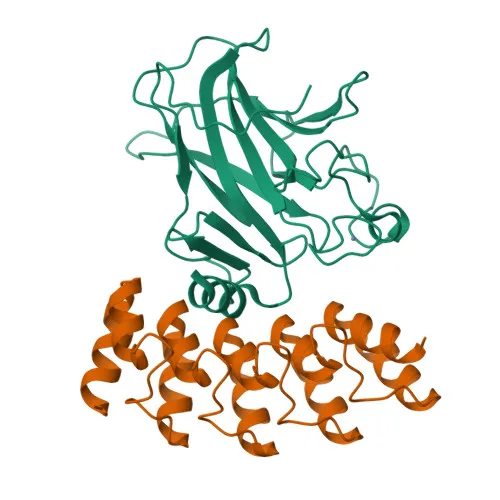
Monoclonal Antibodies
Anti-p63 Rabbit Monoclonal Antibody for WB, ELISA, ChIP - Q9H3D4
Item Number : CM0005135
Price varies based on specs and customizations
- Application
- WB, ELISA, ChIP
- Cross Reactivity
- Human, Rat
- Protein Weight
- 45-77 kDa

Shipping:
Contact us to get shipping details Enjoy On-time Dispatch Guarantee.
Why Choose Us
Easy ordering process, quality products, and dedicated support for your business success.
Core Product Specifications and Parameters
| Parameter | Value |
|---|---|
| Product Name | p63 Rabbit mAb |
| Remarks/Alias | AIS; KET; LMS; NBP; RHS; p40; p51; p63; EEC3; OFC8; p73H; p73L; SHFM4; TP53L; TP73L; p53CP; TP53CP; B(p51A); B(p51B) |
| Species | Human |
| GeneID (Human) | 8626 |
| GeneID | 8626 |
| Immunogen | Synthetic peptide corresponding to a sequence within amino acids 581-680 of human p63 (NP_003713.3). |
| Source | Rabbit |
| Category | Monoclonal Antibodies |
| Application | WB, ELISA, ChIP |
| Cross Reactivity | Human, Rat |
| SWISS | Q9H3D4 |
| Protein Weight | 45-77 kDa |
| Shipping | Ice bag |
Biological Background: p63 Function and Localization
- p63, also known as TP63, p73L, p40, p51, and KET, is a member of the p53 family of transcription factors.
- It functions as a sequence-specific DNA-binding transcriptional activator or repressor, regulating genes involved in apoptosis, Notch signaling, and epithelial morphogenesis.
- The ratio of N-terminally truncated (ΔN) and full-length transactivation (TA) isoforms governs epithelial stem cell maintenance and stratification.
- p63 is required for limb formation from the apical ectodermal ridge and activates the p21 promoter.
- It binds to an upstream regulatory region of DSG1 and promotes its transcription (PubMed:24594668). Related references: PMID:24594668
- Subcellular localization is primarily nuclear, consistent with its role as a transcription factor.
- Widely expressed in heart, kidney, placenta, prostate, skeletal muscle, testis, and thymus; ΔN isoforms are highly expressed in progenitor cell layers of skin, breast, eye, and prostate.
- Keywords highlight alternative splicing, isopeptide bond formation, and involvement in developmental processes and disease.
Experimental Guidance and Technical Tips
- The immunogen spans amino acids 581-680 of human p63 (NP_003713.3). This C-terminal region may be present in certain isoforms; consult sequence alignments to predict isoform detection.
- For western blot (WB), expect bands between 45 and 77 kDa corresponding to TA and ΔN isoforms. Validate specificity using knockout or siRNA controls.
- In ELISA applications, use the immunizing peptide or a relevant recombinant protein as a positive control and for quantification.
- For chromatin immunoprecipitation (ChIP), optimize cross-linking and shearing conditions; include positive and negative genomic loci based on known p63 targets (e.g., p21, DSG1).
- The antibody is validated for human and rat; cross-reactivity with other species should be tested empirically.
CamelBio: Your One-Stop Sourcing Bridge
CamelBio provides diagnostic manufacturers, labs, and research institutes with one-stop access to IVD raw materials, technical services, and consulting—covering every stage from concept to clinic. This p63 monoclonal antibody is part of our transcription factor and cancer research toolbox, supporting assay development for WB, ELISA, and ChIP. Beyond individual antibodies, CamelBio can source validated antibody pairs, optimized monoclonal/polyclonal antibodies, bulk ancillary reagents, and rare target raw materials to accelerate your diagnostic or research programs.
REQUEST A QUOTE
Our professional team will reply to you within one business day. Please feel free to contact us!
Related Articles
qPCR Efficiency: The Mathematical Foundation of Reliable Molecular Diagnostics
Learn how qPCR efficiency is calculated, why the 90–100% range matters, and how it protects diagnostic accuracy, sensitivity, and compliance.
Designing Generic Antibodies: How Hapten Engineering Enables Broad-Spectrum Pesticide Detection
Learn how strategic hapten design exposes conserved pesticide structures, improves antibody cross-reactivity, and guides reliable multi-residue assays.