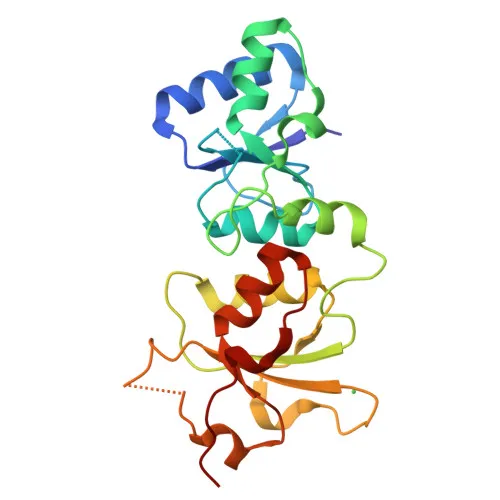
Polyclonal Antibodies
Anti-BRCA1 Polyclonal Antibody for WB, IHC-P, IF/ICC, ELISA - P38398
Item Number : CM0013583
Price varies based on specs and customizations
- Application
- WB, IHC-P, IF/ICC, ELISA
- Cross Reactivity
- Human
- Protein Weight
- 208kDa

Shipping:
Contact us to get shipping details Enjoy On-time Dispatch Guarantee.
Why Choose Us
Easy ordering process, quality products, and dedicated support for your business success.
Core Product Specifications and Parameters
| Parameter | Value |
|---|---|
| Product Name | BRCA1 Rabbit pAb |
| Remarks/Alias | IRIS; PSCP; BRCAI; BRCC1; FANCS; PNCA4; RNF53; BROVCA1; PPP1R53; BRCA1 |
| Species | Human |
| GeneID (Human) | 672 |
| GeneID | 672 |
| Immunogen | Synthetic peptide |
| Source | Rabbit |
| Category | Polyclonal Antibodies |
| Application | WB, IHC-P, IF/ICC, ELISA |
| Cross Reactivity | Human |
| SWISS | P38398 |
| Protein Weight | 208kDa |
| Shipping | Ice bag |
Biological Background: BRCA1 Function and Localization
-
BRCA1 is a breast cancer type 1 susceptibility protein that functions as a RING finger protein and E3 ubiquitin-protein ligase, specifically mediating 'Lys-6'-linked polyubiquitin chain formation, which is crucial for DNA damage repair and genomic stability. Related references: PMID:10500182, PMID:12887909, PMID:12890688
-
The BRCA1-BARD1 heterodimer orchestrates DNA damage repair, ubiquitination, and transcriptional regulation, ensuring genomic integrity. Related references: PMID:12890688, PMID:14976165, PMID:20351172
-
BRCA1 is required for ionizing radiation-induced cell cycle arrests in both S-phase and G2 phase, contributing to proper checkpoint control. Related references: PMID:10724175, PMID:11836499, PMID:12183412
-
It regulates centrosomal microtubule nucleation, impacting chromosome segregation and mitotic fidelity. Related references: PMID:18056443
-
BRCA1 facilitates homologous recombination repair by interacting with PALB2, which promotes BRCA2-RAD51 loading at DNA breaks. Related references: PMID:19369211
-
Additionally, BRCA1 inhibits lipid synthesis by binding to inactive phosphorylated ACACA and acts as a transcriptional activator to modulate gene expression. Related references: PMID:16326698, PMID:20160719
-
The protein undergoes phosphorylation and acetylation and contains a RING-type zinc finger domain essential for its E3 ligase activity. BRCA1 localizes predominantly to the nucleus and chromosomes, with some cytoplasmic presence. Isoform 1 and 3 are widely expressed, while isoform 3 is often reduced or absent in breast and ovarian cancer cell lines.
Experimental Guidance and Technical Tips
- The immunogen corresponds to a region within amino acids 901-1000; this central region may recognize full-length BRCA1 and potentially some isoforms.
- For Western blot, consider using whole-cell lysates from cell lines with known BRCA1 expression (e.g., HeLa, MCF-7) due to the large ~208 kDa protein size; ensure proper gel electrophoresis and transfer conditions.
- In immunohistochemistry (IHC-P), antigen retrieval may be required; validate the antibody in frozen or paraffin-embedded tissues according to standard protocols.
- For immunofluorescence/ICC, fixation and permeabilization conditions should be optimized for nuclear and cytoplasmic detection.
- ELISA can be used for detecting recombinant BRCA1 fragments or screening antibodies; consider paired antibody strategies for sandwich ELISA.
CamelBio: Your One-Stop Sourcing Bridge
CamelBio provides a comprehensive portfolio of IVD raw materials, including validated antibody pairs, optimized monoclonal and polyclonal antibodies, and ancillary reagents for assays targeting BRCA1 in oncology and genetic testing. Whether you need bulk quantities or specialized sourcing for rare targets, CamelBio supports your diagnostic development from concept to clinic.
REQUEST A QUOTE
Our professional team will reply to you within one business day. Please feel free to contact us!
Related Articles
When the Dye Sees Everything: A Systematic Strategy for Cleaner, More Reliable qPCR
Learn how primer design, Mg2+ control, thermal optimization, and melt curves reduce background signal in dye-based qPCR assays.
The Thermal Block Is the Hidden Variable in Real-Time PCR Performance
How ramp rate, gradient control, block geometry, and thermal uniformity shape qPCR speed, optimization, reproducibility, and sample volume.
Two Positive Controls, One Clear Answer: Isolating RT and PCR Failure in qRT-PCR Diagnostics
Learn how dual positive controls isolate reverse transcription and PCR failures, improve qRT-PCR reliability, and support compliant diagnostic workflows.
Specificity Is Built in Gates: A Hybridoma Screening Workflow for Reliable Immunoassay Raw Materials
A practical hybridoma screening workflow that removes carrier binders, proves native-target recognition, and limits cross-reactivity in IVD assays.
Choosing the Thermal Architecture That Makes a Molecular Assay Transferable
Compare Peltier blocks and air-heated carousels across speed, uniformity, sample flexibility, optimization, and throughput for qPCR development.
Why Thermal Ramp Rates and Gradient Control Decide the Quality of a qPCR Assay
Learn how qPCR ramp rates and thermal gradients reduce run time, improve uniformity, and rapidly identify the annealing temperature for reliable diagnostics.
When the Seal Changes the Result: Controlling CT Variance in Real-Time PCR
Learn how evaporation, optical interference, and edge effects raise qPCR CT values, and how better sealing protects diagnostic accuracy.
Designing Generic Antibodies: How Hapten Engineering Enables Broad-Spectrum Pesticide Detection
Learn how strategic hapten design exposes conserved pesticide structures, improves antibody cross-reactivity, and guides reliable multi-residue assays.

Engineering High-Sensitivity Electrochemical Immunosensors for Small-Molecule Detection
How competitive assay design, high-affinity antibodies, HRP labels, and interface control enable reliable trace small-molecule detection.
Why Open Chemistry and Flexible Reaction Volumes Define Better Diagnostic PCR Systems
Learn how open chemistry compatibility and flexible reaction volumes improve PCR assay control, sensitivity, cost, scalability, and supply independence.
Annealing Temperature: The Thermodynamic Decision Behind Reliable Diagnostic PCR
Learn how annealing temperature controls PCR specificity, sensitivity, LOD, and manufacturing consistency across real diagnostic workflows.
Why Rapid Immunoassays and GC-MS Work Better Together in Diagnostic Screening
Discover how immunoassays and GC-MS divide screening and confirmation to improve diagnostic speed, cost control, and analytical certainty.