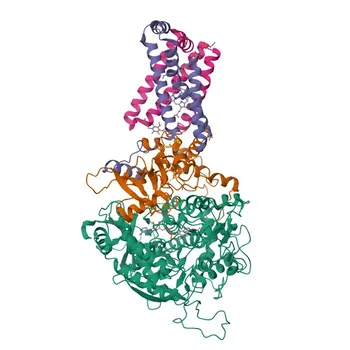
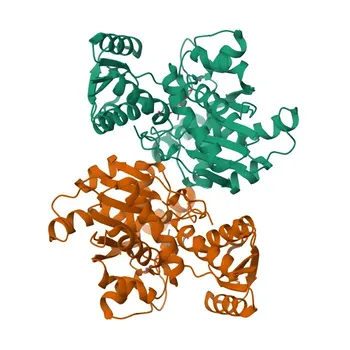
Strand Displacement Amplification (SDA) is an isothermal nucleic acid amplification method that replaces thermal cycling with a continuous enzymatic nicking-and-polymerization cycle. Unlike traditional PCR, which relies on repeated high-temperature denaturation steps and a thermostable DNA polymerase, SDA uses a restriction endonuclease to nick a hemimodified DNA site and an exonuclease-deficient DNA polymerase to extend from the nick while displacing the downstream strand. This constant-temperature process dramatically simplifies instrument design for point‑of‑care (POC) diagnostics, but it demands a specialized enzyme toolkit: a high‑purity strand‑dis placing DNA polymerase, a nicking restriction enzyme, and modified nucleotides such as dATPaS.
SDA eliminates thermal cycling by coupling a restriction enzyme that nicks only one strand of a hemiphosphorothioate‑modified recognition site with a strand‑dis placing polymerase that drives exponential amplification isothermally. For diagnostic developers, this means simpler hardware at the expense of a more complex enzymatic formulation—high‑purity enzymes and specialty modified dNTPs become non‑negotiable.
The Core Mechanism: How SDA Differs from Traditional PCR
PCR: The Thermal Cycling Gold Standard
Traditional PCR requires a thermostable DNA polymerase (like Taq), a primer pair, and standard dNTPs.
Its defining feature is dynamic thermal cycling—repeated high‑temperature denaturation (~95°C) followed by annealing and extension steps.
This thermal control provides inherent specificity but demands precision‑engineered thermocyclers and adds time for temperature transitions.
SDA: Isothermal Amplification via Nicking and Displacement
SDA operates at a single, constant temperature (typically around 52°C) after an initial denaturation step.
Instead of heat denaturation, the process harnesses enzymatic strand separation: a restriction endonuclease nicks a hemimodified double‑stranded DNA site, and a strand‑dis placing DNA polymerase extends from that nick, pushing the downstream strand away while synthesizing a new copy.
This cycle repeats, generating single‑stranded products that serve as templates for further rounds of nicking and extension, achieving exponential amplification without ever returning to a denaturation temperature.
Step‑by‑Step SDA Reaction Mechanism
Target Generation and Hemimodification
SDA uses four primers: two outer (bumper) primers and two inner primers that contain a restriction enzyme recognition sequence at their 5' ends.
The strand‑dis placing polymerase extends from all primers and incorporates modified dATPaS (2'‑deoxyadenosine 5'‑O‑(1‑thiotriphosphate)) into the nascent DNA.
Because the newly synthesized strand contains a phosphorothioate‑modified backbone within the restriction site, the enzyme can no longer cleave that strand—it creates a hemimodified site where only the unmodified original strand is susceptible to nicking.
Nicking and Strand Displacement
A specific restriction endonuclease (e.g., HincII) nicks the unmodified strand at the hemimodified recognition sequence.
The exonuclease‑deficient polymerase recognizes the single‑strand nick, binds, and starts extension from the 3'‑OH while simultaneously displacing the downstream single strand.
The displaced strand is then free to anneal to a new inner primer, initiating the next round of synthesis and nicking.
Exponential Amplification and Real‑Time Detection
Because each displaced strand becomes a template for further inner‑primer extension, the reaction enters an exponential amplification phase that is sustained isothermally.
For real‑time monitoring, diagnostic kits often incorporate fluorophore‑and‑quencher‑labeled hairpin primers. In their unincorporated state, the hairpin keeps the fluorophore quenched.
When the restriction enzyme cleaves the double‑stranded DNA formed by the incorporated primer, fluorescence is released, providing a real‑time signal that correlates with target amplification.
Critical Enzyme Raw Materials for SDA Kit Development
1. Exonuclease‑Deficient DNA Polymerase with Strand‑Displacement Activity
The polymerase must be exo‑minus (lacking 5'→3' exonuclease activity) so that it extends from the nick without degrading the displaced strand.
It also needs robust strand‑displacement capability and sufficient thermal stability to remain active at the chosen isothermal temperature (often around 52°C).
Common choices include exonuclease‑deficient Klenow fragment (DNA Polymerase I large fragment) or thermostable strand‑dis placing polymerases like Bst DNA Polymerase.
Diagnostic developers must source these enzymes at ultra‑high purity—any co‑purifying nucleases can cause non‑specific degradation and ruin assay sensitivity.
2. Restriction Endonuclease That Nicks Hemimodified Sites
The enzyme must recognize the target sequence and nick only the unmodified strand when the complementary strand contains phosphorothioate linkages.
HincII is the classical example, but other restriction endonucleases with similar hemimodified‑selective nicking properties are used in commercial formulations.
The enzyme must display tight stringency and minimal star activity under the SDA buffer conditions, because any off‑target nicking will create background amplification or degrade the template.
3. Modified Deoxynucleotides (dATPaS)
dATPaS is incorporated during primer extension in place of dATP, creating the phosphorothioate‑modified strand that resists endonucleolytic cleavage.
The quality and purity of these modified nucleotides directly impact the efficiency of hemimodification and, consequently, the overall amplification rate.
Sourcing high‑purity, nuclease‑free dATPaS is essential to prevent side reactions that can inhibit the polymerase or introduce false nicking sites.
4. (Optional) Fluorogenic Primers and Probes
While not enzymatic raw materials, real‑time SDA assays often use hairpin primers or molecular beacons labeled with a fluorophore and quencher.
The restriction enzyme cleavage step physically separates the fluorophore from the quencher, generating a signal that can be read on a simple fluorescence detector.
Understanding the Trade‑offs of SDA in Diagnostic Assay Development
Hardware Simplicity Comes at an Enzymatic Cost
SDA enables compact, battery‑operated POC devices because it eliminates the need for a thermocycler.
However, the number of enzymes and the requirement for modified nucleotides make the biochemistry more complex than a typical PCR master mix.
This complexity shifts the quality‑control burden to the enzyme supply chain and increases the number of components that must be rigorously tested for consistency.
Sensitivity and Specificity Challenges
SDA can achieve high analytical sensitivity, but constant‑temperature operation raises the risk of non‑specific amplification if the polymerase, restriction enzyme, or primers engage in side reactions.
PCR’s high‑temperature denaturation step helps melt away non‑specific interactions, providing an inherent specificity advantage that SDA must compensate for through stringent enzyme purification and careful primer design.
Cost and Supply Chain Considerations
Modified dNTPs (like dATPaS) are significantly more expensive than standard dNTPs, driving up the per‑test cost.
Sourcing high‑purity exonuclease‑deficient polymerase and hemimodified‑nicking restriction enzyme with low lot‑to‑lot variability can be challenging for manufacturers scaling up production for global diagnostic markets.
Speed vs. Robustness
SDA often delivers a faster time‑to‑result than PCR because it avoids ramping times, making it attractive for settings where speed is paramount.
However, achieving competitive reaction kinetics requires precise optimization of enzyme ratios and buffer additives; poorly formulated kits can show slow or inconsistent amplification.
Making the Right Choice for Your Diagnostic Platform
- If your primary focus is a truly portable, instrument‑light point‑of‑care test: SDA’s isothermal operation can slash hardware costs and complexity, making it ideal for near‑patient or field testing.
- If your primary focus is the highest sensitivity, specificity, and established regulatory acceptance: PCR remains the reference method with a mature supply chain, well‑characterized enzymes, and an extensive body of clinical validation data.
- If your primary focus is rapid time‑to‑result and you can invest in custom enzyme sourcing and quality control: SDA can deliver fast amplification, but you must secure a reliable source of ultra‑pure exo‑minus polymerase and nicking restriction enzyme to ensure reproducible performance.
Selecting the right amplification technology—and the right enzyme raw materials—ultimately aligns your diagnostic platform’s performance with the needs of your end users.
Summary Table:
| Feature / Parameter | Traditional PCR | Strand Displacement Amplification (SDA) |
|---|---|---|
| Amplification Temp | Thermal cycling (50°C – 95°C) | Isothermal (~52°C constant) |
| Strand Separation | High-temperature denaturation | Enzymatic nicking & strand displacement |
| Key Enzymes Required | Thermostable DNA Polymerase (e.g., Taq) | Exonuclease-deficient Polymerase + Nicking Endonuclease |
| Modified dNTPs | Standard dNTPs | Modified dATPaS (creates hemimodified site) |
| Hardware Requirements | Precision thermocycler | Simple incubator / heat block (Ideal for POC) |
| Assay Formulation | Standard master mix formulation | Complex enzyme ratios & high raw material purity requirements |
Accelerate Your Isothermal & PCR Assay Development with CamelBio
Scaling your molecular diagnostic platform requires uncompromising raw material purity and expert formulation. Whether you are developing isothermal assays like SDA or optimizing traditional PCR, CamelBio provides diagnostic manufacturers, labs, and research institutes with one-stop access to high-purity IVD raw materials, technical services, and consulting—covering every stage from concept to clinic.
Ready to elevate your assay sensitivity and simplify supply chain complexity? Contact CamelBio today to request raw material samples and expert technical assistance.