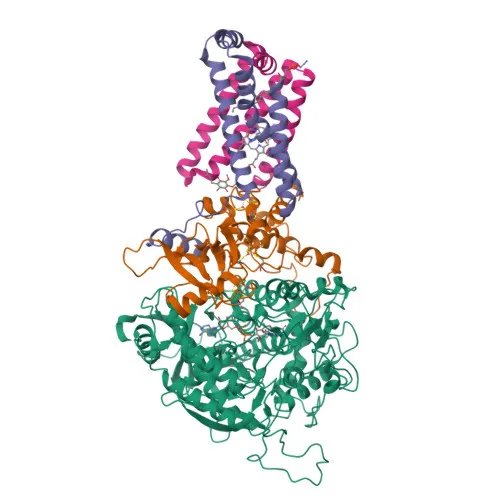
Monoclonal Antibodies
Anti-SDHA Monoclonal Antibody for WB, IF, ELISA - P31040
Item Number : CM0002697
Price varies based on specs and customizations
- Application
- WB, IF/ICC, IF-P, ELISA
- Cross Reactivity
- Human, Mouse, Rat
- Protein Weight
- 73 kDa

Shipping:
Contact us to get shipping details Enjoy On-time Dispatch Guarantee.
Why Choose Us
Easy ordering process, quality products, and dedicated support for your business success.
Core Product Specifications and Parameters
| Parameter | Value |
|---|---|
| Product Name | SDHA Rabbit mAb |
| Remarks/Alias | FP; PGL5; SDH1; SDH2; SDHF; CMD1GG; MC2DN1; NDAXOA; SDHA |
| Species | Human |
| Gene ID (Human) | 6389 |
| Gene ID | 6389 |
| Immunogen | A synthetic peptide corresponding to a sequence within amino acids 550-650 of human SDHA (P31040). |
| Source | Rabbit |
| Category | Monoclonal Antibodies |
| Application | WB, IF/ICC, IF-P, ELISA |
| Cross Reactivity | Human, Mouse, Rat |
| SWISS | P31040 |
| Protein Weight | 73 kDa |
| Shipping | Ice bag |
Biological Background: SDHA Function and Localization
-
SDHA encodes the flavoprotein subunit of succinate dehydrogenase (SDH), an enzyme complex (complex II) of the mitochondrial electron transport chain that couples succinate oxidation to ubiquinone reduction (PubMed:10746566, PubMed:24781757).
Related references:
PMID:10746566 PMID:24781757 -
The protein also catalyzes the oxidation of malate to enol-oxaloacetate, a potent SDH inhibitor that is subsequently isomerized to keto-oxaloacetate (By similarity).
-
SDHA acts as a tumor suppressor; loss-of-function mutations are associated with paragangliomas and gastrointestinal stromal tumors (PubMed:20484225).
Related references:
PMID:20484225 -
Localized to the mitochondrial inner membrane, SDHA is essential for both the tricarboxylic acid cycle and oxidative phosphorylation.
-
Post-translational modifications include acetylation and phosphorylation, which may regulate enzyme activity; the protein also contains a covalently bound FAD cofactor.
-
Clinically, SDHA mutations are linked to Leigh syndrome, cardiomyopathy, and other primary mitochondrial diseases (keywords: Disease variant, Primary mitochondrial disease).
-
Multiple transcript variants encoding different isoforms have been identified (Alternative splicing).
-
The protein has a predicted molecular mass of 72.7 kDa but commonly migrates at ~73 kDa on SDS-PAGE.
Experimental Guidance and Technical Tips
-
The immunogen corresponds to a conserved C-terminal region (aa 550–650), suggesting recognition of all known human SDHA isoforms; verify in relevant sample systems.
-
For Western blot, use reducing conditions and load appropriate protein amounts; the expected band is approximately 73 kDa. Validate with a positive control such as HeLa or HEK293 cell lysates.
-
In immunofluorescence assays, mitochondrial staining should predominate; optimize fixation (e.g., 4% PFA) and permeabilization (e.g., 0.1% Triton X-100) for best signal.
-
This antibody cross-reacts with mouse and rat SDHA, making it suitable for studies in these species; confirm reactivity in your model by testing lysates or tissue sections.
-
For ELISA applications, consider pairing with a detection antibody that recognizes a non-overlapping epitope.
CamelBio: Your One-Stop Sourcing Bridge
CamelBio is dedicated to providing diagnostic manufacturers, laboratories, and research institutes with reliable access to premium IVD raw materials and technical expertise. As a one-stop sourcing partner, we supply validated antibody pairs, optimized monoclonal and polyclonal antibodies, bulk ancillary reagents, and support for rare-target development—all designed to accelerate your SDHA-related diagnostic and research programs. Let CamelBio bridge your workflow from concept to clinic with efficient supply solutions tailored to your needs.
REQUEST A QUOTE
Our professional team will reply to you within one business day. Please feel free to contact us!