Monoclonal Antibodies
Anti-RPA70/RPA1 Rabbit Monoclonal Antibody for WB, IP, ELISA, ChIP - P27694
Item Number : CM0005523
Price varies based on specs and customizations
- Application
- WB, IP, ELISA, ChIP
- Cross Reactivity
- Human, Rat
- Protein Weight
- 68kDa

Shipping:
Contact us to get shipping details Enjoy On-time Dispatch Guarantee.
Why Choose Us
Easy ordering process, quality products, and dedicated support for your business success.
Core Product Specifications and Parameters
| Parameter | Value |
|---|---|
| Product Name | RPA70/RPA1 Rabbit mAb |
| Remarks/Alias | HSSB; RF-A; RP-A; REPA1; RPA70; MST075; PFBMFT6; RPA70/RPA1 |
| Species | Human |
| GeneID (Human) | 6117 |
| GeneID | 6117 |
| Immunogen | Synthetic Peptide | A synthetic peptide corresponding to a sequence within amino acids 1-100 of human RPA70/RPA1 (P27694). |
| Source | Rabbit |
| Category | Monoclonal Antibodies |
| Application | WB, IP, ELISA, ChIP |
| Cross Reactivity | Human, Rat |
| SWISS | P27694 |
| Protein Weight | 68kDa |
| Shipping | Ice bag |
Biological Background: RPA70/RPA1 Function and Localization
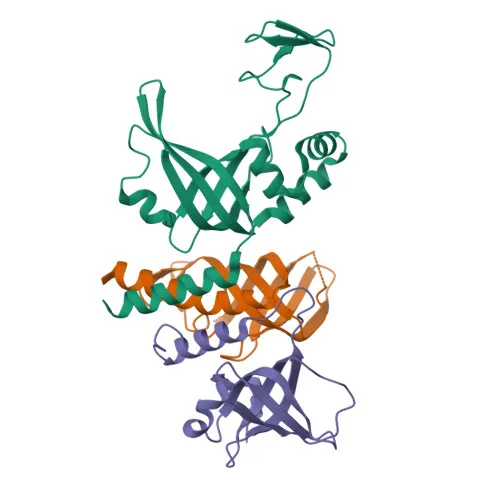
- The RPA70 subunit, encoded by RPA1 (also known as REPA1), is the 70 kDa DNA-binding component of the heterotrimeric replication protein A (RPA) complex, which also includes the RPA2 and RPA3 subunits. Together, they bind and stabilize single-stranded DNA (ssDNA) intermediates.
- RPA is indispensable for chromosomal DNA replication and orchestrates the cellular response to DNA damage. It activates DNA damage checkpoints and facilitates repair pathway choice. Related references: PMID:9430682
- Through recruitment of ATRIP, RPA activates the ATR kinase, a master regulator of the DNA damage response, linking ssDNA detection to global checkpoint signaling. Related references: PMID:24332808
- RPA is required for the recruitment of the homologous recombination factors RAD51 and RAD52 to chromatin at sites of DNA double-strand breaks. Related references: PMID:17765923
- In nucleotide excision repair (NER), RPA directly recruits XPA and XPG to damaged sites and is essential for the dual incision/excision step of this repair pathway. Related references: PMID:7697716
- RPA contributes to telomere maintenance, preserving genomic integrity, and mutations in RPA1 are linked to telomere biology disorders. Related references: PMID:17959650 | PMID:34767620
- An alternative RPA complex, aRPA, is formed when RPA4 replaces RPA2. This complex retains ssDNA-binding ability but functions primarily in DNA repair rather than chromosomal DNA replication. Related references: PMID:19996105
- RPA stimulates the 5'-3' helicase activity of BRIP1/FANCJ, linking it to interstrand crosslink repair and maintaining replication fork stability. Related references: PMID:17596542
- RPA70 is predominantly nuclear and localizes to PML bodies. It is subject to extensive post-translational modifications, including phosphorylation, acetylation, and ubiquitination, which regulate its activity and protein interactions.
Experimental Guidance and Technical Tips
- The immunogen is a synthetic peptide within the N-terminal region (amino acids 1–100). For Western blotting, the expected molecular weight is approximately 68 kDa; whole-cell lysates from human or rat cultured cells are suitable starting materials.
- For ChIP assays, note that the epitope lies in an unstructured region; consider inducing DNA damage (e.g., UV or hydroxyurea treatment) to enrich RPA-bound loci and verify performance.
- In IP and ELISA applications, pre-test the antibody under your specific buffer conditions, as it recognizes a linear epitope. Include appropriate controls.
- Validate antibody specificity in your system using siRNA-mediated knockdown or CRISPR/Cas9 knockout samples.
CamelBio: Your One-Stop Sourcing Bridge
CamelBio provides diagnostic manufacturers and researchers with a comprehensive portfolio of IVD raw materials, including validated monoclonal antibodies such as this anti-RPA70/RPA1 clone. Beyond individual reagents, we facilitate bulk and customized sourcing of ancillary reagents, rare-target antibodies, and technical consultation for assay development across DNA damage, repair, and replication research areas. Partner with us to streamline your supply chain from concept to clinic.
REQUEST A QUOTE
Our professional team will reply to you within one business day. Please feel free to contact us!
Related Articles
ROX in qPCR: The Quiet Reference That Makes Diagnostic Signals Trustworthy
Learn how ROX normalizes qPCR fluorescence, stabilizes Ct calls, and shapes the trade-off between instrument compatibility and multiplexing.
qPCR Primer Design: The Small Decisions That Determine Assay Reliability
A practical guide to qPCR primer design, from amplicon length and 3' stability to validation for efficient, reproducible diagnostics.
Where Ct Values Become Trustworthy: Establishing the qPCR Fluorescence Threshold
Learn how baseline noise, statistical thresholds, exponential-phase placement, and validation turn qPCR fluorescence into reliable Ct values.
qPCR Efficiency: The Mathematical Foundation of Reliable Molecular Diagnostics
Learn how qPCR efficiency is calculated, why the 90–100% range matters, and how it protects diagnostic accuracy, sensitivity, and compliance.
Why Open Chemistry and Flexible Reaction Volumes Define Better Diagnostic PCR Systems
Learn how open chemistry compatibility and flexible reaction volumes improve PCR assay control, sensitivity, cost, scalability, and supply independence.