Monoclonal Antibodies
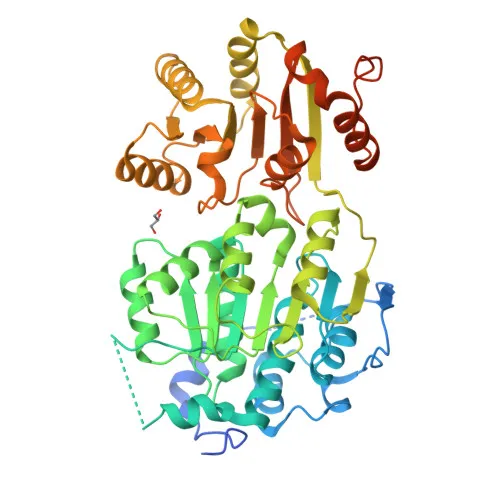
Anti-DDX3X/DDX3Y Rabbit Monoclonal Antibody for WB, IHC-P, IF/ICC, IP, ELISA - O00571/O15523
Item Number : CM0007009
Price varies based on specs and customizations
- Application
- WB, IHC-P, IF/ICC, IP, ELISA
- Cross Reactivity
- Human, Mouse, Rat
- Protein Weight
- 73 kDa/71 kDa/32 kDa

Shipping:
Contact us to get shipping details Enjoy On-time Dispatch Guarantee.
Why Choose Us
Easy ordering process, quality products, and dedicated support for your business success.
Core Product Specifications and Parameters
| Parameter | Value |
|---|---|
| Product Name | DDX3X/DDX3Y Rabbit mAb |
| Remarks/Alias | DBX; DDX3; HLP2; DDX14; CAP-Rf; MRX102; MRXSSB; DBY; DDX3X/DDX3Y |
| Species | Human |
| Gene ID (Human) | 1654/8653 |
| Immunogen | Recombinant protein |
| Source | Rabbit |
| Category | Monoclonal Antibodies |
| Application | WB, IHC-P, IF/ICC, IP, ELISA |
| Cross Reactivity | Human, Mouse, Rat |
| SWISS | O00571/O15523 |
| Protein Weight | 73 kDa/71 kDa/32 kDa |
| Shipping | Ice bag |
Biological Background: DDX3X/DDX3Y Function and Localization
- DDX3X is a multifunctional ATP-dependent RNA helicase that unwinds RNA and DNA duplexes, with ATPase activity stimulated by various nucleic acids. It binds RNA G-quadruplex structures and is involved in transcription, translation, and innate immunity. Related references: PMID:17357160, PMID:21589879, PMID:31575075, PMID:29222110, PMID:30256975
- DDX3X positively regulates transcription of CDKN1A/WAF1/CIP1 via SP1 and represses CDH1/E-cadherin, while also modulating HNF4A-mediated MTTP expression in lipid homeostasis. Related references: PMID:16818630, PMID:18264132, PMID:28128295
- It promotes translation of complex mRNAs with structured 5' UTRs, such as cyclin E1, and enhances 80S ribosome assembly independently of ATPase activity. Related references: PMID:20837705, PMID:22872150, PMID:17667941, PMID:18628297, PMID:22323517
- As a viral RNA sensor, DDX3X triggers type I interferon production via MAVS/RIG-I and TLR7/TLR8 pathways, activating IRF3/IRF7 and NF-κB. This antibody recognizes both DDX3X and its Y-chromosomal homolog DDX3Y (O15523), which share high sequence identity in the immunogen region. Related references: PMID:20127681, PMID:21170385, PMID:31575075, PMID:33674311, PMID:18583960, PMID:18636090, PMID:19913487, PMID:23478265, PMID:27736973
- DDX3X is required for stress granule assembly via EIF4E interaction, promoting survival, and also regulates NLRP3 inflammasome assembly, influencing pyroptosis. Related references: PMID:21883093
- It allosterically activates casein kinase CSNK1E, enhancing DVL2 phosphorylation and positively regulating Wnt/β-catenin signaling. Related references: PMID:23413191, PMID:29222110
- DDX3X facilitates replication of several viruses, including HCV, HIV-1, Zika, Dengue, and VEEV, often by interacting with viral components or modulating innate immunity. Related references: PMID:29899501, PMID:21170385, PMID:15507209, PMID:18583960, PMID:21589879
- Localized in the nucleus, cytoplasm, stress granules, centrosomes, and lamellipodia; widely expressed with high levels in testis, epidermis, and liver. Related references: PMID:15294876, PMID:16301996, PMID:16818630
Experimental Guidance and Technical Tips
- The immunogen (amino acids 100–200) targets a conserved region of DDX3X and DDX3Y; this monoclonal antibody is expected to detect both paralogs in human, mouse, and rat samples.
- In Western blotting, DDX3X migrates around 73 kDa, DDX3Y around 71 kDa, and a potential alternative isoform at 32 kDa; use appropriate molecular weight markers and verify in the relevant sample system.
- For immunoprecipitation, the rabbit monoclonal format typically provides high specificity; optimize antibody concentration and incubation conditions for your experimental setup.
- In IHC-P and IF/ICC, expect nuclear and cytoplasmic staining; stress induction may cause relocalization to stress granules. Validate with appropriate compartment markers and controls.
- ELISA applications can be considered for quantifying DDX3X/DDX3Y in lysates or recombinant preparations; a sandwich format with matched antibody pairs may be explored.
CamelBio: Your One-Stop Sourcing Bridge
CamelBio is your dedicated one-stop partner for IVD raw materials, offering validated antibodies, antigen pairs, and bulk ancillary reagents for diagnostic development. For research and assay development targeting DDX3X/DDX3Y in RNA helicase function, viral infections, or immune response, CamelBio streamlines procurement from concept to clinic. Our supply capability spans monoclonal antibodies, optimized recombinant proteins, and rare target sourcing to accelerate your IVD projects.
REQUEST A QUOTE
Our professional team will reply to you within one business day. Please feel free to contact us!
Related Articles
ROX in qPCR: The Quiet Reference That Makes Diagnostic Signals Trustworthy
Learn how ROX normalizes qPCR fluorescence, stabilizes Ct calls, and shapes the trade-off between instrument compatibility and multiplexing.
ROX in Real-Time PCR: The Optical Trade-Off Behind Precision and Multiplexing
Understand how ROX normalization corrects qPCR signal variation, how optics consume channels, and how to choose the right master mix.
From Fluorescence to Diagnostic Truth: Choosing Passive Reference Dyes for qPCR Master Mixes
Learn how passive reference dyes stabilize qPCR signals, improve diagnostic reproducibility, and guide ROX formulation across instrument platforms.
ROX, Optical Architecture, and the Hidden Ceiling of Multiplex qPCR
How instrument optics determine ROX requirements, consume detection channels, and shape multiplex qPCR design, reagent logistics, and kit strategy.
The Silent Correction Behind Reliable qPCR: Passive Reference Dyes, Rn, and Assay Design
Learn how passive reference dyes normalize qPCR noise, how Rn is calculated, and when ROX affects compatibility, accuracy, and multiplexing.
Why Dioxin Immunoassays Fail in Complex Matrices—and How to Engineer Them for Reliable Screening
Explore how matrix interference, antibody cross-reactivity, and sample preparation limit dioxin immunoassays—and how better materials and workflows improve accuracy.
Why ddNTP Chain Termination Still Defines Confidence in Diagnostic Sanger Sequencing
Explore how ddNTP chemistry, polymerase balance, and reagent quality turn Sanger sequencing into reliable diagnostic validation.