The key to reading genetic code is stopping the copy process at exactly the right moment.
Dideoxynucleotides (ddNTPs) are chemically engineered chain terminators that lack both the 2′- and 3′-hydroxyl (-OH) groups on their ribose sugar. When a DNA polymerase incorporates a ddNTP into a growing DNA strand, the missing 3′-OH makes it impossible to form the next phosphodiester bond, so strand extension halts permanently. In automated Sanger sequencing, each of the four ddNTP analogs carries a unique fluorescent tag, generating base‑specific terminated fragments that are size‑separated by capillary electrophoresis and laser‑detected to read the full DNA sequence. In clinical molecular diagnostics, these reactions rely on high‑purity fluorescent ddNTPs and optimized DNA polymerases to achieve error rates as low as ~0.1%, ensuring accurate detection of single‑nucleotide variants, insertions, and deletions that guide patient care.
The power of ddNTPs lies in their ability to freeze DNA synthesis at every possible position along a template. However, their true diagnostic value depends entirely on rigorous raw material quality, precise stoichiometry, and a balanced polymerase—mess up the ddNTP concentration or purity, and you risk missing a pathogenic mutation or calling a false positive.
How ddNTPs Trigger Chain Termination
The Structural Trick That Halts DNA Synthesis
Natural deoxynucleotides (dNTPs) provide the 3′-OH group that acts as the “hook” for the next incoming nucleotide. DNA polymerase links this 3′-OH to the 5′ phosphate of the subsequent dNTP via a phosphodiester bond, moving the strand forward. A ddNTP is missing that hook—it lacks both the 2′‑OH and the 3′‑OH. Because the 3′‑OH is absent, the polymerase cannot catalyze the formation of the next phosphodiester bond. Once a ddNTP is added, the chain freezes.
Why the Polymerase Accepts the Impostor
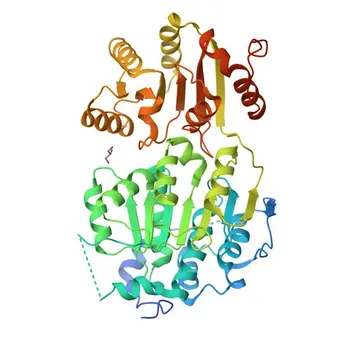
DNA polymerases cannot perfectly discriminate between a dNTP and a ddNTP; they recognize the base and the triphosphate group. The ddNTP fits into the enzyme’s active site, gets incorporated, and then instantly blocks further elongation. This deterministic behavior is what makes Sanger sequencing possible.
From Chemical Terminator to Diagnostic Readout
The Sanger Sequencing Workflow
A typical cycle‑sequencing reaction mixes DNA template, a primer, a specialized DNA polymerase, and a blend of natural dNTPs plus fluorescently labeled ddNTPs. As the polymerase extends the primer, it occasionally picks a ddNTP instead of a dNTP. This generates a nested set of fragments, each ending at a specific base. When these fragments are separated by capillary electrophoresis, the smallest pieces travel fastest. A laser excites the fluorescent tag on each fragment’s terminal ddNTP, and a detector records the color—blue for one base, green for another, etc. The result is an electropherogram that reveals the sample’s exact genetic sequence.
Why “Chain Termination” Matters in the Clinic
Clinical assays need to interrogate specific gene regions for mutations that cause disease or guide therapy. Because ddNTPs terminate at known positions, they give you single‑nucleotide resolution. This lets you read a stretch of DNA base by base and confidently call single‑nucleotide variants (SNVs), small insertions, or deletions.
The ddNTP as a Diagnostic Raw Material
Purity Is Non‑Negotiable
In diagnostic kit manufacturing, the ddNTP raw material must be extremely pure. Even traces of impurities can lead to premature termination—stopping synthesis before the region of interest is fully scanned—or produce fluorescent noise that masks a true mutation. Manufacturers aim for ddNTP lots that yield clean electropherograms with minimal background peaks.
The Golden Ratio: ddNTPs vs. dNTPs
The ratio of chain‑terminating ddNTPs to standard dNTPs directly controls the reaction’s footprint. If the ddNTP concentration is too high, termination happens so early that you cannot read beyond the primer binding site, losing coverage of distant variants. If it’s too low, termination is sparse, fragment intensity drops, and critical peaks may vanish. A precisely calibrated blend—often around 1% ddNTP relative to the corresponding dNTP—ensures a uniform distribution of terminated fragments across all base positions.
Polymerase Partnership
Not all DNA polymerases handle modified nucleotides equally well. The enzyme must exhibit balanced substrate affinity for ddNTP analogs, avoiding incorporation bias that would favor one base over another. An optimized polymerase–ddNTP duet is therefore essential for consistent peak heights and accurate heterozygote calling in clinical samples.
Using ddNTPs to Validate Diagnostic Assays
Sequence Confirmation Before Manufacturing
High‑purity ddNTPs and polymerases are employed as quality control tools long before a kit reaches the patient. They verify the sequence integrity of recombinant vectors, positive control plasmids, and synthetic target genes. A single Sanger run can confirm that the intended mutation is present and that no spurious changes were introduced during cloning.
Single‑Base Extension and Fragment Analysis
Beyond full‑length Sanger sequencing, ddNTPs power single‑nucleotide extension (SNE) assays and minisequencing for targeted SNP genotyping. Here, a primer anneals immediately adjacent to the variant site, and a fluorescent ddNTP is incorporated in a single step—highly specific, low‑background detection that depends entirely on the purity of the terminator reagent.
Understanding the Trade‑offs and Pitfalls
Premature Termination and Missing Peaks
If ddNTP purity is subpar or the ratio is off, you may see truncated reads or dropout of entire sequence regions. In a clinical setting, this means a pathogenic variant located in a “dark” area of the electropherogram goes undetected, potentially leading to a false‑negative report.
Signal Imbalance and Mis‑called Bases
An unbalanced ddNTP/dNTP mix can create uneven peak heights. Software may then misinterpret a weak true peak as background or, conversely, call a spurious peak as a variant. For heterozygous SNV detection, where the mutant peak is expected to be about half the height of the wild‑type, any signal distortion can flip the call.
Incorporation Bias
Polymerases that struggle with certain fluorescent ddNTP analogs—often the larger dye molecules on pyrimidines—produce systematically lower peaks for those bases. This bias must be compensated for in the reagent formulation or the analysis algorithm, or the diagnostic accuracy suffers.
Making the Right Choice for Your Assay Development
How you leverage ddNTPs depends on your diagnostic goal. The following recommendations can help you navigate the critical raw material and reaction design decisions.
- If your primary focus is high‑sensitivity somatic mutation detection: Select ultra‑pure fluorescent ddNTPs with verified balanced incorporation rates, and pair them with a polymerase engineered for low‑error synthesis. This combination enables reliable calling of low‑frequency variants in backgrounds of wild‑type DNA.
- If your goal is standard Sanger confirmation as part of a quality control workflow: Use a pre‑optimized ddNTP/dNTP master mix with defined stoichiometry and include established control templates every run. Reproducible, clean electropherograms are more important than ultimate sensitivity.
- If you are designing single‑base extension SNP genotyping assays: Source high‑purity ddNTPs with minimal free‑dye contamination to avoid elevated background fluorescence. Even a small amount of uncoupled label can obscure the true extension signal.
- If you need to validate new vector constructs or positive controls: Run a full‑length Sanger reaction using the same high‑grade ddNTPs and enzyme you intend to supply in your IVD kit. This not only verifies sequence accuracy but also stress‑tests your future reagent lot.
Mastering the selection and application of ddNTPs turns sequencing from a process with inherent biochemical errors into a decisive, trustworthy pillar of clinical diagnostics—where every terminated fragment brings you closer to a life‑altering molecular answer.
Summary Table:
| Aspect | Mechanism / Diagnostic Application | Key Quality & Optimization Factor |
|---|---|---|
| Chain Termination | Missing 3′-OH prevents phosphodiester bond formation, halting DNA extension. | High chemical purity prevents premature termination and fluorescent noise. |
| Base Call Accuracy | Fluorescent tags on ddNTPs generate size-separated, color-coded fragments. | Balanced stoichiometry (~1% ddNTP:dNTP) ensures even fragment distribution. |
| Clinical Assays | Enables SNV, insertion, deletion detection, and single-base extension (SNE). | Optimized polymerase affinity eliminates incorporation bias and missing peaks. |
| Assay Validation | Verifies sequence integrity of vectors, plasmids, and IVD positive controls. | Minimal free-dye contamination prevents elevated background signal. |
Developing high-precision Sanger sequencing kits or targeted SNE assays? CamelBio provides diagnostic manufacturers, labs, and research institutes with one-stop access to premium IVD raw materials—including ultra-pure fluorescent ddNTPs and optimized DNA polymerases—along with comprehensive technical services and consulting, supporting your assay from concept to clinic. Contact CamelBio today to elevate your clinical diagnostic kit performance!