Monoclonal Antibodies
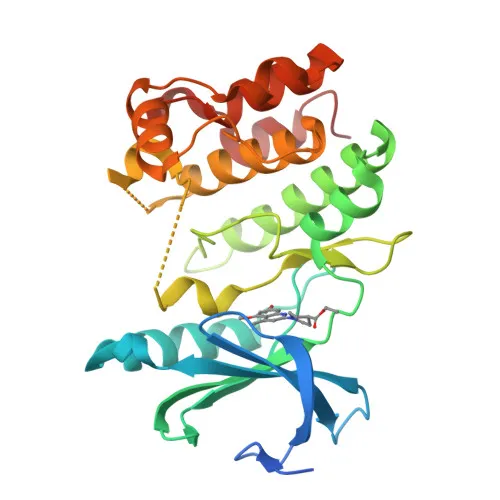
WNK3 Rabbit mAb - Q9BYP7
Item Number : CM0006493
Price varies based on specs and customizations
- Application
- WB, IHC-P, ELISA
- Cross Reactivity
- Human, Mouse, Rat
- Protein Weight
- 198 kDa

Shipping:
Contact us to get shipping details Enjoy On-time Dispatch Guarantee.
Why Choose Us
Easy ordering process, quality products, and dedicated support for your business success.
Core Product Specifications and Parameters
| Parameter | Value |
|---|---|
| Product Name | WNK3 Rabbit mAb |
| Remarks/Alias | PRKWNK3; WNK3 |
| Species | Human |
| Gene ID | 65267 |
| Immunogen | Synthetic peptide; A synthetic peptide corresponding to a sequence within amino acids 1700-1800 of human WNK3. (NP_065973.2). |
| Source | Rabbit |
| Category | Monoclonal Antibodies |
| Application | WB, IHC-P, ELISA |
| Cross Reactivity | Human, Mouse, Rat |
| SWISS | Q9BYP7 |
| Protein Weight | 198 kDa |
| Shipping | Ice bag |
Biological Background: WNK3 Function and Localization
- WNK3 is a serine/threonine-protein kinase of the WNK (With No Lysine) family, also designated PRKWNK3. It serves as a key upstream component of the WNK-SPAK/OSR1 kinase cascade.
- WNK3 regulates electrolyte homeostasis and cell volume recovery by phosphorylating and activating the downstream kinases OXSR1/OSR1 and STK39/SPAK in response to hyperosmotic stress. Related references: PMID:16275911 PMID:16275913 PMID:16501604 PMID:22989884
- Under hyperosmotic conditions, WNK3 functions as a molecular crowding sensor, undergoing liquid-liquid phase separation to form membraneless compartments that concentrate the kinase with its substrates, thereby promoting efficient signal transduction. Related references: PMID:36318922
- The activated OXSR1/OSR1 and STK39/SPAK kinases subsequently phosphorylate cation-chloride cotransporters: activating Na-K-Cl cotransporters (e.g., SLC12A2/NKCC1) and inhibiting K-Cl cotransporters (e.g., SLC12A4/KCC1, SLC12A5/KCC2, SLC12A6/KCC3), which together mediate regulatory volume increase. Related references: PMID:16275911 PMID:16275913 PMID:16357011
- WNK3 also phosphorylates WNK4, potentially modulating NCC (SLC12A3) activity, and may phosphorylate NEDD4L. Independent of its kinase activity, WNK3 can act as a scaffold protein to negatively regulate the membrane localization of channels such as KCNJ1 and SLC26A9. Related references: PMID:16357011 PMID:17975670 PMID:20525693 PMID:17673510
- WNK3 enhances TRPV5 and TRPV6-mediated calcium influx by increasing their membrane expression levels through a kinase-dependent mechanism. Related references: PMID:18768590
- The protein localizes predominantly to the cytoplasm.
- WNK3 is broadly expressed in adult brain, lung, kidney, liver, and pancreas, as well as in fetal tissues. Isoform 1 is brain-specific, while isoform 3 is kidney-specific. Mutations in WNK3 have been associated with intellectual disability.
Experimental Guidance and Technical Tips
- The immunogen corresponds to a C-terminal peptide (amino acids 1700-1800), targeting a region that may be well-exposed and suitable for detecting the full-length protein.
- For Western blotting, consider using a low-percentage (e.g., 6–8%) SDS-PAGE gel to effectively resolve the large 198 kDa WNK3 protein and include appropriate molecular weight markers.
- The antibody’s cross-reactivity with mouse and rat suggests a conserved epitope; however, validation in the relevant species and sample system is recommended.
- The antibody is suitable for IHC-P and ELISA in addition to WB; optimization of antigen retrieval methods and antibody dilutions for each application and tissue type is advised.
- Because WNK3 signaling is activated under hyperosmotic stress, consider pre-treating cells or tissues with hyperosmotic stimuli (e.g., sucrose) to enhance detection of phosphorylated downstream targets when assessing pathway activation.
CamelBio: Your One-Stop Sourcing Bridge
CamelBio supports diagnostic manufacturers and research laboratories with reliable access to high-quality IVD raw materials, including validated antibody pairs, optimized monoclonal and polyclonal antibodies, bulk ancillary reagents, and sourcing of rare targets. For WNK3-related studies in electrolyte homeostasis, kinase signaling, and volume regulation, CamelBio offers one-stop procurement solutions tailored to your development pipeline—from initial feasibility to scaled production.
REQUEST A QUOTE
Our professional team will reply to you within one business day. Please feel free to contact us!