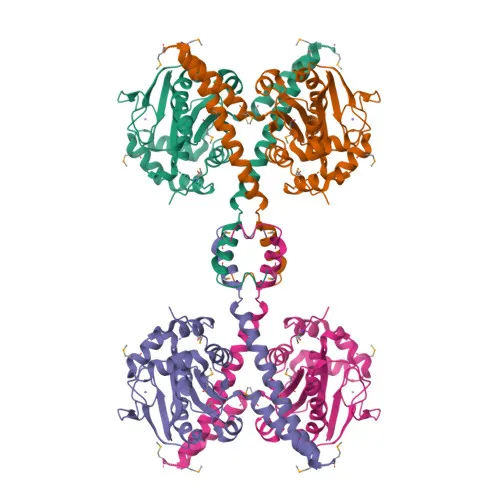
Monoclonal Antibodies
UCH37/UCHL5 Rabbit mAb for WB and ELISA - Q9Y5K5
Item Number : CM0007414
Price varies based on specs and customizations
- Application
- WB, ELISA
- Cross Reactivity
- Human, Mouse, Rat
- Protein Weight
- 36kDa/37kDa

Shipping:
Contact us to get shipping details Enjoy On-time Dispatch Guarantee.
Why Choose Us
Easy ordering process, quality products, and dedicated support for your business success.
Core Product Specifications and Parameters
| Parameter | Value |
|---|---|
| Product Name | UCH37/UCHL5 Rabbit mAb |
| Remarks/Alias | UCHL5; CGI-70; INO80R; UCH-L5; UCH37; ubiquitin C-terminal hydrolase L5; UCH37/UCHL5 |
| Species | Human |
| Gene ID | 51377 |
| Immunogen | Recombinant fusion protein containing a sequence corresponding to amino acids 1-329 of human UCH37/UCHL5 (NP_057068.1) |
| Source | Rabbit |
| Category | Monoclonal Antibodies |
| Application | WB, ELISA |
| Cross Reactivity | Human, Mouse, Rat |
| SWISS | Q9Y5K5 |
| Protein Weight | 36kDa/37kDa |
| Shipping | Ice bag |
Biological Background: UCH37/UCHL5 Function and Localization
- Ubiquitin carboxyl-terminal hydrolase isozyme L5 (UCHL5), also known as UCH37, is a thiol protease encoded by the UCHL5 gene; it belongs to the ubiquitin C-terminal hydrolase (UCH) family.
- It functions as a deubiquitinating enzyme that specifically cleaves 'Lys-48'-linked polyubiquitin chains, playing a key role in protein degradation by recycling ubiquitin prior to proteasomal processing.
- UCHL5 is a regulatory component of the 26S proteasome, associated with the 19S regulatory particle, where it participates in the removal of ubiquitin from substrates destined for degradation.
- Additionally, it is a putative component of the INO80 chromatin remodeling complex; however, it remains inactive in this context and becomes activated only upon transient interaction with the proteasome through the adaptor protein ADRM1.
- Subcellularly, UCHL5 is found both in the cytoplasm and the nucleus, consistent with its involvement in proteasomal degradation and nuclear processes such as DNA repair and transcription regulation.
- Alternative splicing and post-translational modifications, including acetylation, may generate multiple isoforms, contributing to functional diversity.
Experimental Guidance and Technical Tips
- For Western blot, the antibody is expected to detect a band at approximately 36–37 kDa; consider that post-translational modifications (e.g., acetylation) or proteasomal association may cause slight mobility shifts—validate in your specific sample system.
- With cross-reactivity to human, mouse, and rat, you can directly test endogenous UCHL5 in lysates from these species; always include appropriate positive and negative controls.
- In ELISA, the recombinant immunogen (amino acids 1–329) can serve as a standard; optimize coating antigen and antibody concentration, and evaluate matrix effects if using complex samples.
- As UCHL5 functions in the ubiquitin-proteasome pathway, consider using proteasome inhibitors (e.g., MG132) or ubiquitin pathway modulators in your assays to assess dynamic changes in UCHL5 levels or activity.
CamelBio: Your One-Stop Sourcing Bridge
CamelBio serves as a comprehensive source for IVD raw materials, supporting diagnostic developers and researchers from early R&D to clinical application. For your work on deubiquitinases like UCHL5 and proteasome biology, CamelBio offers validated monoclonal antibodies, bulk ancillary reagents, and custom sourcing for rare targets. Let us streamline your procurement and help accelerate your assay development in the ubiquitin-proteasome field.
REQUEST A QUOTE
Our professional team will reply to you within one business day. Please feel free to contact us!