Polyclonal Antibodies
UBE3A Rabbit pAb - Q05086
Item Number : CM0024656
Price varies based on specs and customizations
- Application
- WB, IHC-P, IF/ICC, ELISA
- Cross Reactivity
- Human, Mouse, Rat
- Protein Weight
- 101kDa

Shipping:
Contact us to get shipping details Enjoy On-time Dispatch Guarantee.
Why Choose Us
Easy ordering process, quality products, and dedicated support for your business success.
Core Product Specifications and Parameters
| Parameter | Value |
|---|---|
| Product Name | UBE3A Rabbit pAb |
| Remarks/Alias | AS; ANCR; PIX1; E6-AP; HPVE6A; EPVE6AP; UBE3A |
| Species | Human |
| GeneID (Human) | 7337 |
| Immunogen | Recombinant fusion protein containing a sequence corresponding to amino acids 300-590 of human UBE3A (NP_570853.1) |
| Source | Rabbit |
| Category | Polyclonal Antibodies |
| Application | WB, IHC-P, IF/ICC, ELISA |
| Cross Reactivity | Human, Mouse, Rat |
| SWISS | Q05086 |
| Protein Weight | 101kDa |
| Shipping | Ice bag |
Biological Background: UBE3A Function and Localization
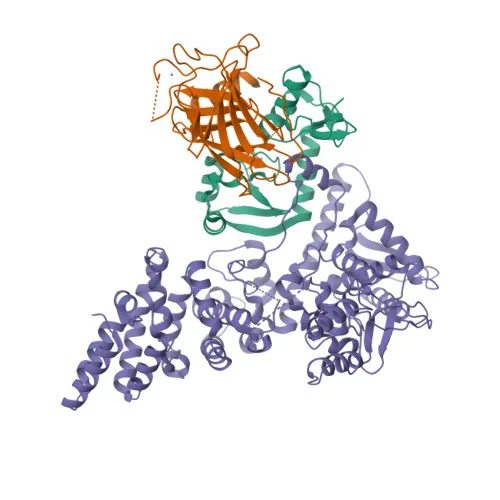
- UBE3A encodes the HECT-type E3 ubiquitin-protein ligase E6AP, which accepts ubiquitin from an E2 conjugating enzyme and transfers it to substrate proteins. Related references: PMID:10373495, PMID:16772533, PMID:19204938
- Key substrates include BMAL1, ARC, LAMTOR1, RAD23A, RAD23B, MCM7, annexin A1, the PML tumor suppressor, and the cell cycle regulator CDKN1B, linking UBE3A to circadian rhythm, synaptic remodeling, DNA replication, and tumor suppression. Related references: PMID:10373495, PMID:19204938, PMID:19325566
- In the circadian clock, UBE3A ubiquitinates BMAL1, targeting it for proteasomal degradation and thus regulating the core circadian oscillator. Related references: PMID:24728990
- In neurons, UBE3A controls synaptic development by mediating ubiquitination and degradation of ARC and LAMTOR1, thereby limiting mTORC1 signaling and activity-dependent synaptic remodeling (By similarity).
- UBE3A acts as a transcriptional coactivator of the progesterone receptor PGR, synergizing with WBP2 to enhance PGR-mediated transcription. Related references: PMID:16772533
- The protein localizes to both the cytoplasm and nucleus, consistent with its roles in protein quality control and transcriptional regulation.
- During high-risk human papillomavirus (HPV) infection, UBE3A cooperates with the viral E6 protein to ubiquitinate and degrade the tumor suppressor p53, contributing to cellular transformation.
- UBE3A contains a Zinc-finger domain and is regulated by phosphorylation, as indicated by curated UniProt keywords.
Experimental Guidance and Technical Tips
- The immunogen spans amino acids 300–590, a central region conserved across human, mouse, and rat UBE3A, supporting the observed cross-reactivity.
- For western blotting, the expected molecular weight is ~101 kDa; consider using a whole-cell lysate from a cell line known to express UBE3A (e.g., HEK293, HeLa) as a positive control.
- For IHC-P and IF/ICC, validate the staining pattern in your tissue or cell system; reported localization includes both cytoplasmic and nuclear compartments.
- ELISA may be used for quantitative detection; consider pairing with a matched antibody pair for capture-detection assays.
- Always titrate the antibody in your own experimental system, as optimal working dilutions depend on sample type and detection method.
CamelBio: Your One-Stop Sourcing Bridge
CamelBio streamlines IVD raw-material procurement for diagnostic manufacturers, laboratories, and research institutes by providing a single access point for validated antibodies, matched pairs, bulk ancillary reagents, and rare-target sourcing. This UBE3A rabbit polyclonal antibody supports research into ubiquitin-mediated signaling, circadian biology, neurodevelopment, and oncology. With expertise spanning the complete diagnostic development continuum, we help you move from concept to clinic with reliable, one-stop supply solutions.
REQUEST A QUOTE
Our professional team will reply to you within one business day. Please feel free to contact us!