Polyclonal Antibodies
TRPV6 Rabbit pAb - Q9H1D0
Item Number : CM0015632
Price varies based on specs and customizations
- Application
- WB, IHC-P, ELISA
- Cross Reactivity
- Human, Mouse, Rat
- Protein Weight
- 87kDa

Shipping:
Contact us to get shipping details Enjoy On-time Dispatch Guarantee.
Why Choose Us
Easy ordering process, quality products, and dedicated support for your business success.
Core Product Specifications and Parameters
| Parameter | Value |
|---|---|
| Product Name | TRPV6 Rabbit pAb |
| Remarks/Alias | CAT1; CATL; ZFAB; ECAC2; ABP/ZF; HRPTTN; LP6728; HSA277909; TRPV6 |
| Species | Human |
| GeneID (Human) | 55503 |
| GeneID | 55503 |
| Immunogen | Synthetic peptide corresponding to a sequence within amino acids 1-100 of human TRPV6 (NP_061116.5) |
| Source | Rabbit |
| Category | Polyclonal Antibodies |
| Application | WB, IHC-P, ELISA |
| Cross Reactivity | Human, Mouse, Rat |
| SWISS | Q9H1D0 |
| Protein Weight | 87kDa |
| Shipping | Ice bag |
Biological Background: TRPV6 Function and Localization
-
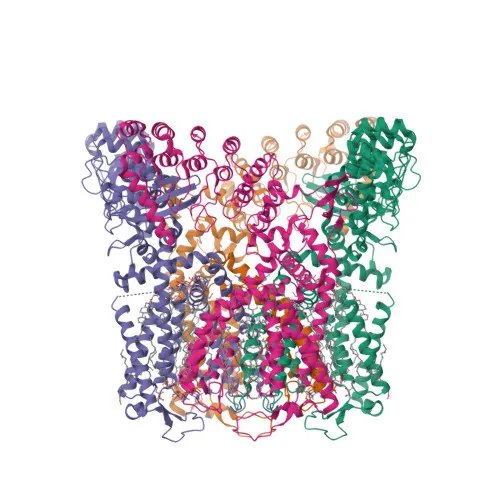
TRPV6 (Transient receptor potential cation channel subfamily V member 6), also designated CaT1, CaT-L, ECaC2, and CATL, is a calcium-selective ion channel encoded by the TRPV6 (ECAC2) gene.
-
The channel mediates Ca²⁺ uptake in various tissues, particularly the intestine, playing a critical role in whole-body calcium homeostasis, including bone and skin maintenance. Related references: PMID:11097838 PMID:11248124 PMID:11278579
-
TRPV6 activity is activated by low intracellular calcium levels and exhibits inward rectification. Its inactivation involves rapid Ca²⁺-dependent and slower Ca²⁺-calmodulin-dependent mechanisms, the latter potentially regulated by phosphorylation. Related references: PMID:15184369
-
The channel localizes to the cell membrane and is expressed at high levels throughout the gastrointestinal tract (esophagus, stomach, small intestine, colon), pancreas, placenta, prostate, and salivary gland, with moderate expression in liver, kidney, and testis. Related references: PMID:23612980
-
Heteromeric assembly with TRPV5 modifies channel properties, and TRPV5-TRPV6 heteromultimers display voltage-dependent gating. TRPV6 is also known to be inhibited by Mg²⁺ in a voltage-independent manner in vitro.
-
Keywords indicate that TRPV6 undergoes alternative splicing, glycosylation, and phosphorylation, and contains ANK repeats and calmodulin-binding domains.
Experimental Guidance and Technical Tips
-
Given the immunogen corresponds to the N-terminal region (aa 1-100), this antibody may recognize both full-length TRPV6 and potential N-terminal splice variants; validate band patterns against predicted molecular weight (~87 kDa) in relevant samples.
-
For Western blotting, consider using reducing conditions and standard protein loading controls; the predicted molecular weight is 87 kDa, but glycosylation or other PTMs may cause slight shifts.
-
In immunohistochemistry (IHC-P), antigen retrieval conditions may be required; assess staining in tissues with known high TRPV6 expression, such as duodenum, placenta, or prostate.
-
For ELISA, the antibody can be used as a capture or detection reagent; include appropriate controls and titration experiments to optimize signal-to-noise ratio.
-
Cross-reactivity is indicated for human, mouse, and rat; however, verify band specificity in each species, as sequence homology outside the epitope may lead to different detection profiles.
CamelBio: Your One-Stop Sourcing Bridge
CamelBio offers a comprehensive range of IVD raw materials, including this anti-TRPV6 polyclonal antibody for calcium channel research and diagnostic development. With validated antibody pairs, optimized polyclonal antibodies, and bulk ancillary reagents, we help you streamline your assay development from concept to clinic. Whether you need rare target reagents or large-scale production, our one-stop sourcing solution is designed to meet your procurement needs.
REQUEST A QUOTE
Our professional team will reply to you within one business day. Please feel free to contact us!