Methylated Antibodies
TriMethyl-Histone H3-K64 (Q16695/P68431) Rabbit Polyclonal Antibody (WB, IHC-P, IF/ICC, ELISA)
Item Number : CM0000298
Price varies based on specs and customizations
- Application
- WB, IHC-P, IF/ICC, ELISA
- Cross Reactivity
- Human, Mouse, Rat, Other (Wide Range Predicted)
- Protein Weight
- 15 kDa

Shipping:
Contact us to get shipping details Enjoy On-time Dispatch Guarantee.
Why Choose Us
Easy ordering process, quality products, and dedicated support for your business success.
Core Product Specifications and Parameters
| Parameter | Value |
|---|---|
| Product Name | TriMethyl-Histone H3-K64 Rabbit pAb |
| Remarks/Alias | H3t; H3.4; H3/g; H3FT; H3C16; HIST3H3; TriMethyl-Histone H3-K64 |
| Species | Human |
| GeneID (human) | H3 |
| GeneID | 8290/8350 |
| Immunogen | Synthetic peptide, A synthetic trimethylated peptide around K56 of human TriMethyl-Histone H3-K64 (NP_003520.1). |
| Source | Rabbit |
| Category | Methylated Antibodies |
| Application | WB, IHC-P, IF/ICC, ELISA |
| Cross Reactivity | Human, Mouse, Rat, Other (Wide Range Predicted) |
| SWISS | Q16695/P68431 |
| Protein Weight | 15 kDa |
| Shipping | Ice bag |
Biological Background: Histone H3 Function and Localization
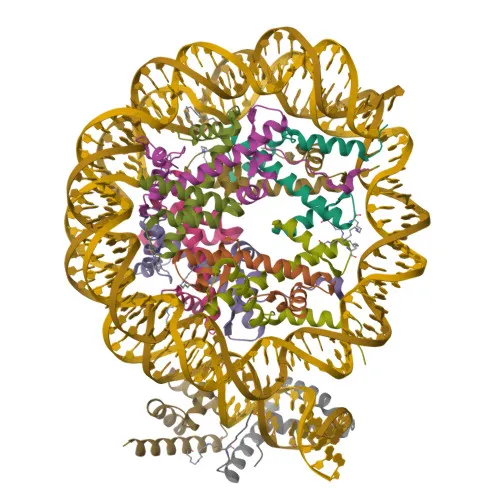
Histone H3 is a core component of the nucleosome, the fundamental repeating unit of chromatin. Nucleosomes wrap and compact DNA, regulating its accessibility to the cellular machinery required for processes such as transcription, DNA repair, DNA replication, and the maintenance of chromosomal stability. Histones thereby play a central role in genome organization and function. DNA accessibility is dynamically controlled through a complex array of post-translational modifications (PTMs) on histones, often referred to as the histone code, as well as through nucleosome remodeling activities.
Two isoforms are represented by the Swiss-Prot accessions Q16695 and P68431. Q16695 (Histone H3.1t, also known as H3t or H3.4) is a testis-specific histone H3 variant expressed primarily in testicular cells, where it likely contributes to chromatin reorganization during spermatogenesis. P68431 (Histone H3.1) is a canonical, replication-dependent histone that is widely expressed and deposited onto newly synthesized DNA during S phase. Both isoforms share extensive sequence homology and are subject to a multitude of PTMs, including methylation, acetylation, phosphorylation, and others, which modulate chromatin structure and function.
The trimethylation of lysine 64 (K64) is a specific epigenetic mark within the histone H3 tail, although its precise biological roles are still being elucidated. Like other histone methylation events, it is thought to influence gene expression by serving as a docking site for effector proteins or by altering chromatin compaction.
Related references: UniProt Q16695, UniProt P68431.
Experimental Guidance and Technical Tips
- The immunogen used is a synthetic trimethylated peptide corresponding to the region surrounding lysine 64 of histone H3 (based on NP_003520.1). This design enables specific recognition of the trimethylated state at this residue.
- For Western blot (WB), consider using whole cell lysates from human, mouse, rat, or other vertebrate samples. The predicted molecular weight of ~15 kDa should be confirmed under reducing and denaturing conditions.
- For immunohistochemistry (IHC-P), antigen retrieval methods (e.g., heat-induced epitope retrieval in citrate buffer) may be required to unmask the epitope. Validate staining in positive and negative control tissues, taking into account the testis-specific expression of the H3.1t isoform.
- In immunofluorescence (IF/ICC), optimal fixation and permeabilization conditions should be determined empirically. The wide predicted cross-reactivity makes this antibody suitable for multi-species comparative studies.
- For ELISA, the antibody can be used to detect trimethylated H3-K64 peptides or recombinant proteins. Ensure proper blocking and washing steps to minimize non-specific binding.
CamelBio: Your One-Stop Sourcing Bridge
CamelBio is a premier B2B supplier of IVD raw materials, offering diagnostic manufacturers, laboratories, and research institutes a streamlined, one-stop solution from concept to clinic. This rabbit polyclonal antibody targeting TriMethyl-Histone H3-K64 is a valuable tool for epigenetic and chromatin research, facilitating the study of histone modification dynamics. Beyond this product, CamelBio provides a comprehensive portfolio including validated antibody pairs, optimized monoclonal and polyclonal antibodies, bulk ancillary reagents, and custom sourcing for rare targets. Partner with CamelBio to accelerate your diagnostics development with reliable, high-quality raw materials and expert support.
REQUEST A QUOTE
Our professional team will reply to you within one business day. Please feel free to contact us!