Methylated Antibodies
TriMethyl-Histone H3-K4 (H3K4me3) Rabbit Polyclonal Antibody – Q16695/P68431 for ChIP-seq & WB
Item Number : CM0000396
Price varies based on specs and customizations
- Application
- WB, DB, IHC-P, ELISA, ChIP, ChIP-seq
- Cross Reactivity
- Human, Mouse, Rat, Other (Wide Range Predicted)
- Protein Weight
- 15 kDa

Shipping:
Contact us to get shipping details Enjoy On-time Dispatch Guarantee.
Why Choose Us
Easy ordering process, quality products, and dedicated support for your business success.
Core Product Specifications and Parameters
| Parameter | Value |
|---|---|
| Product Name | TriMethyl-Histone H3-K4 Rabbit pAb |
| Remarks/Alias | H3t; H3.4; H3/g; H3FT; H3C16; HIST3H3; TriMethyl-Histone H3-K4 |
| Species | Human |
| GeneID (Human) | H3 |
| GeneID | 8290/8350 |
| Immunogen | A synthetic peptide corresponding to a sequence within amino acids 1-100 of human histone H3 (NP_003520.1). |
| Source | Rabbit |
| Category | Methylated Antibodies |
| Application | WB, DB, IHC-P, ELISA, ChIP, ChIP-seq |
| Cross Reactivity | Human, Mouse, Rat, Other (Wide Range Predicted) |
| SWISS | Q16695/P68431 |
| Protein Weight | 15 kDa |
| Shipping | Ice bag |
Biological Background: Histone H3 Function and Localization
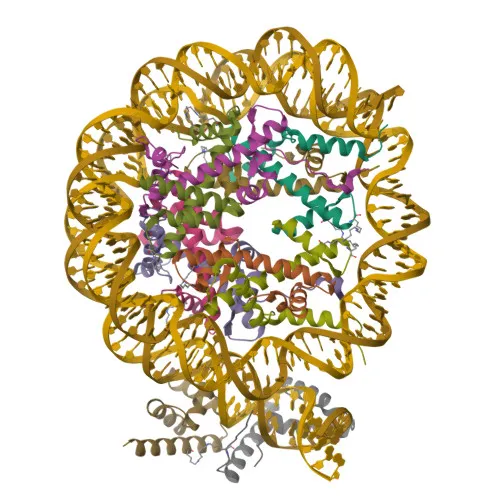
Histone H3 is a core histone protein that, together with H2A, H2B, and H4, assembles into the nucleosome, the fundamental repeating unit of chromatin. Nucleosomes compact DNA and regulate its accessibility to cellular machinery, playing a central role in transcription, replication, repair, and chromosomal stability. Post-translational modifications of histones, collectively known as the "histone code," dynamically control chromatin structure and gene expression. Related references: UniProt Q16695/P68431
Trimethylation of lysine 4 on histone H3 (H3K4me3) is a hallmark of active gene promoters and is intimately linked to transcriptional initiation and elongation. This modification is deposited by specific methyltransferases and removed by demethylases, serving as a critical epigenetic regulator in development, differentiation, and disease.
Histone H3 is located in the nucleus and associated with chromosomes. Multiple variants exist, including the canonical H3.1 (encoded by several genes, represented by P68431) and the testis-specific H3.1t (Q16695). While H3.1 is ubiquitously expressed, H3.1t is predominantly found in testicular cells. Related references: UniProt Q16695
The N‑terminal tails of histones are subject to a vast array of modifications—acetylation, methylation, phosphorylation, and many more—that generate a complex regulatory landscape. Comprehensive mapping studies have catalogued these modifications, underscoring the intricate combinatorial nature of the histone code. Related references: PMID:17194708
Experimental Guidance and Technical Tips
- For Western blot (WB) and dot blot (DB), a single band of approximately 15 kDa is expected. Histone-rich lysates (e.g., acid‑extracted HeLa nuclear proteins) are recommended as positive controls, and loading should be normalized to total H3.
- In chromatin immunoprecipitation (ChIP) and ChIP‑seq, optimize crosslinking and sonication conditions for the specific cell type. Include known H3K4me3‑positive loci (e.g., GAPDH promoter) and negative control regions to validate enrichment.
- For immunohistochemistry on paraffin‑embedded sections (IHC‑P), antigen retrieval (e.g., citrate buffer, pH 6.0) is essential. A predominantly nuclear staining pattern should be observed, with signal intensity reflecting the transcriptional activity of the tissue.
- In ELISA and other plate‑based assays, consider using a trimethylated H3K4 peptide as a positive control and an unmodified or monomethylated peptide to confirm modification specificity.
- As with any polyclonal antibody, lot‑to‑lot consistency should be verified by titrating on known‑positive samples. Cross‑reactivity with other species is predicted based on high sequence conservation across vertebrates, but validation in the relevant sample system is advised.
CamelBio: Your One-Stop Sourcing Bridge
CamelBio provides diagnostic manufacturers, laboratories, and research institutes with one‑stop access to IVD raw materials, technical services, and consulting — covering every stage from concept to clinic. This TriMethyl‑Histone H3‑K4 rabbit polyclonal antibody is part of our extensive portfolio of epigenetic research reagents. We support your assay development with validated antibody pairs, optimized monoclonal and polyclonal antibodies, bulk ancillary reagents, and rare target raw‑material sourcing. Our global supply chain and expert team are ready to help secure the right components for your diagnostic workflow, from early‑stage biomarker discovery to regulated IVD manufacturing.
REQUEST A QUOTE
Our professional team will reply to you within one business day. Please feel free to contact us!